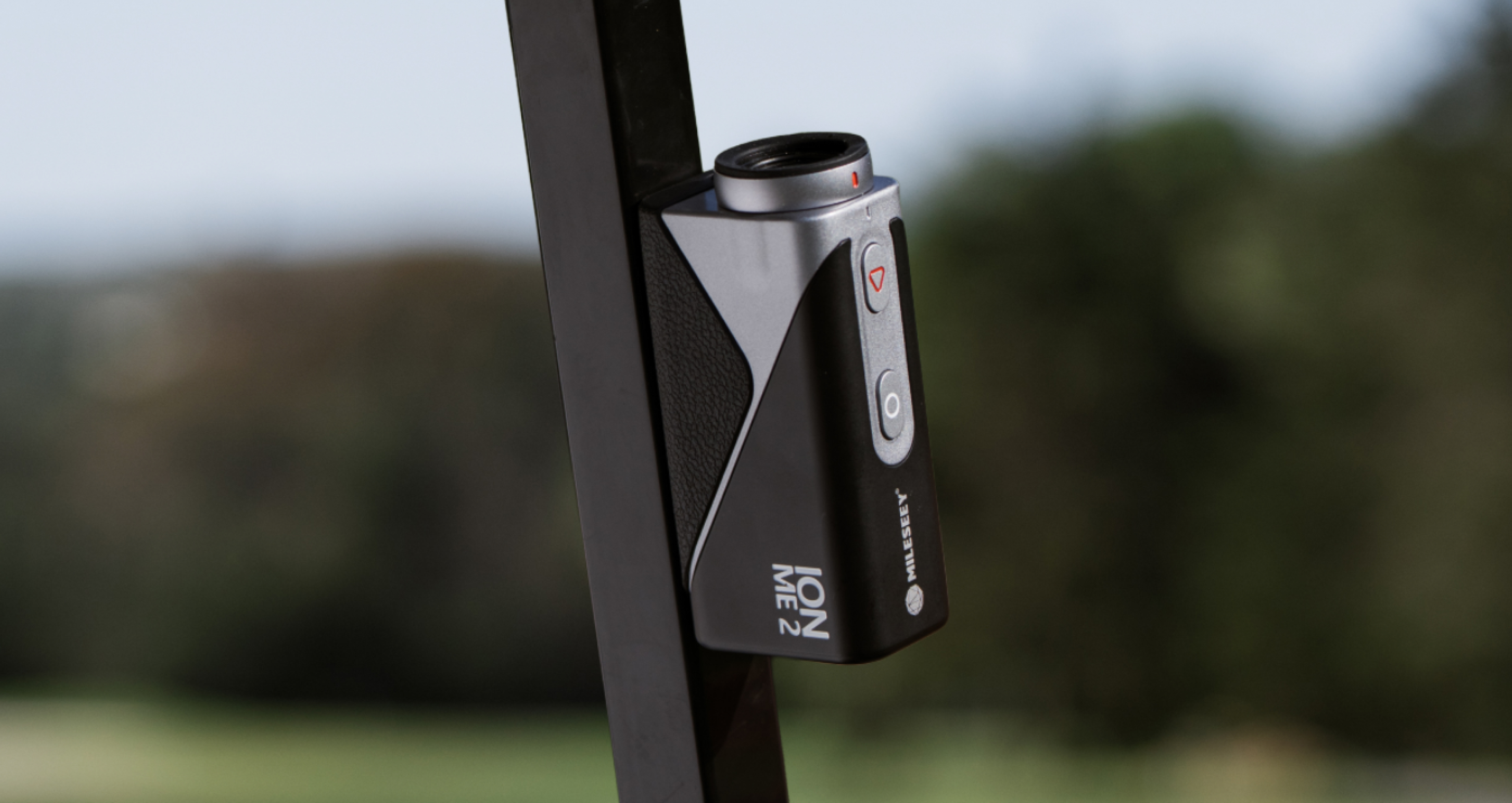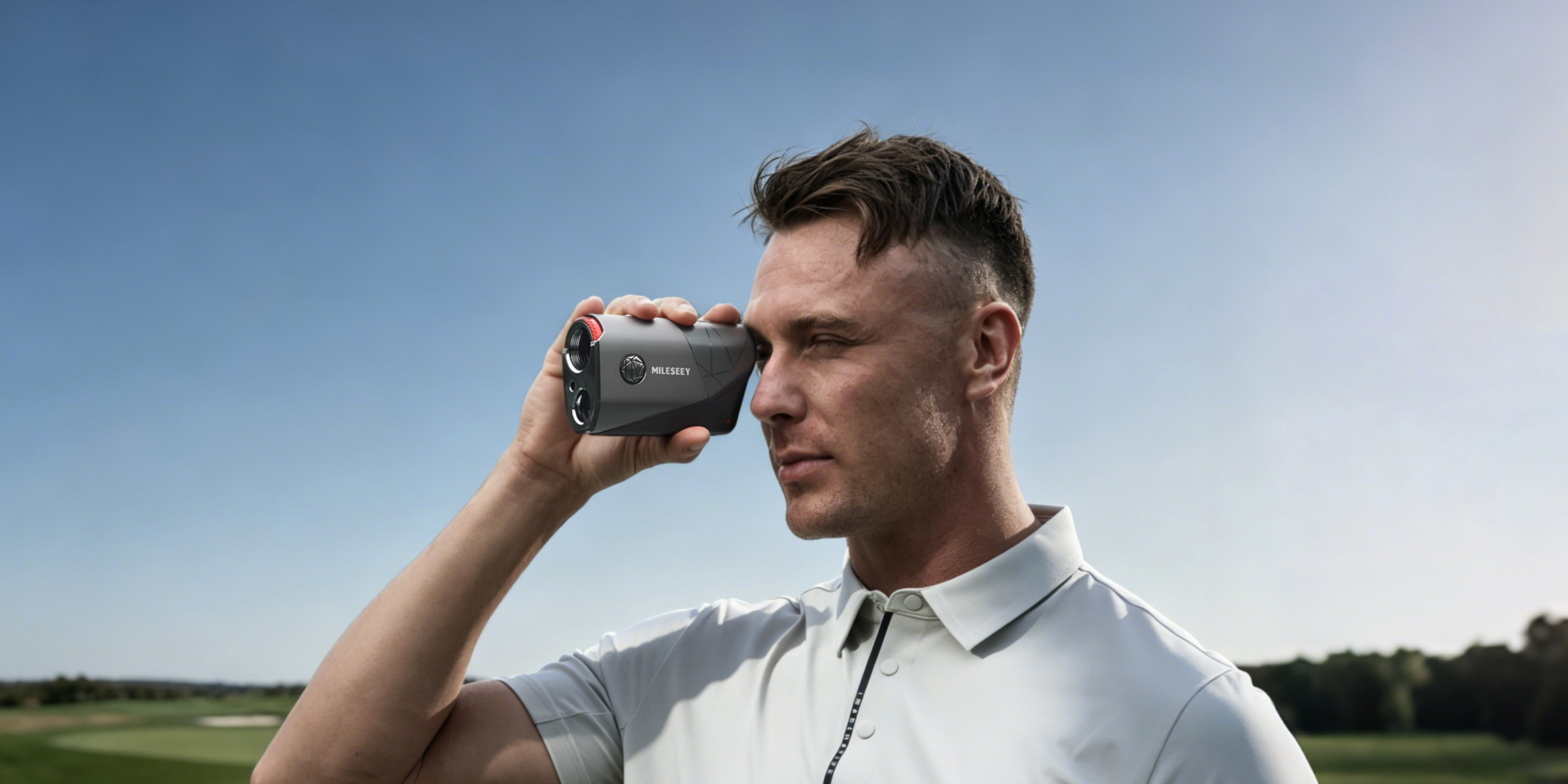
A golf rangefinder is a distance-measuring device that helps a golfer estimate how far it is to a target. A laser model measures a selected object such as the flagstick or bunker face. A GPS model uses mapped course data to show distances such as the front, center, and back of a green. A hybrid combines both approaches.
The important distinction is simple: a rangefinder gives you information, not a shot choice. You still have to decide which target matters, how far your club actually carries, and how weather, lie, elevation, and risk change the decision.
Mileseey Golf view: The best use of a rangefinder is not chasing a perfect number. It is turning a reliable distance into a repeatable decision.
What Does a Golf Rangefinder Actually Do?
A rangefinder reduces one source of uncertainty: distance. That sounds basic, but it affects three connected decisions.
1. It identifies the distance to the target you selected
With a laser, the target is whatever surface returns the measurement. If you aim at the flag but the beam reaches trees behind it, the number may describe the trees. With GPS, the target is a mapped point rather than the object in the viewfinder.
2. It separates target distance from club distance
If the flag is 152 yards away, that does not automatically mean “hit the 150-yard club.” Your useful club number is carry distance under the current lie and conditions. The device supplies one input; your distance chart supplies the other.
3. It supports a safer target decision
Sometimes the flag is not the right target. Front-edge, bunker-carry, layup, and back-edge distances can matter more. A good routine asks “what number changes my decision?” before pressing the button.
Laser, GPS, or Hybrid: The Three Main Types
| Type | Best at | Main limitation |
|---|---|---|
| Laser | Precise line-of-sight distance to a visible target | Needs a visible, rangeable object and steady aim |
| GPS | Mapped green, hazard, and hole context | Relies on course mapping and satellite position rather than the exact object you see |
| Hybrid | Combining exact target distance with broader hole context | More features can mean more setup and learning |
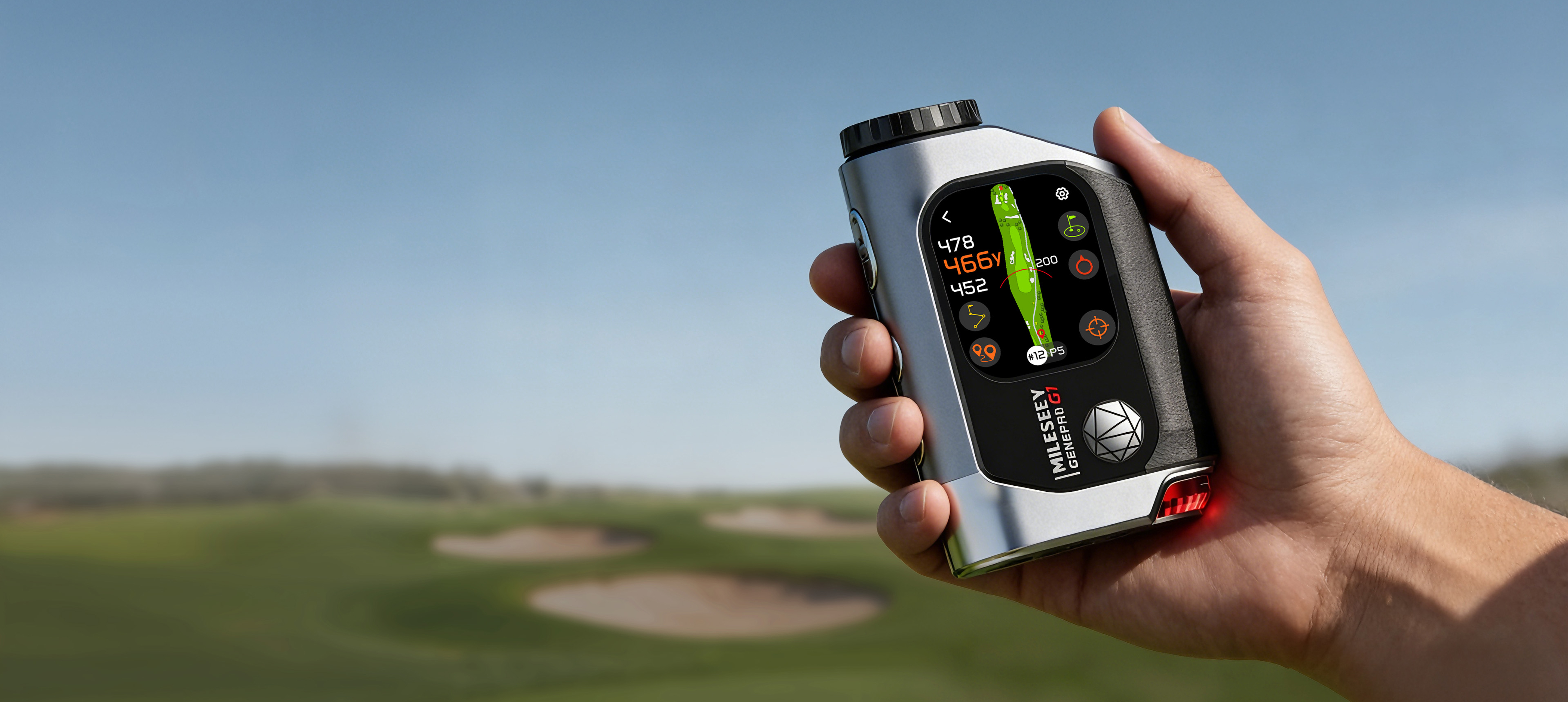 A golf GPS rangefinder such as the GenePro G1 illustrates the hybrid category. Golf Monthly’s independent review praised its bright AMOLED display and the way it combines laser distance with full-hole mapping, while also noting occasional screen lag and auto-hole issues. Read the independent review.
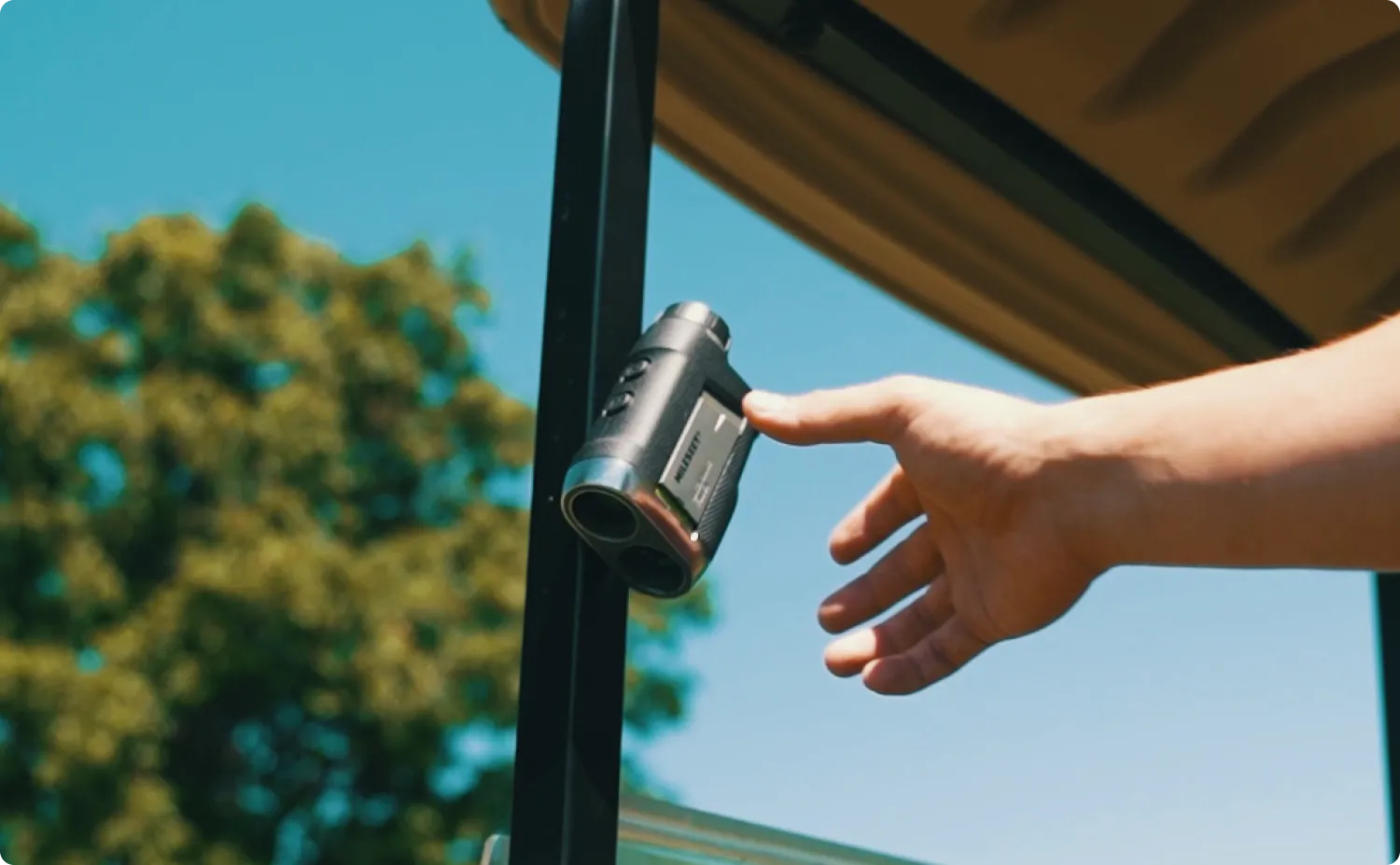
At the simpler end, a best-value rangefinder such as the PF260 Tour focuses on core laser tasks. National Club Golfer gave it a five-star media rating and highlighted ease of use, compactness, and value. See the source review.
The Distance-to-Decision Framework
- Name the decision. Are you choosing a club, confirming a carry, or checking room behind the flag?
- Select the correct target. Flag, bunker lip, tree line, front edge, or layup point.
- Capture a repeatable number. Take a second reading if the result changes the shot materially.
- Compare it with your real carry chart. Do not substitute total distance for carry distance.
- Choose the miss. Favor the number that leaves the safest common miss, not the most aggressive possible result.
Editorial simulation: 152 yards to a back flag
Scenario: The laser shows 152 yards to the flag. GPS context shows 139 to the front and 160 to the back. Your normal 7-iron carry is 148, while your 6-iron carries 158.
Option A: Treat 152 as an exact command and hit 7-iron hard. Risk: a slight mishit finishes short.
Option B: Treat the three distances as a decision window. If long is safe, a controlled 6-iron may provide margin; if long is dangerous, the center-green target may be smarter. The device did not make the choice—the context did.
What a Rangefinder Cannot Tell You
- Your true carry distance unless you have measured and maintained it.
- How the ball will react from rough, a downhill lie, or a wet fairway.
- Whether the aggressive target is worth the penalty around it.
- Whether a tournament committee has restricted a device or a function.
Under USGA Rule 4.3, distance-measuring devices are generally allowed, but a committee may prohibit them by Local Rule, and prohibited functions such as slope or wind information must not be used during a qualifying round. Check the USGA guidance and always confirm the event’s notice to players.
When a Rangefinder Is Most—and Least—Useful
It is most useful when
- Course markers are sparse or inconsistent.
- You play unfamiliar courses.
- You practice distance control with a carry chart.
- You need hazard, layup, or green-depth context.
It may not be necessary when
- You already get sufficient information from trusted course markers or a caddie.
- You rarely use distance to change club or target.
- Extra device handling disrupts your pace and routine.
- The competition prohibits electronic distance measurement.
Build the Essential Skill Set
Continue with the five practical guides in this series:
- How a golf rangefinder works
- How to decide whether you need one
- Where to aim on the course
- How to hold a rangefinder steady
- Where to carry it on a golf bag
If you are ready to compare device types, browse the golf distance finder collection by the problem you need to solve—not by the longest feature list.