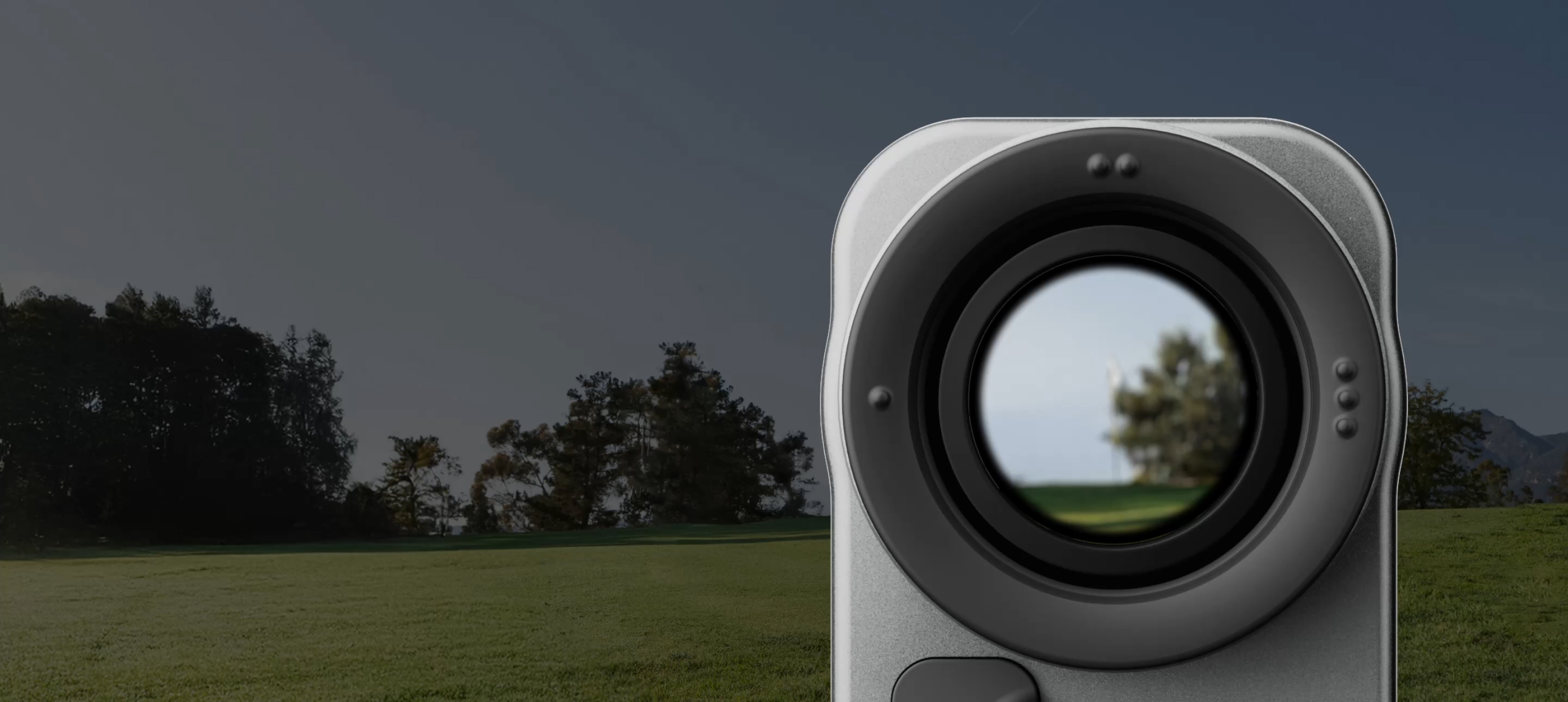
Aim a golf rangefinder at the object that answers your next decision—not automatically at the flag. For an approach, that may be the flagstick. For a layup, it may be a bunker face or tree. For a forced carry, the near edge of the hazard matters more than the pin.
The most common aiming error is measuring the easiest visible object instead of the object that changes the shot.
Use the Target Ladder
Level 1: Safety target
First measure the number that prevents the costly miss: the front of water, the bunker lip, the tree line, or the back boundary. This establishes what the shot must carry—or must not reach.
Level 2: Playing target
Next measure the point you actually intend to finish near. That could be the center of the green, a layup marker, or a section of fairway.
Level 3: Reference target
Finally, measure the flag or another landmark if it improves the decision. The flag is a reference, not always the goal.
Where to Aim in Common Situations
| Situation | Aim at | Decision answered |
|---|---|---|
| Open approach | Flagstick, then green edge if visible | Pin distance and usable depth |
| Forced carry | Near hazard edge or bunker lip | Minimum carry required |
| Dogleg | Corner tree, bunker face, or visible turning point | Club that reaches the corner without running through |
| Layup | Tree, sign, mound, or bunker at the layup zone | How far to leave a preferred next-shot distance |
| Practice range | Solid target board or flag base | Reference distance for carry calibration |
How to Avoid Measuring the Background
- Start on a larger object near the flag, such as the green surface or flag base.
- Move the crosshair slowly onto the flagstick.
- Use pin-seeking mode if the device provides it.
- Take two readings and look for a tight pair.
- If one number is much longer, re-aim rather than averaging.
Editorial simulation: 132 or 154?
The flag appears in front of trees. Your readings are 132, 154, and 133 yards. The two near numbers form a repeatable pattern; 154 likely describes the background. Confirm once more from a steadier position, then use the near-target number with your green-depth context.
Ground, Flagstick, or Cup?
A flagstick usually offers more reflective surface than the cup. The ground can help you find the front of a hazard or the base of a slope, but turf angle and texture may produce less consistent returns. If the flag is hard to capture, sweep across it rather than trying to hold a perfectly fixed crosshair.

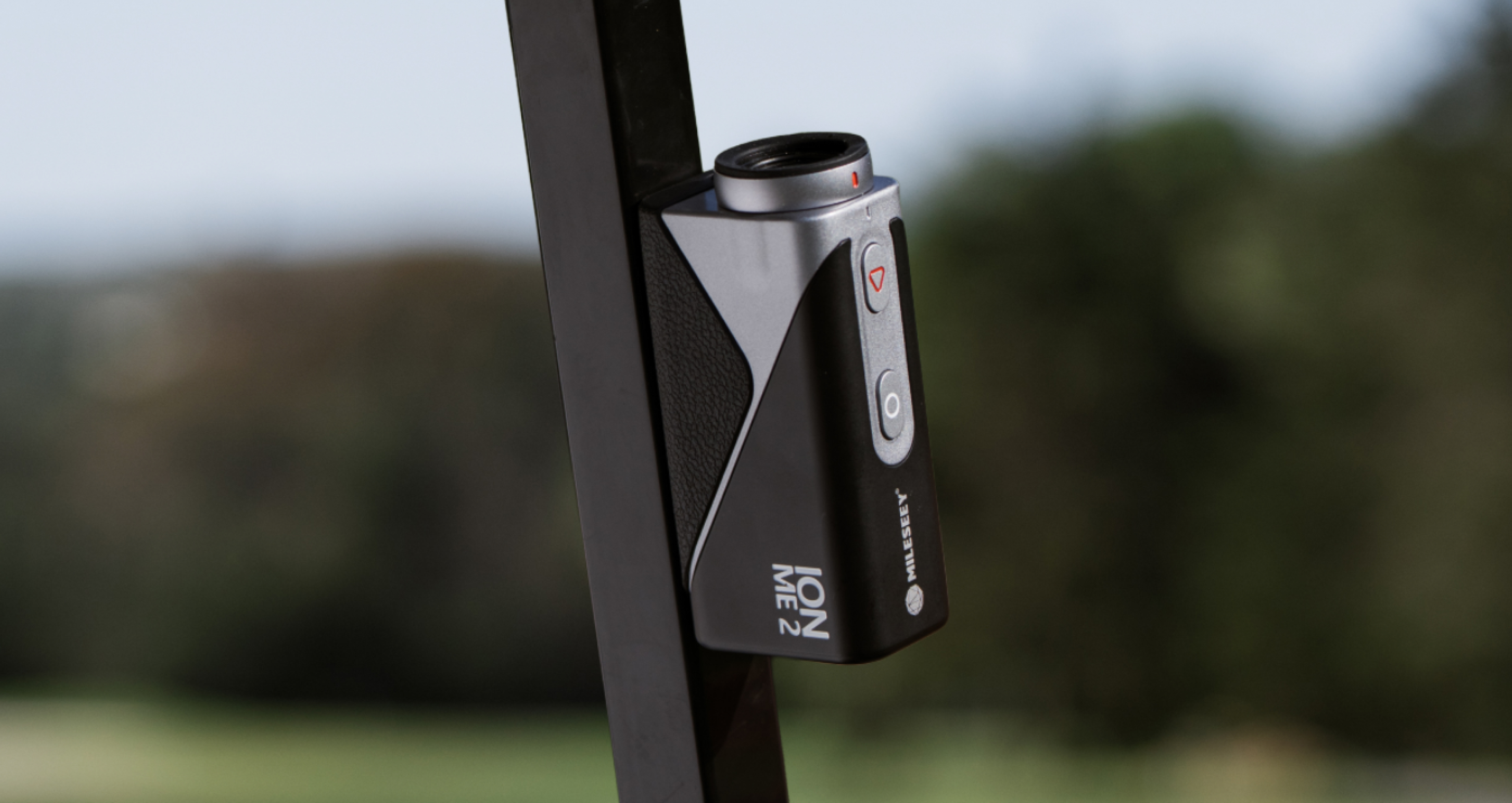
A compact rangefinder such as the IONME2 is designed around portable laser use and includes PinPoint Green and Ball-to-Pin functions. Plugged In Golf’s independent review highlighted its pocket-size body and high-end feature set while noting that the modes must be used correctly. Read the source review.
When This Advice Does Not Apply
A laser cannot reliably measure what it cannot see. On a blind shot, use a mapped GPS point, course marker, yardage book, or safe reference target. Do not aim through another group, toward reflective vehicles, or at anything that creates a pace or safety problem.
Five-Second Pre-Measurement Check
- What decision am I making?
- What is the costly miss?
- Which object answers that question?
- Is there clutter behind it?
- Do I need a second reading?
For the full foundation, read what a golf rangefinder measures. Then pair this technique with how reflected laser readings work and the four-point stability routine.
Compare suitable golf course rangefinders only after you know which targets matter in your game.