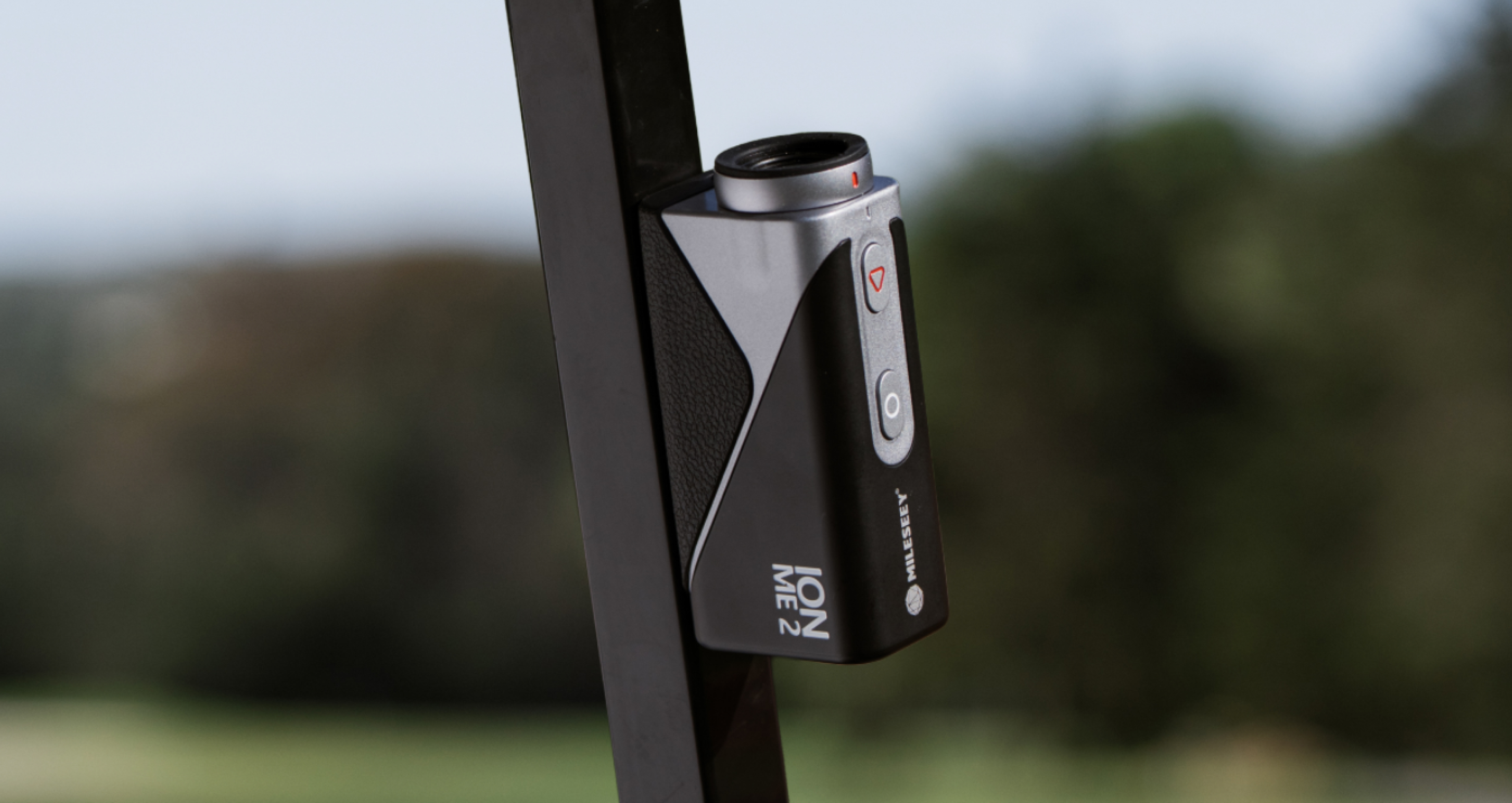
To hold a golf rangefinder steady, create four points of control: both hands on the device, elbows connected to your body, a balanced lower body, and a slow exhale during measurement. The goal is not to freeze the crosshair. It is to make its movement small and predictable enough to capture the intended target.
The Four-Point Stability Routine
1. Build a two-hand grip
Place the device in your dominant hand and use the other hand to support the front or underside without covering the lens. Keep pressure firm but not rigid. Excess tension often increases tremor.
2. Connect your elbows
Bring one or both elbows lightly toward your ribs. If a cart roof post, bag top, bench, or stable rail is available and safe, use it as an additional support point.
3. Balance from the ground
Stand with feet about shoulder width apart, knees unlocked, and weight centered. Avoid measuring while walking, leaning around the cart, or standing on an unstable slope if you can reposition safely.
4. Measure on a slow exhale
Do not hold your breath aggressively. Inhale normally, begin a slow exhale, and press the measure button during the quiet middle of that exhale.
Diagnose the Movement You See
| Viewfinder pattern | Likely cause | Adjustment |
|---|---|---|
| Fast small shake | Grip tension | Reduce squeeze and support with second hand |
| Large drifting circle | Unsupported elbows or body sway | Tuck elbows and widen stance |
| Jump when pressing | Button jab | Preload the button gently, then finish the press |
| Target looks sharp but will not lock | Background or target contrast | Sweep across the flag and repeat |
The Sweep Is Better Than the Statue
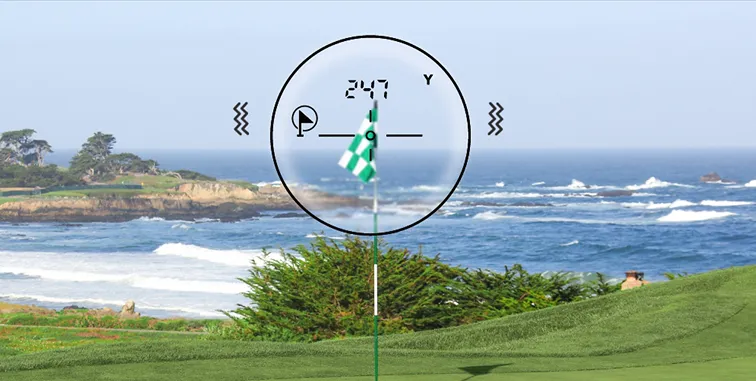
Trying to hold the crosshair perfectly still can make the grip tense. Instead, start on a larger nearby surface and move slowly across the flag. A controlled sweep gives the targeting system multiple returns and is often more repeatable than a desperate fixed hold.
Editorial simulation: the 170-yard flag
Attempt A: One-handed grip, locked knees, breath held, hard button press. The crosshair jumps between flag and trees.
Attempt B: Two hands, elbows on ribs, soft knees, slow exhale, gentle sweep. The target still moves, but it crosses the center predictably and produces two similar readings.
A Five-Minute Practice Drill
- Choose a safe fixed target 80–150 yards away.
- Take five one-handed readings and record only whether they repeat closely.
- Take five readings with the four-point routine.
- Repeat with a slow sweep across a narrow target.
- Keep the method that gives the tightest repeatability, not the fastest single reading.
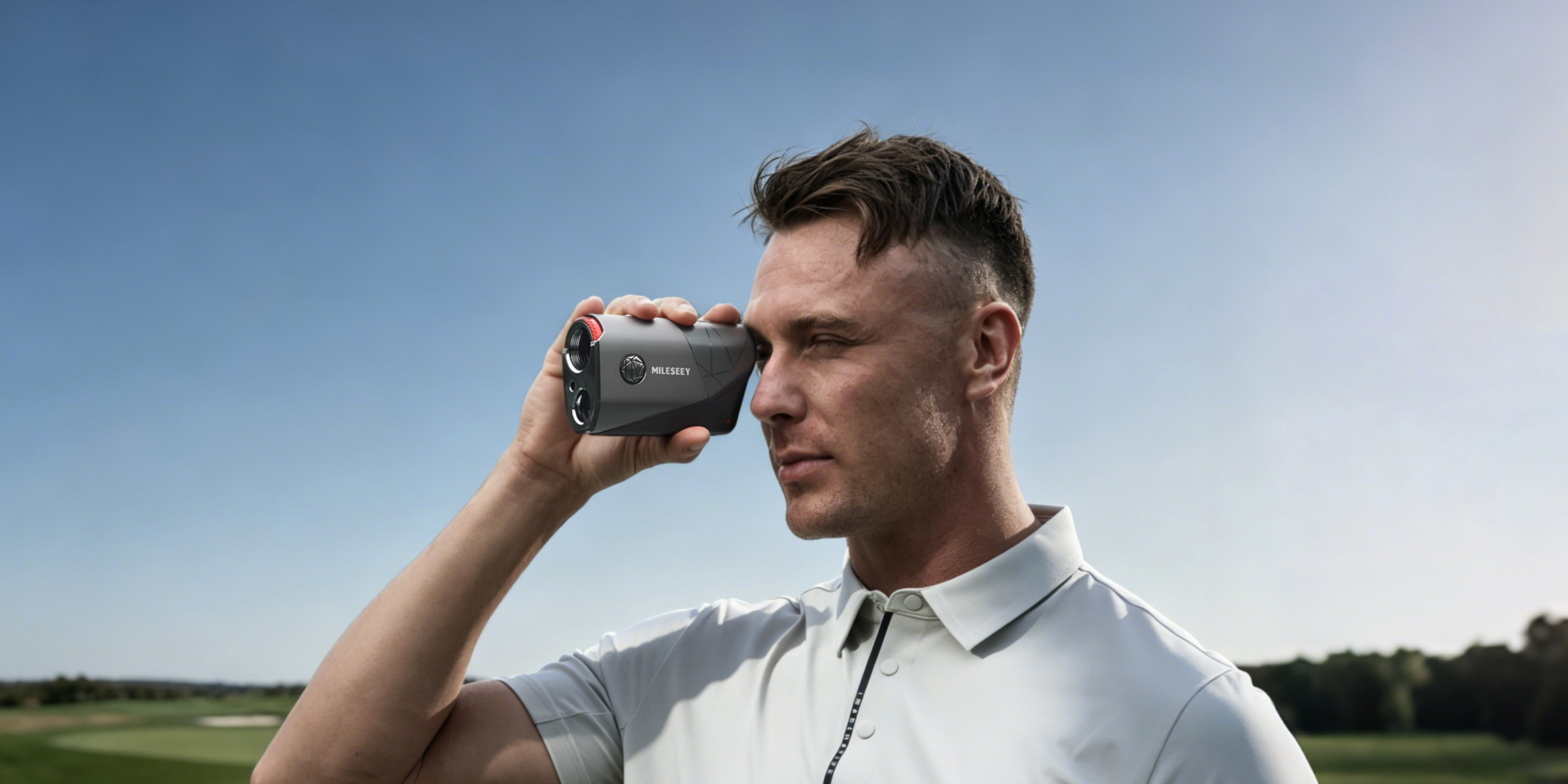
Higher magnification can make small targets easier to see, but it also makes apparent movement look larger. A golf laser rangefinder such as the GenePro S1 uses high-magnification optics and advanced targeting features. MyGolfSpy’s independent review scored it 9.6 overall and praised its wide, clear optics while noting that it was among the heavier devices tested. Read the independent review.
When This Advice Does Not Apply
If tremor, pain, weakness, vision, or balance makes handheld use unsafe or frustrating, do not force the standard stance. Use a stable support, choose a larger display or GPS format, ask a playing partner for permitted distance information, or discuss appropriate adaptations with a qualified professional.
Return to the rangefinder essentials pillar, then combine stability with the target ladder and a faster carry position.
When grip and visibility are priorities, compare the optics and form factors across the golf laser rangefinder collection.