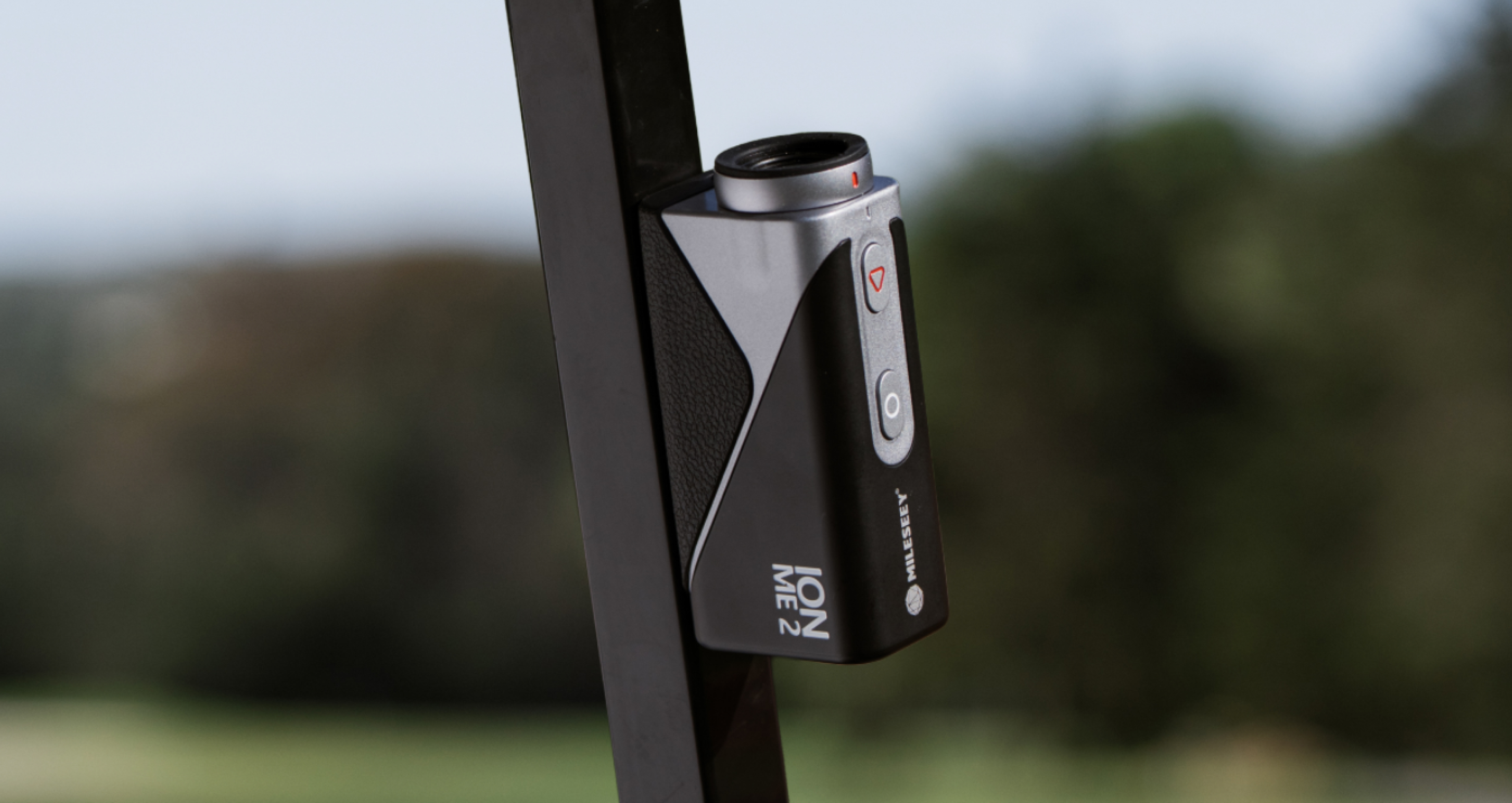
A laser golf rangefinder works by sending a low-power light pulse toward a target, detecting the reflected signal, and converting the round-trip travel time into distance. The process is fast, but the displayed number is only as useful as the target the device actually measured.
That is why two readings can differ even when the electronics are working correctly: the beam may have returned from the flag, the trees behind it, the bunker face, or another reflective object inside the aiming area.
The Four-Step Measurement Chain
Step 1: You select a target
The crosshair tells the device where you intend to measure, but it is not a guarantee that every part of the beam reaches only that object. Small flags, background clutter, hand movement, rain, and low contrast all affect the return signal.
Step 2: The device sends and receives light
The rangefinder emits a pulse and listens for reflected energy. A closer, larger, or more reflective surface may produce a stronger return than a narrow flagstick. Pin-seeking algorithms are designed to prioritize the nearer target within a mixed return, but good aim still matters.
Step 3: Time becomes line-of-sight distance
The device uses the light’s round trip to calculate the straight-line distance between you and the measured surface. This is not automatically the same as horizontal distance or the club distance you should play.
Step 4: Optional calculations add context
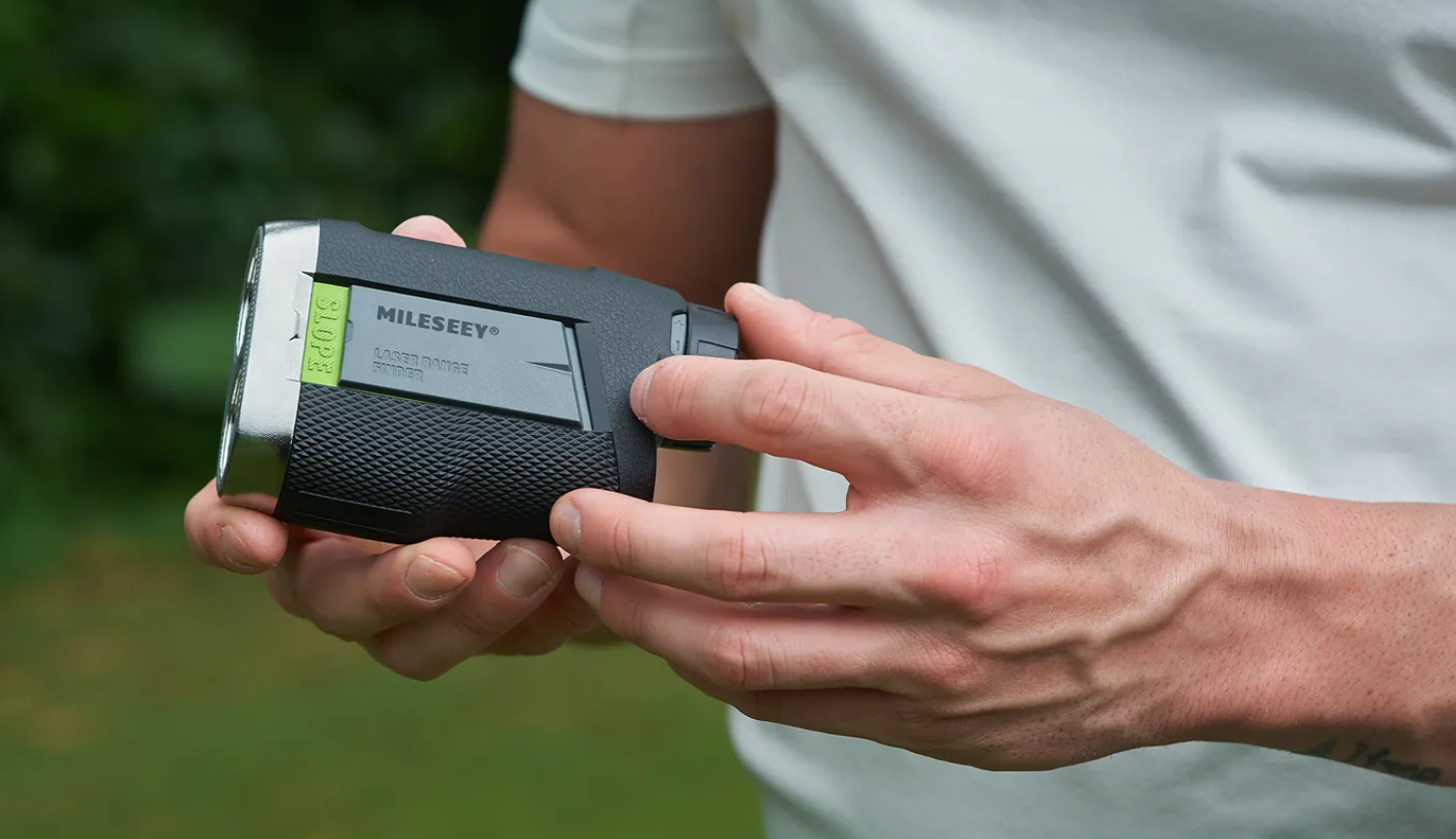
A slope-capable model can use the measured angle to estimate a plays-like distance. Some devices add environmental inputs. These are decision aids, not promises about ball flight, and restricted functions must be disabled when the rules require it.
Why the Number Sometimes Changes
| Cause | What happens | What to do |
|---|---|---|
| Background target | Trees return a longer number than the flag | Sweep slowly across the flag and repeat |
| Hand movement | The aiming area crosses several objects | Support both hands or an elbow |
| Rain or fog | Airborne water scatters the return | Use weather mode if available and verify |
| Different target points | Flag, cup, ground, and green edge are not identical | Name the target before measuring |
Editorial simulation: 147, 166, 148
You take three readings from the same position: 147 yards, 166 yards, and 148 yards. The two close readings likely describe the intended target; the isolated longer result likely came from the background. The right response is not to average all three. Re-aim, stabilize, and confirm the near-target pattern.
What Slope-Adjusted Distance Means
Line-of-sight distance answers “how far is the target?” Slope-adjusted distance estimates “how far might this shot play because it is uphill or downhill?” The second number can help during practice, but it still cannot know your launch, spin, wind exposure, lie, or exact carry pattern.
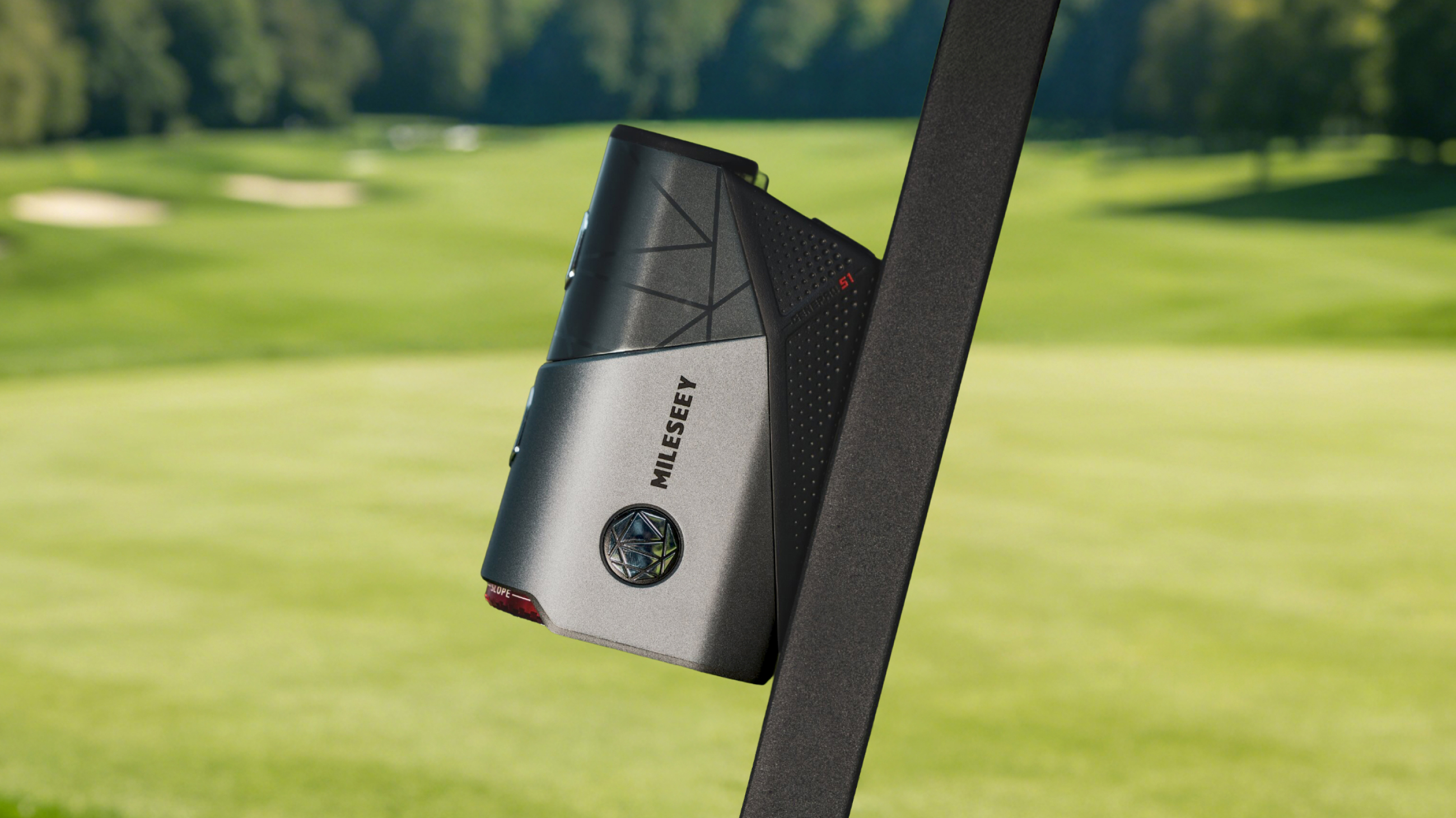
A rangefinder with angle compensation such as the GenePro S1 adds slope and environmental features. Plugged In Golf’s independent review described its PinPoint Green feature as a genuinely new contribution while cautioning that the practical value of AI features depends on the golfer and setting. Read the review.
A Reliability Check Before You Trust the Reading
- Name the object you are measuring.
- Brace the device and focus the eyepiece.
- Take two readings when the target has clutter behind it.
- Reject an isolated number that clearly matches the background.
- Use the distance with your carry chart and risk plan.
When This Explanation Does Not Apply
GPS-only devices do not measure a reflected laser pulse; they estimate your position relative to mapped points. A hybrid can show both laser and GPS distances, so small differences do not automatically indicate a fault. The two systems may be answering slightly different questions.
Start with the pillar guide, what a golf rangefinder is and what it can do. Then learn where to aim on a cluttered hole and how to stabilize the view.
To compare device formats after you understand the measurement chain, browse laser rangefinders for golf.