A 4 hybrid commonly fills the distance between a fairway wood and mid-irons, but there is no dependable universal yardage. Loft, shaft length, speed, strike, launch, and turf interaction can make one golfer’s 4 hybrid overlap a 4-iron while another’s behaves like a 5-wood. A golf laser rangefinder can measure the landing area; the right club is the one whose carry and stopping window fit it.
Use an average only to start the test. Make the bag decision from five personal outputs:
- median carry;
- safe carry;
- normal rollout;
- peak-height and landing pattern;
- dispersion from the lies you actually face.
How Far Should a 4 Hybrid Go?
For many recreational golfers, a 4 hybrid may occupy a broad 145–200-yard carry window. That is an editorial starting band, not a population average or performance promise. Some players will sit outside it.
The more useful comparison is with the clubs next to it:
| Club type | Common flight tendency | Typical strength | Typical trade-off |
|---|---|---|---|
| 4-iron | Lower, more penetrating | Control for a strong iron striker | Harder to launch from imperfect lies |
| 4 hybrid | Mid-high with moderate sole width | Versatility from fairway and light rough | Can overlap a wood or turn left for some swings |
| 5-wood | Higher, often longer shaft | Speed and carry from fairway or tee | More difficult from thicker rough; may roll or curve more |
| 7-wood | High launch and steep landing | Holding greens from long range | May be affected more by wind or overlap a hybrid |
These are design tendencies, not guarantees. Test the actual models, lofts, shafts, and lies.
First establish the rest of your bag with the golf club distance chart method. A 4 hybrid has no useful “correct” distance in isolation; it must fill the space between your longest reliable iron and next wood.
What Controls 4 Hybrid Distance?
Loft is only the starting point
Two 4 hybrids can have different lofts, face construction, center of gravity, and shaft length. A printed club number does not standardize launch.
Ball speed and strike location
Center contact usually produces the most predictable speed. Heel, toe, low-face, and high-face strikes alter distance and curvature. A hybrid that is five yards longer on perfect strikes but 15 yards less stable on ordinary ones may be the worse course club.
Launch, spin, and landing angle
Carry alone does not explain whether the ball can hold a green. A lower shot may finish farther through rollout; a higher shot may land shorter but stop sooner.
Lie and turf
The wider sole and compact head can help many golfers from light rough, but thick grass can close the face or slow the club. A fairway wood’s larger head and longer shaft may be less comfortable in the same lie. Test both.
Conditions
Wind, temperature, elevation, and turf firmness change the result. Trackman’s guidance separates carry from total because the first landing and final position answer different course-management questions.
4 Hybrid vs 4-Iron, 5-Wood, and 7-Wood
Do not choose the winner from a longest-shot contest. Use a replacement matrix.
Choose a 4 hybrid over a 4-iron when…
- the hybrid launches more consistently;
- your 4-iron and 5-iron carry windows overlap;
- light-rough performance matters;
- the hybrid produces a playable landing angle without a wider miss.
Keep the 4-iron when it offers more predictable direction, a useful low flight, and enough carry. Strong iron strikers do not need to replace it merely because hybrids are easier for many golfers.
Choose a 4 hybrid over a 5-wood when…
- you need a shorter, more controllable club;
- the 5-wood overlaps your 3-wood;
- the hybrid performs better from rough;
- the hybrid fills the required carry gap without excessive rollout.
Keep the 5-wood when its added speed, height, and carry solve a real course problem without creating a duplicate.
Choose a 4 hybrid over a 7-wood when…
- the hybrid is more predictable in wind;
- you prefer a shorter shaft and compact profile;
- rough versatility outweighs the 7-wood’s height;
- the hybrid’s landing window still holds the greens you attack.
Keep the 7-wood when its higher flight and steeper landing materially improve long approaches.
The Three-Lie Field Test
A top-of-bag club must work outside a perfect launch-monitor lie.
Lie 1: Fairway
Hit 8–10 shots and record median carry, safe carry, rollout, and left-right pattern. This is the clean baseline.
Lie 2: Light rough
Hit a smaller sample from representative grass. Note whether the face closes, launch changes, or carry becomes unpredictable. Do not compare only the best result.
Lie 3: Tee
Test the club as a placement option on narrow par 4s. Compare its playable total distance with the tee-shot framework in the average driver distance guide.
The best option is the one that fills the most valuable job with the smallest unacceptable miss—not necessarily the longest.
Illustrative Bag Decision
This example is a model, not a first-party product test.
A golfer records:
| Club | Median carry | Normal total | Typical flight | Main miss |
|---|---|---|---|---|
| 4-iron | 169 yd | 178 yd | Low-mid | Short-right |
| 4 hybrid | 181 yd | 191 yd | Mid-high | Left |
| 7-wood | 186 yd | 194 yd | High | High-right |
| 5-wood | 197 yd | 211 yd | Mid-high | Wide both ways |
The 4 hybrid and 7-wood overlap. The choice should come from the course:
- If long approaches must stop on small greens, the 7-wood’s landing pattern may be more valuable.
- If light rough and wind are frequent, the hybrid may be more versatile.
- If both are needed rarely, carrying both may waste a slot that could close a wedge gap.
The golf club distance calculator helps turn each sample into comparable carry windows.
Use Course Geometry, Not Just a Flag Number
For a 182-yard approach, measure or identify:
- front edge;
- forced carry;
- pin distance;
- back edge;
- safe bailout;
- likely rollout.
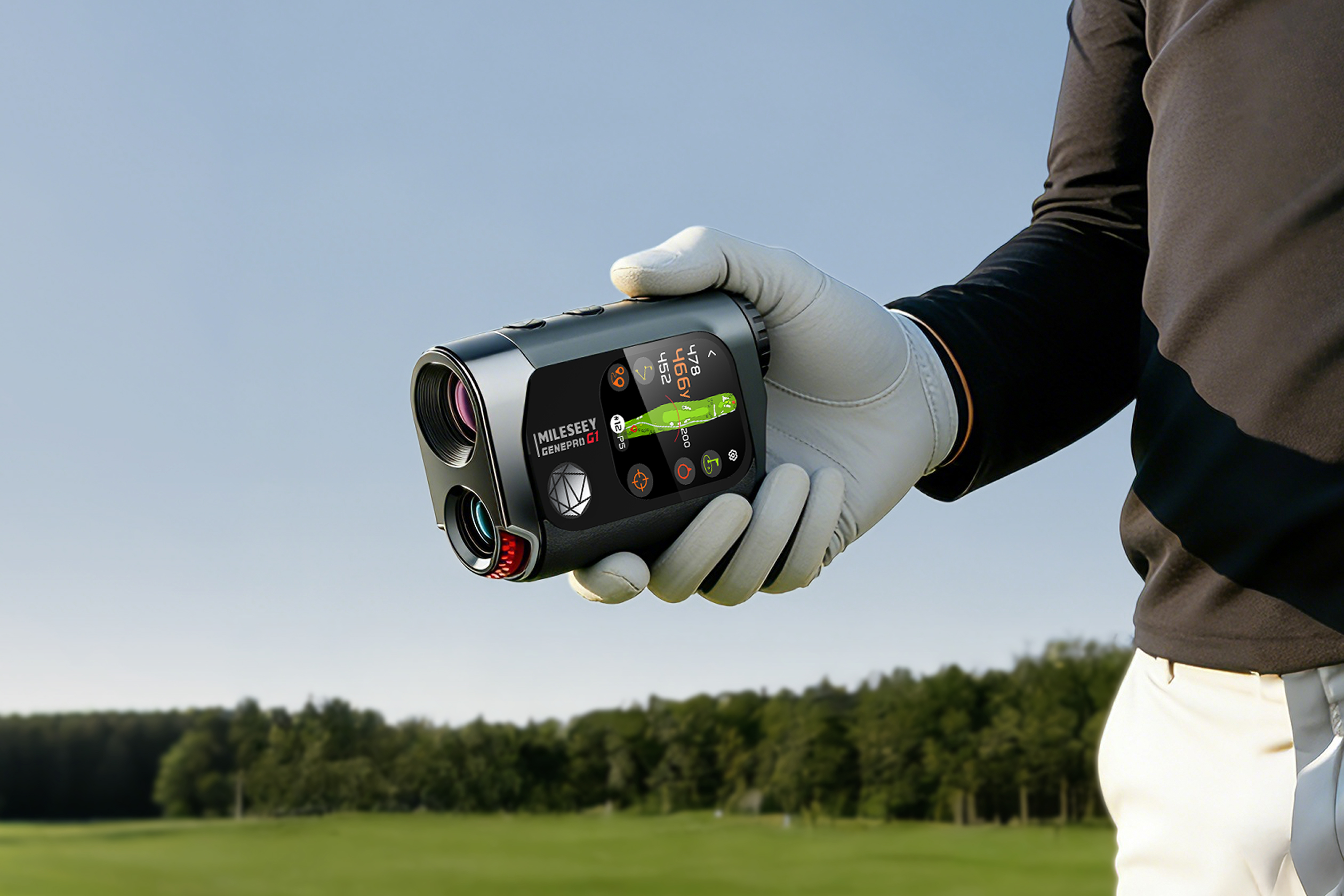
A laser-plus-map device can separate exact target distance from hole context. The MILESEEY GenePro G1 combines those functions; Golf Monthly’s independent test called it one of the best laser/GPS combinations the reviewer had used and praised the bright AMOLED map and integrated distance context, while noting occasional screen lag and unreliable automatic hole changes (read the review). The balanced lesson is that context helps the club decision, but a feature-rich device still has trade-offs.
What Usually Goes Wrong
Buying by average distance alone
Two clubs can share a median and perform differently in height, rollout, lies, and dispersion.
Testing only from a mat
The hybrid’s value often appears in imperfect lies. Include turf.
Comparing mismatched lofts
A strong 4 hybrid and weak 5-wood may be closer than the labels imply. Record actual lofts.
Keeping a club because of one spectacular shot
Top-of-bag clubs produce memorable highs. Select from the normal window and common miss.
Ignoring the clubs on both sides
Replacing a 4-iron can create a new gap to the 5-iron. Adding a 7-wood can duplicate the hybrid. Test the sequence, not one club.
When This Advice Does Not Apply
A self-run field test cannot replace professional fitting when launch, spin, lie angle, shaft fit, or impact pattern is unclear. Golfers with pain or major swing changes should wait for a stable motion.
Also, a 4 hybrid is not compulsory. If a 4-iron or 7-wood provides the required carry and miss pattern, use it. Bag composition should solve your course and swing, not match a template.
The Decision Card
Rate each candidate from your own test:
| Factor | 4-iron | 4 hybrid | 5-wood | 7-wood |
|---|---|---|---|---|
| Safe carry fills the gap | ||||
| Holds target landing window | ||||
| Fairway dispersion | ||||
| Light-rough reliability | ||||
| Tee-shot usefulness | ||||
| Common miss is acceptable |
Then compare the winner with your average 7-iron distance and gap. The correct 4 hybrid distance is not a target to chase; it is the carry window that completes the bag without creating another problem.