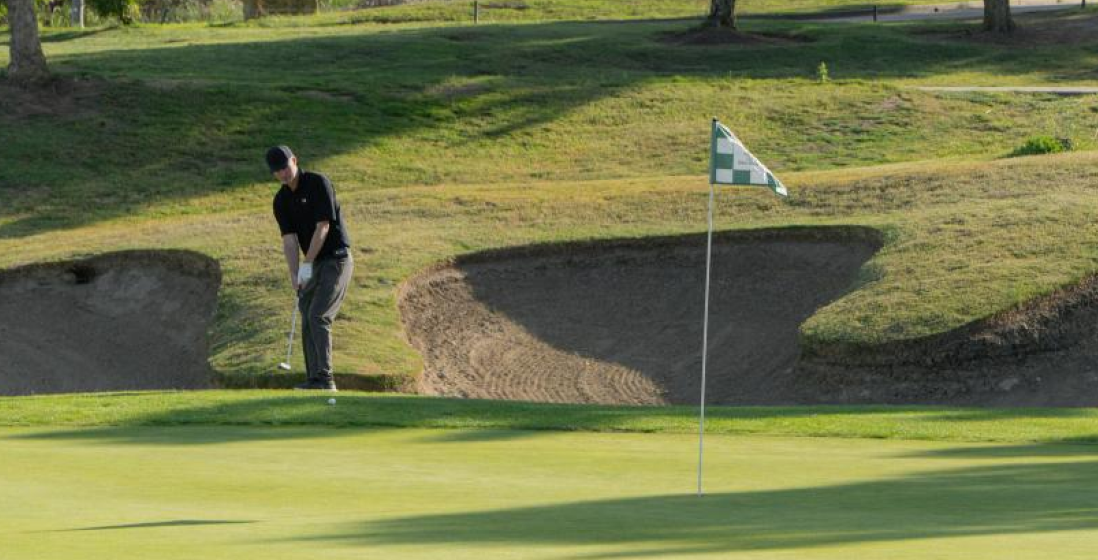
A golf cart is faster in a straight line, but it does not automatically create a faster round. On a compact course, four walkers can move directly to four balls. In two shared carts, the same group may drive to one ball, wait, cross to another, then repeat.
Our view: choose transportation by route friction, not top speed. Long transfers, heat, elevation, and fatigue can favor riding. Cart-path-only rules, scattered shots, and shared-cart backtracking can favor walking.
The Route Friction Matrix
|
Course condition |
Likely faster choice |
Why |
|---|---|---|
|
Compact, walkable, short green-to-tee transfers |
Walking |
Each player travels directly to a ball |
|
Long resort routing or major elevation changes |
Riding |
Vehicle speed matters between playing areas |
|
Cart-path-only with shots on both sides |
Walking or highly organized riding |
Repeated cross-fairway trips erase cart speed |
|
Extreme heat or players with mobility needs |
Riding |
Energy and safety are more important than theoretical pace |
|
Open course, single-rider carts |
Riding |
Players can move independently without shared-cart waits |
|
Busy course with groups ahead |
Neither changes the ceiling |
Traffic is the controlling bottleneck |
Ask the course before choosing
Confirm whether carts may leave the path, whether walking is allowed, how far the transfers are, and whether the course has steep or remote sections. A generic “cart is faster” answer ignores the most important variables.
How Shared Carts Create Hidden Delay
- Two players ride to Ball A.
- Player A gets yardage, chooses a club, and hits.
- The cart travels across or back to Ball B.
- Player B begins the same decision from zero.
The correction is simple: when safe, drop Player A with two or three likely clubs, then move to Ball B. Player A walks forward after the shot while Player B prepares. A shared cart becomes two independent workflows instead of one queue.
Walking Has Its Own Pace Risks
Carrying the wrong club
A player who leaves the bag 40 yards away, discovers a different lie, and walks back creates more delay than a cart would. Take a narrow club range and the tool needed for the next shot.
Long transitions
Some modern courses were designed around carts. A half-mile transfer between holes can turn a reasonable walking pace into an impossible schedule.
Fatigue late in the round
A 2025 controlled study of experienced golfers found greater physiological strain while walking and suggested riding can help preserve neuromuscular function. It did not establish that carts always create faster recreational rounds. Read the walking-versus-riding study. Use that evidence to manage fatigue, not to promise a scoring or timing benefit for every player.
The Best Choice May Be Mixed
A group can ride and still walk strategically. On cart-path-only holes, take several clubs and walk across once. Near the green, let one player drive the cart to the next staging point while the other carries the putter and wedge. On a long transfer, everyone rides; in a compact playing area, players spread safely.
Use the “one trip” rule
Before leaving the bag or cart, carry enough equipment to finish the decision without returning: likely clubs, towel, repair tool, and putter when appropriate.
Distance Tools for a Walking Workflow
If route efficiency is good but yardage lookup remains slow, compare compact golf rangefinders. For golfers who prefer mapped front-center-back context, the golf GPS lineup may fit better. The correct category depends on the decision you repeat most often.
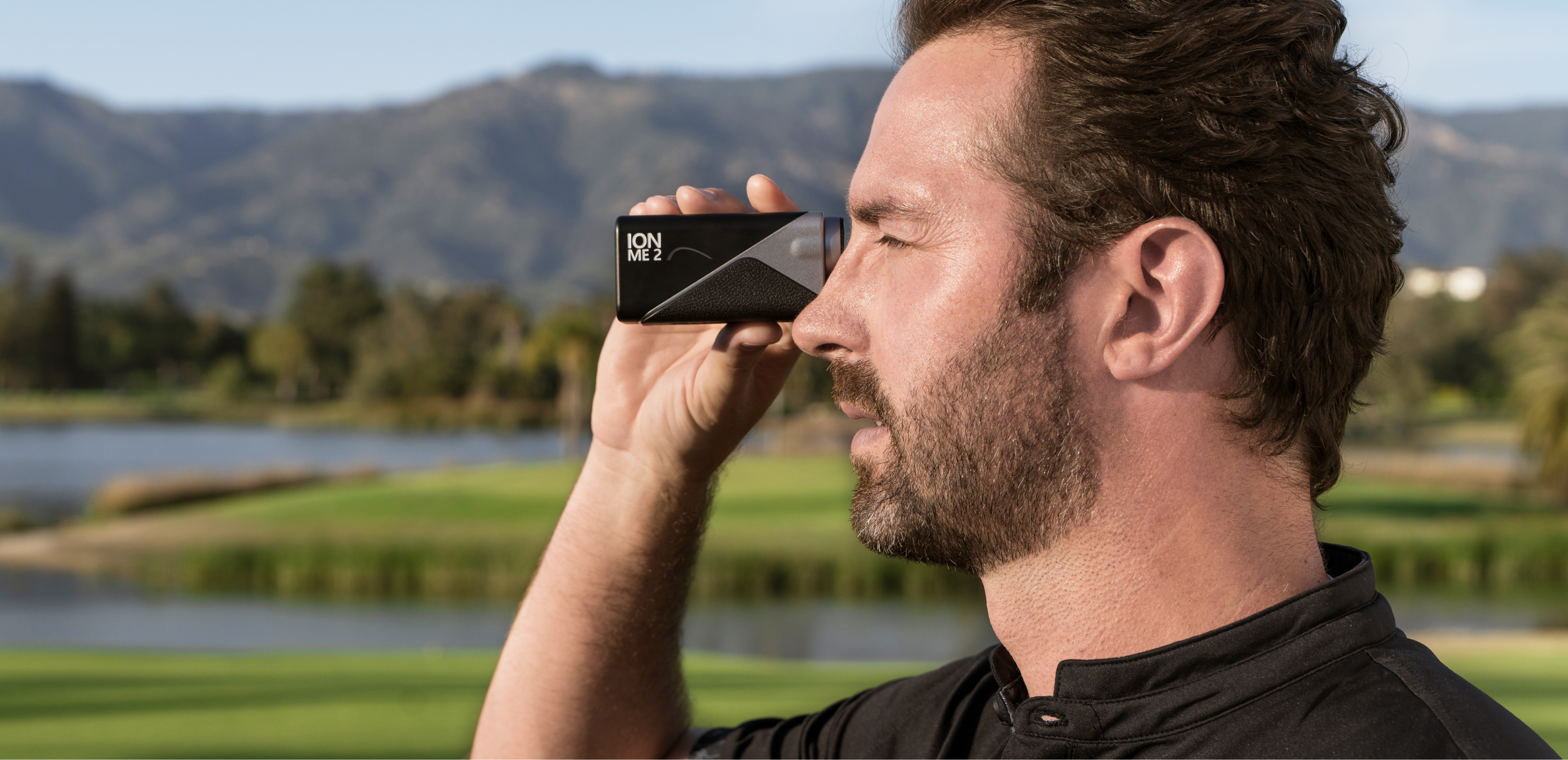
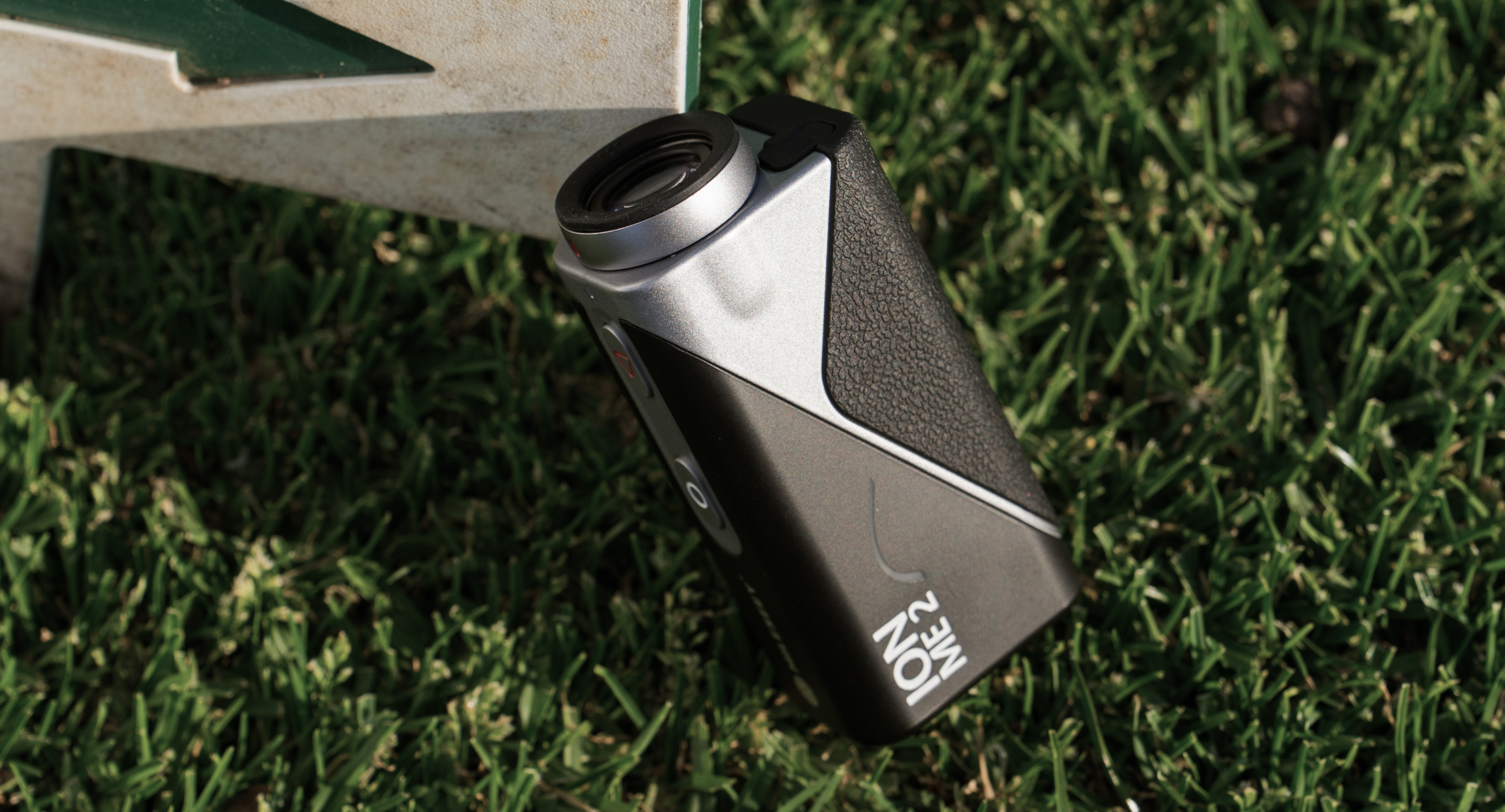
The MILESEEY IONME2 laser rangefinder is positioned as a 109-gram pocket-format model with one-hand operation and a magnetic clip in the current product database. In its independent test, Plugged In Golf described the IONME2 as pocket-sized while retaining high-end features, and said PinPoint Green can support pace when used correctly. It also noted that the price is not entry-level and the modes require correct use. For a walker, a small tool helps only if it is easy to retrieve and return every time.
Editorial Simulation: Cart-Path-Only Foursome
This is an editorial simulation, not a field test.
Four players share two carts. All four drives finish on the opposite side of the fairway from the path.
Option A: one club per trip
Each cart parks beside the path. Players cross, assess the lie, discover a club change, return, cross again, hit, and walk back. The carts repeat the sequence for the second balls.
Option B: convert the hole into a walking segment
Each player takes three likely clubs, a towel, and the distance tool. One player moves the cart toward the next staging point after both shots. The group makes one cross-fairway trip rather than several.
Decision: Option B is usually faster and requires less repeated walking. Riding remains useful for the long transfer, while walking handles the playing area.
When Pace Should Not Decide
- Heat, storms, health, injury, or accessibility makes riding the safer choice.
- The course requires carts or prohibits walking.
- A player enjoys walking and remains in position; a theoretical time saving is not a reason to remove that benefit.
- The course is backed up; neither choice can pass the traffic ceiling safely.
Choose in 30 Seconds
- Are green-to-tee transfers long? If yes, lean cart.
- Is cart-path-only likely? If yes, lean walking or use a mixed strategy.
- Can every player walk safely and comfortably? If no, choose cart.
- Will two players share each cart? Plan independent drop-offs.
- Is the course busy? Focus on readiness; transport will not remove the queue.
Use the complete pace-of-play guide for the framework. Build course-specific checkpoints with the pace-of-play calculator, compare the 18-hole time plan, and apply the ready-golf habits that remove idle transitions.