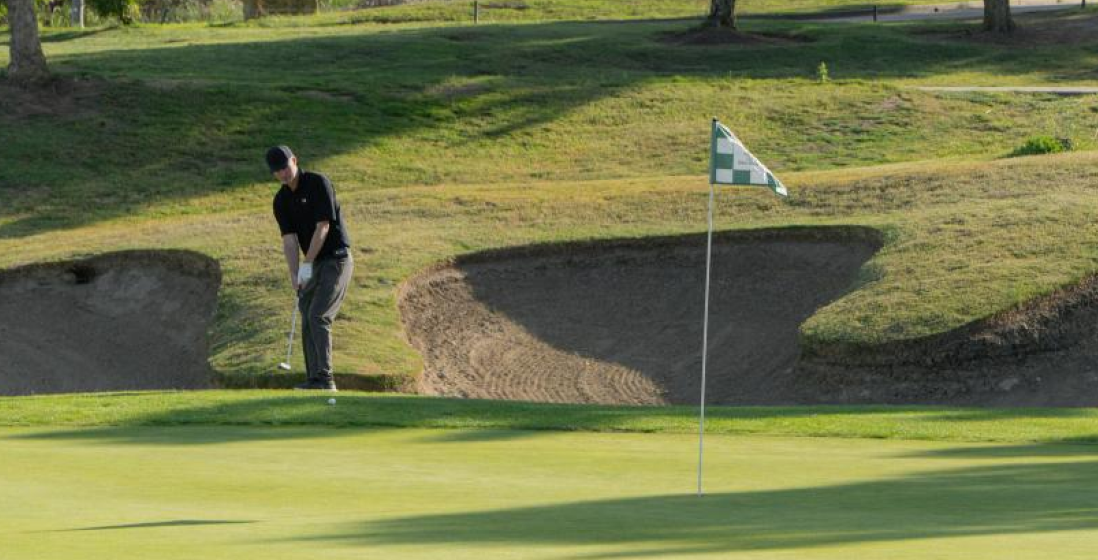
Ready golf means playing out of the traditional “farthest from the hole goes first” order when it is safe, responsible, and useful in stroke play. It is not permission to distract another player, hit into danger, or ignore a competition's pace policy.
The USGA recommends making a stroke in no more than 40 seconds once a player can play without interference or distraction—and usually more quickly. It also encourages safe ready golf in stroke play. See USGA Rule 5.6.
Our view: the largest savings come before the clock starts. If the player reaches the ball with the target, club range, and next action mostly decided, the actual routine can remain calm.
Ready Golf Is a Parallel System

Traditional serial play looks like this: everyone watches Player A prepare, then everyone travels to Player B, then Player B begins preparing. Ready golf keeps safety and attention while allowing non-interfering tasks to happen at the same time.
Safe parallel tasks
- Walking toward your ball while staying outside another player's danger zone
- Checking the lie, wind, and likely target while someone else prepares
- Carrying multiple clubs from a path or distant bag
- Reading a putt without moving in another player's line or field of view
- Recording the previous score after the first player tees off
Tasks that must stay serial
- Hitting when another player is in range
- Moving or talking in a way that distracts the player
- Playing out of turn to give someone an advantage
- Ignoring match-play order when it affects strategy
12 Ready-Golf Habits
1. Be ready before it is your turn
Glove on, club range narrowed, target identified, and ball position found. Preparation should not begin only after another player's ball stops.
2. Let the ready player hit
If the player farther away is delayed and another player can hit safely, allow the ready player to go in stroke play.
3. Hit a short tee shot first when the longer hitter must wait
A shorter hitter may be able to play while a longer hitter waits for the landing area to clear. Confirm safety and communicate.
4. Watch every ball
Assign a landmark before looking away. Four sets of eyes reduce searches and make a provisional decision easier.
5. Use the three-minute search window intelligently
The search time begins when the player or caddie starts looking. One player can search while others safely play known balls, then join the search.
6. Declare a provisional when appropriate
If a ball may be lost outside a penalty area or out of bounds, a properly declared provisional can avoid the walk back. Apply the Rules correctly; a casual extra ball is not automatically a provisional.
7. Take three likely clubs
When the cart or bag is away from the ball, carry the expected club plus a reasonable longer and shorter alternative.
8. Use one distance workflow
Measure or map, choose, and return the device. Do not compare three screens unless the decision genuinely needs three kinds of information.
9. Read putts while others prepare
Do the non-distracting portion of the read early. When it is your turn, confirm and use the normal routine.
10. Putt out when safe and helpful
A short continuous finish can save marking, lifting, replacing, and re-reading, but only when it does not stand on another line or distract another stroke.
11. Leave the green promptly
Collect clubs, repair marks, and move to the next tee. Discuss scores away from the completed hole.
12. Recover position over three holes
If a gap opens, do not sprint through the next swing. Save a few minutes across three holes by applying every transition habit consistently.
Distance Tools: Faster Only When the Routine Is Short
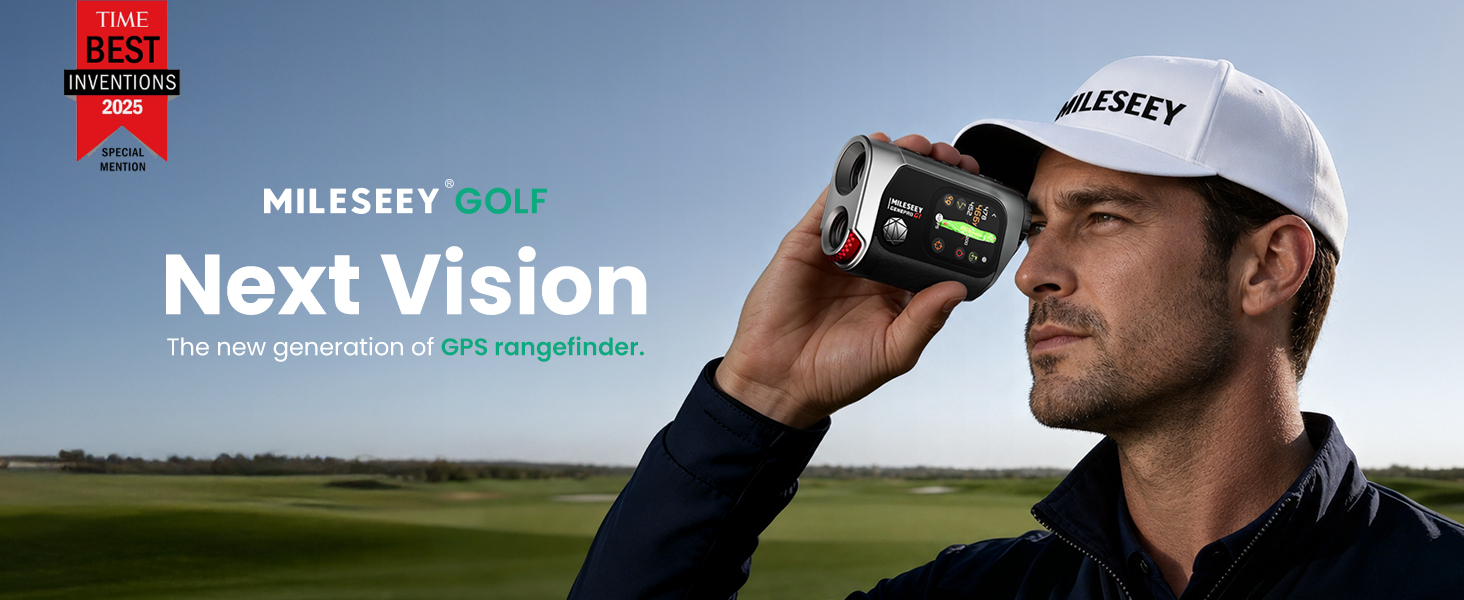
When the recurring delay is exact target selection, compare the golf rangefinder collection. When the decision is front-center-back distance or hole layout, use the golf GPS collection. The USGA notes that electronic distance-measuring devices can support pace when allowed, but a Local Rule may prohibit them in a competition.
The MILESEEY GenePro G1 hybrid rangefinder combines laser measurement with GPS maps and front-center-back context according to the current product database. In an independent review, Plugged In Golf found the laser fast and accurate and described the all-course data package as difficult to beat; it also said scoring input and global shot tracking were less intuitive than dedicated tools. The pace lesson is clear: use the feature that answers the current shot, not every feature on every shot.
Editorial Simulation: One Hole Out of Position
This is an editorial simulation, not a field test.
A foursome finishes the sixth hole with an empty seventh fairway and the next group waiting behind. A lost ball and two cart returns created the gap.
Option A: shorten every pre-shot routine
Players feel hurried, skip target confirmation, and risk additional recovery shots.
Option B: use a three-hole recovery plan
On holes seven through nine, the group watches every ball, drops cart partners with clubs, lets the ready player hit, limits the search correctly, and scores at the next tee. Each player keeps the normal swing routine.
Expected result: Saving two to three minutes per hole can restore position by the turn. If the group ahead is also delayed, the foursome remains ready rather than pressing into it.
When Ready Golf Does Not Apply
- Match play: order can affect strategy. Players may agree to play out of turn, but should understand the consequences.
- Formal events: the committee's pace policy and timing procedure control.
- Unsafe positions: never hit while a player, worker, or group is in range.
- Potential distraction: stop moving and talking when another player begins the stroke routine.
- Accessibility needs: a pace system must accommodate players who need more time.
Use This on the Next Tee
- Agree that safe ready golf is in effect for stroke play.
- Identify who is ready, not only who is farthest away.
- Prepare target and club while others play.
- Watch every ball and use a provisional when appropriate.
- Move scores and discussion to the next tee.
- Track position behind the group ahead every three holes.
Set the full framework with the golf pace-of-play guide. For a standard round benchmark, see how long 18 holes takes. For team-event logistics, use the scramble pace workflow.
Ready golf should make the round feel smoother, not more anxious. Keep the deliberate swing; remove the empty minutes around it.