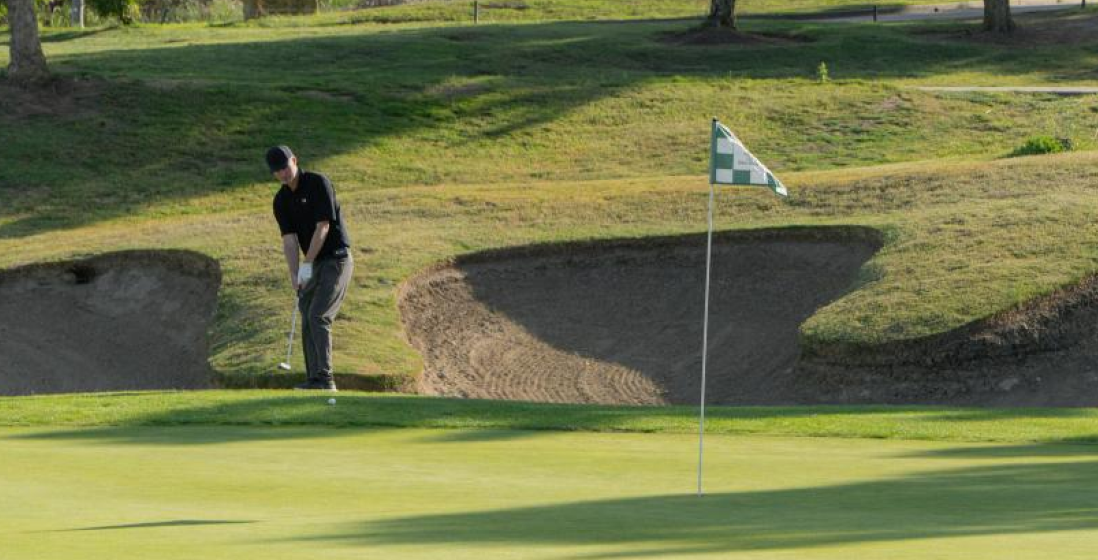
A four-person golf scramble often takes about four to five hours for 18 holes. A charity or corporate event can run longer when it includes a shotgun start, registration, sponsor activations, hole contests, catered stops, score collection, and awards.
The scramble format can be faster than every player holing out, but it is not automatically fast. Four players hit, the team evaluates several balls, everyone moves to one location, and the process repeats. Our view: the team that defines roles before the first tee saves more time than the team that tries to rush after falling behind.
Scramble Time: The Round Is Only Part of the Event
|
Event segment |
Planning allowance |
Typical risk |
|---|---|---|
|
Arrival, registration, and instructions |
30–60 minutes |
Late arrivals, bag assignment, rules questions |
|
Travel to shotgun hole |
10–25 minutes |
Remote starting holes and cart queues |
|
18-hole scramble |
4:00–5:00+ |
Field congestion, selection debates, contests |
|
Scoring and tie resolution |
20–45 minutes |
Missing cards and unclear handicaps |
|
Awards or meal |
45–90 minutes |
Program length and catering schedule |
For a full charity-golf day, a six- to eight-hour calendar block is often more realistic than counting the playing time alone.
Why Scrambles Slow Down

Everyone waits for every shot
In normal stroke play, players can prepare near separate balls. In a scramble, the team often gathers at one selected ball, making preparation serial unless roles are assigned.
Selection becomes a committee meeting
The longest debate is rarely between a perfect drive and a poor one. It is between two playable options with different angles. A simple rule prevents repeated discussion: choose the ball that gives the clearest next shot unless a materially shorter option changes the club.
Extra activities interrupt the rhythm
Closest-to-the-pin measurements, long-drive markers, photos, sponsor conversations, food, and beverage stops are part of the event experience. They need time in the plan rather than being treated as unexpected delays.
Shotgun starts create shared bottlenecks
Every group begins at once, but not every hole processes groups at the same speed. A short par 3 or reachable par 5 can stack the field.
The One-Ball Decision Loop
Use the same sequence after every set of shots:
- Watch: Every teammate tracks every ball and notes a landmark.
- Nominate: The first clear favorite is called before carts move.
- Verify: Check only the realistic alternative, not all four balls.
- Select: The captain decides within a short window.
- Move: Retrieve unused balls while the first player at the chosen spot prepares.
- Play: Use a fixed order that puts the ready player first.
Assign four rotating roles
- Spotter: tracks every ball and identifies landmarks.
- Navigator: moves the cart or walking route efficiently.
- Distance lead: confirms target and carry once.
- Score lead: records the result at the next tee or during travel.
Rotate roles every three holes so one player is not carrying the administrative load for the entire event.
Use One Distance Answer, Not Four
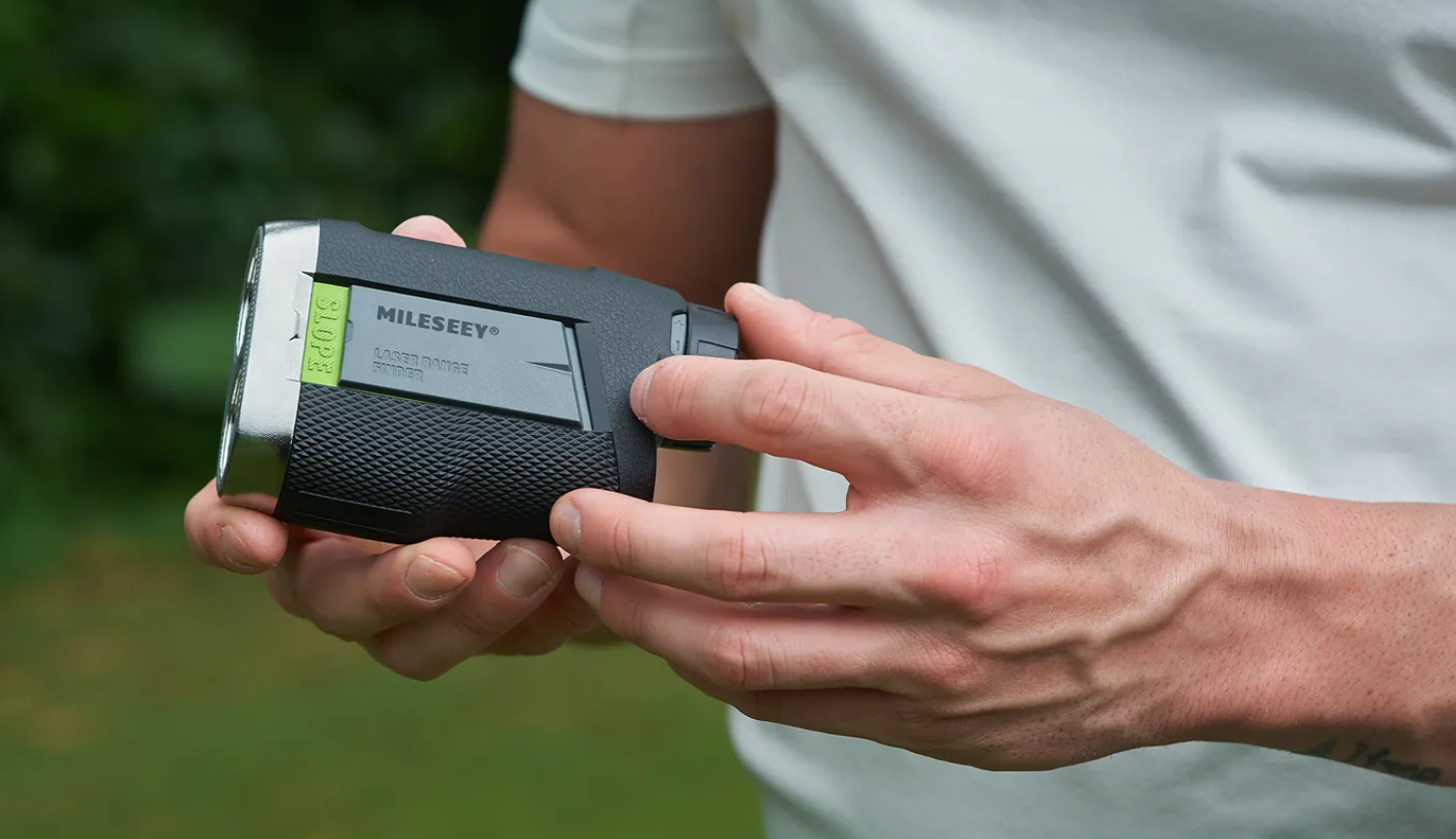
When every player independently paces, opens an app, or asks for yardage, the team multiplies decision time. A laser golf distance finder can support the distance lead: one measurement, one carry decision, four club choices.
For teams that want a focused laser, the MILESEEY PF260 Tour combines slope-switch functionality, flag-lock vibration, magnetic cart mounting, and rechargeable power with a CR2 backup according to the current official product database. In its independent review, National Club Golfer gave the PF260 Tour five stars and described it as simple to use and strong value. The same review noted lower brand familiarity as a drawback. In a scramble, simplicity matters more than showing every teammate a separate screen.
Editorial Simulation: A Five-Minute-Per-Hole Team
This is an editorial simulation, not a field test.
A team spends two minutes collecting drives, one minute debating the selection, one minute measuring and choosing clubs, and two minutes hitting approaches. Before travel and putting, six minutes have passed.
Option A: keep every decision democratic
All four players inspect every ball and discuss every option. The team feels inclusive but repeatedly falls a hole behind.
Option B: define the decision rule
The spotter names two candidates, the captain chooses based on angle and lie, the distance lead gives one number, and the first ready player hits. The team can save one to two minutes without reducing anyone's shots.
Expected result: Across 18 holes, small savings can recover 20 to 30 minutes. The format stays social because the roles remove logistics, not conversation.
When Faster Is Not the Right Goal
- A sponsor station or charitable activation is an intentional part of the event.
- Safety requires waiting for a landing area or adjacent hole to clear.
- The organizer publishes a pace policy or contest procedure that differs from casual play.
- Players need accessibility support or additional time.
- The field is stacked ahead; your team should remain ready without pressuring the group in front.
Scramble Checklist
- Confirm arrival, instructions, shotgun, scoring, and awards times.
- Choose a captain and four rotating roles.
- Use a fixed order for tee shots and approaches.
- Call likely balls before carts start moving.
- Bring multiple clubs from the cart.
- Measure the selected shot once for the team.
- Record scores away from the green.
For the broader timing framework, use the golf pace-of-play guide. Compare the normal 18-hole round-time plan, then apply the ready-golf preparation habits that fit the event's rules.