A phone app is not automatically the budget choice, and a handheld is not automatically the serious-golfer choice. The better option is the one that produces useful yardage with less total friction across a full round.
If you are still comparing all formats, begin with our complete golf GPS guide. This comparison assumes you want visual course information and are choosing between your phone and a dedicated handheld.
Quick comparison
| Factor | App | Handheld |
|---|---|---|
| Upfront cost | Often lower | Higher |
| Ongoing cost | May include subscription or premium features | Varies; some include maps and updates |
| Battery | Shared with calls, camera and travel | Dedicated to golf |
| Interruptions | Notifications and lock-screen friction | Single-purpose interface |
| Map size | Usually larger phone display | Smaller but purpose-built |
| Carry | No extra device if phone is already carried | Extra item, often easier to expose to play |
Compare the true cost
For an app, add any annual fee, power bank, mount and the value of premium maps over the period you expect to use it. For a handheld, include purchase price, case and replacement cable. Do not compare a one-year app price with a device expected to last several seasons.
Run a three-round friction audit
- For three rounds, record how many times you unlock, relaunch or reposition the app.
- Note phone battery before tee-off and after the round.
- Count interruptions from messages, calls or camera use.
- Record any shot where you skipped GPS because retrieval took too long.
- Compare that friction with the purchase cost of a dedicated device.
This converts a vague preference into a real workflow decision. It does not require pretending that every golfer values focus or convenience equally.
Offline use is not one question
Ask separately whether the device needs a phone during play, needs data during play, needs an account for setup, and needs an app for updates or score sync. A product can be independent on the course but still use a phone between rounds. See our golf GPS without a phone guide for a full test.
When an app wins
Choose an app when your phone comfortably lasts, you value a large display, you already carry it in an accessible pocket or mount, and the software's paid tier still costs less over your ownership period. Apps also make sense for occasional golfers who do not want another battery to maintain.
When a handheld wins
A handheld is stronger when you want one-purpose controls, consistent battery, fewer notifications and fast access without exposing your main phone to repeated handling. The handheld golf GPS buying guide explains what to inspect after choosing this path.
A relevant dedicated option
-9.png?w=1098&h=640)
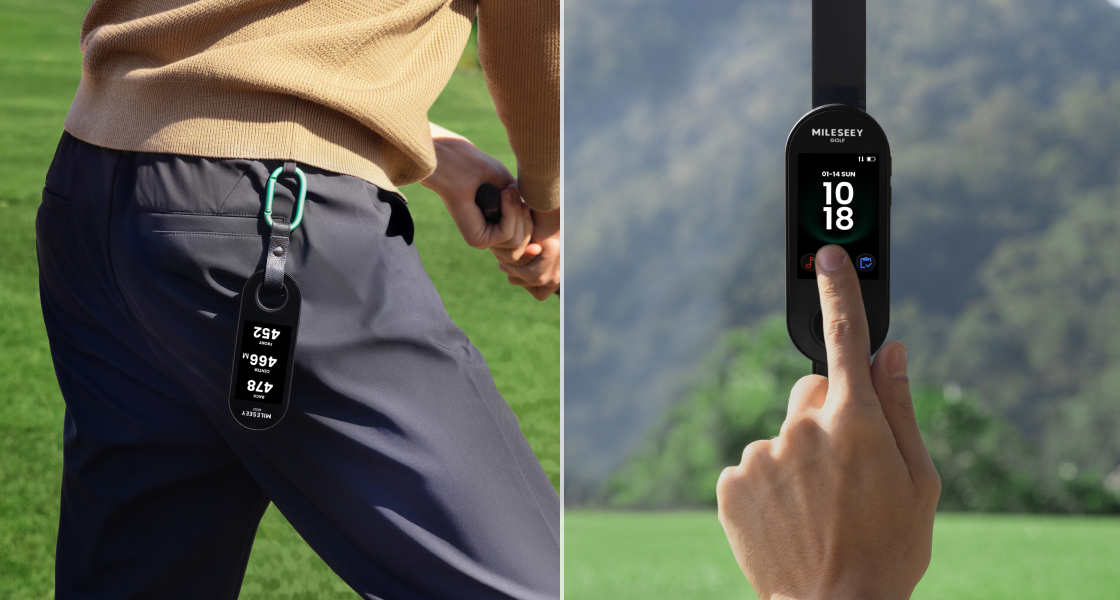
The golf GPS collection includes the MILESEEY GeneSonic Go Golf GPS Handheld. Official specifications list 43,000+ preloaded courses, a 3-inch touchscreen, IP67 protection, 110 g weight and about 15 hours of operation. It can operate on the course without using a phone for every yardage; app synchronization is a separate function.
When neither is ideal
A watch may be better if instant glanceability matters more than map size. A laser may be better if you mainly want exact distance to a visible flag. A cart display may be better when two riders need the same map. Device category should follow the question you ask most often.
Decision rule
Keep the app if it survives three real rounds without skipped checks, battery anxiety or subscription regret. Buy a handheld if reducing those recurring frictions is worth more to you than its total ownership cost.