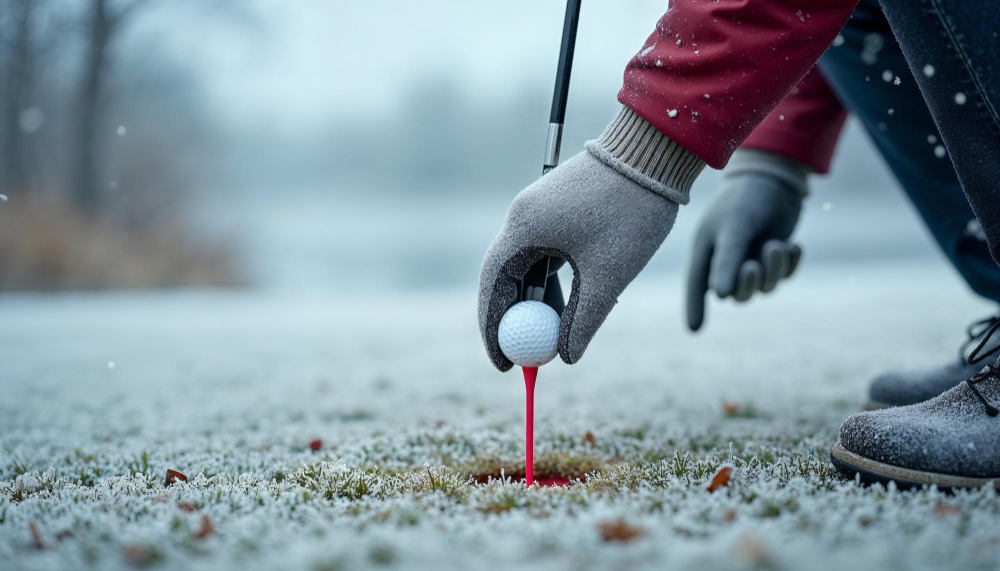
The best winter golf gloves are not automatically the warmest pair. They are the gloves that keep enough warmth and moisture control without making you squeeze harder, losing awareness of the clubface, or changing your setup.
For most golfers, the right answer comes from one of three systems:
- a normal playing glove plus insulated mitts between shots;
- paired thermal golf gloves worn while swinging;
- paired rain gloves for wet or persistently damp conditions.
Choose the system from the condition, then test it with your actual club grip. Buying from a temperature label alone ignores wind, rain, waiting time, and your tolerance.
Match the Glove System to the Condition
| Condition | Best starting system | Main advantage | Main trade-off |
|---|---|---|---|
| Dry, cool, active walking | Normal glove plus mitts between shots | Familiar feel during the swing | Hands cool while mitts are removed |
| Dry, cold, long waits | Paired thermal golf gloves | Continuous warmth on both hands | Thicker feel and possible grip tension |
| Wet or damp | Paired rain gloves | Grip improves as the pair works with moisture | Different texture and less bare-hand feel |
| Variable fall weather | Normal glove, rain pair, and mitts in a dry compartment | Flexible response | More items to organize |
| Extreme cold or poor hand control | Stop or change the activity | Protects safety and control | The round may need to end |
This decision sits inside the broader winter golf guide. Course access, lightning, footing, and hand function come before product choice.
Understand What Each System Actually Does
Normal glove plus mitts
This system preserves the familiar playing feel. Wear your usual glove for the shot and place both hands in insulated mitts while walking or waiting. It works best in dry conditions when you can remove and replace the mitts without exposing the playing glove to moisture.
The weakness is transition time. If pace is fast or a group is waiting, golfers may skip the mitts for several shots and gradually lose feel. Choose mitts that open easily and have a secure place on the bag or cart.
Paired thermal golf gloves
Thermal pairs keep both hands covered during the swing. They can be the better choice in steady dry cold or when there are long waits between shots. A golf-specific pair should allow the fingers to close naturally around the grip and should not create a thick seam in the lead palm.
The risk is hidden tension. When a glove makes the handle feel less defined, many players squeeze harder. That tension can reduce wrist movement and speed even though the hands feel warmer.
Paired rain gloves
Rain gloves solve a different problem: traction in moisture. They are generally worn on both hands, and their value grows when grips, air, and hands remain damp. The PGA of America's rain coaching guide prioritizes proper rain gear, dry towels, and rain gloves because a stable grip is central to control.
Do not assume a rain glove is the warmest cold-weather option. It may be the correct choice at 50~F in steady rain and the wrong choice at 35~F in dry wind. For the complete wet-round decision, see can you golf in the rain.
Run a Four-Part Fit Test Before Buying

Glove size labels vary. A useful fit test looks at material behavior on the club.
1. Palm test
Close the fastening and place the hand flat. There should be no large fold in the palm. Excess material can move independently of the hand and create the sensation that the grip is rotating.
2. Finger test
Push the fingertips gently into the ends. A small amount of space may be acceptable in an insulated design, but a loose fingertip makes it difficult to sense pressure. Bend and extend each finger; the seam should not cut across a joint.
3. Cuff test
Wear the jacket or mid layer you will use. The glove cuff and sleeve should overlap without creating a bulky ridge at the wrist. Make a putting stroke and a full backswing. If the cuff catches the sleeve, change the combination.
4. Handle-rotation test
Take your normal grip and have another person apply light twisting pressure to the clubhead, or gently rotate the handle yourself while keeping the hands still. Compare the winter glove with your normal glove.
- If the handle moves inside the glove, the fit or palm material is wrong.
- If the whole hand rotates because you are squeezing harder, the glove may be too thick.
- If the fingers cannot close consistently, check both size and seam placement.
The test is not a measure of maximum strength. It asks whether the glove transfers modest rotation without requiring extra tension.
Test Warmth and Control Separately
Warmth is easy to notice; control needs a deliberate test.
Indoor control test
Hit ten short putts, rehearse ten chips, and make five half swings. Record only three observations:
- Can you feel the grip position in the fingers?
- Does grip pressure stay normal?
- Can you remove and replace the glove without disrupting pace?
Outdoor condition test
On a practice day, compare the glove systems over 20每30 minutes. Keep the club, grip, and activity the same. Note whether warmth persists while waiting and whether the glove becomes slippery when damp.
Do not compare one system after walking quickly with another after standing still. Activity level changes the result.
Editorial Simulation: Three Choices on a Cold, Damp Morning
This scenario illustrates the decision process; it is not a product test.
Conditions: 39~F at the first tee, light mist, five-minute waits on several holes, and grips that become damp despite a towel.
Option A: normal glove plus mitts
Feel is excellent during the shot, but the playing glove repeatedly becomes damp. The mitts warm the hand but do not restore traction to the wet palm.
Option B: paired thermal gloves
Warmth is better, but the damp palm material feels less secure. The golfer responds by squeezing harder.
Option C: paired rain gloves plus mitts between shots
The rain pair addresses moisture during the swing, while mitts address waiting time. This creates more transitions, but each component has one clear job.
Option C is the stronger starting choice for this exact scenario. Change the mist to dry wind, and Option B or a normal glove plus mitts may become better. That is why ※best§ must include the condition.
Coordinate Gloves With the Rest of the Outfit
The handwear decision can fail when sleeves and layers are chosen separately. The cold weather golf attire guide explains how to create a mobile three-layer system.
Use these coordination checks:
- The sleeve should overlap the cuff without trapping wrist hinge.
- A rain shell should not drain water directly into the glove.
- Mitts should attach where they remain dry and can be reached with one hand.
- A towel and spare pair belong in the protected dry zone of the bag.
- Hand warmers should be used only according to their instructions and should not create excessive heat or direct skin exposure.
Care for Gloves During and After the Round
During play
Rotate gloves before they become saturated. Keep the spare pair in a sealed or waterproof compartment. Avoid placing a damp glove against a cold metal cart frame or an exposed bag surface.
After play
Air-dry gloves at room temperature according to the care label. Do not place them on intense direct heat, which can change material shape and feel. Reshape the fingers and palm while damp and store only when completely dry.
Mark rain, thermal, and normal gloves so the right pair is easy to find. Winter equipment fails most often through poor organization, not lack of ownership.
What Usually Goes Wrong
Buying the thickest pair
Maximum insulation can reduce grip definition. Choose the minimum thickness that preserves warmth and control in the expected condition.
Wearing only one winter glove
Many cold and wet systems are designed as pairs because the trail hand contributes control and warmth. Test the configuration as intended.
Waiting until the glove is soaked
Once the playing glove and grip are saturated, switching pairs solves only part of the problem. Protect towels, dry the handle, and rotate early.
Ignoring worn grips
A polished or damaged grip forces the glove to compensate for equipment that needs attention. Inspect and clean grips before blaming the glove.
When This Advice Does Not Apply
No glove makes lightning, ice, unsafe footing, or loss of hand control acceptable. Stop if fingers become numb, painful, or unable to manage the club safely. This article is a selection framework, not medical advice.
Some tournament or club rules may also restrict external aids or require particular dress standards. Confirm local requirements before play.
Winter Glove Buying Checklist
- Name the condition: dry cold, wet cold, wind, or long waits.
- Choose a system, not just one glove.
- Test palm folds, fingertips, cuff interaction, and handle rotation.
- Compare short-game feel as well as full swings.
- Pack a dry spare and protect it from the start.
- Inspect the club grips.
- Rehearse the glove-to-mitt transition before the first tee.
The right winter glove disappears from your attention. Your hands remain functional, the handle feels defined, and grip pressure stays normal. That is a more useful standard than warmth alone.
Frequently Asked Questions
Do you wear winter golf gloves on both hands?
Most thermal and rain golf gloves are designed as pairs. A normal playing glove plus mitts is different: the mitts are usually removed for the shot. Follow the product design and test both grip and warmth.
Are rain gloves good for cold weather?
They can be excellent in cold, wet conditions because they address traction. In dry cold, a thermal pair or a normal glove plus mitts may provide better warmth or feel.
Should winter golf gloves fit tighter than normal gloves?
They should fit securely without restricting circulation or finger movement. Because insulation adds thickness, judge fit by palm movement, fingertip control, and the handle-rotation test〞not by the printed size alone.