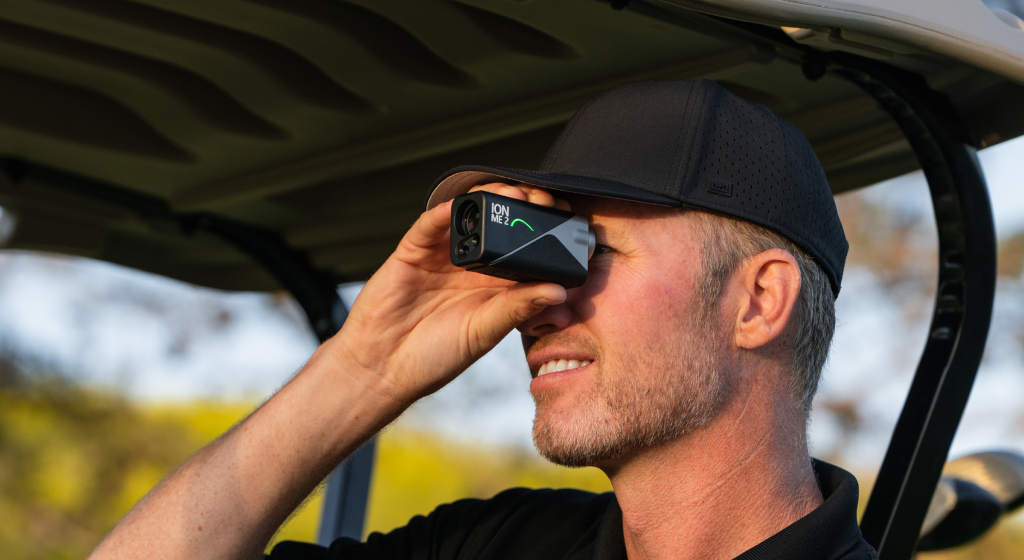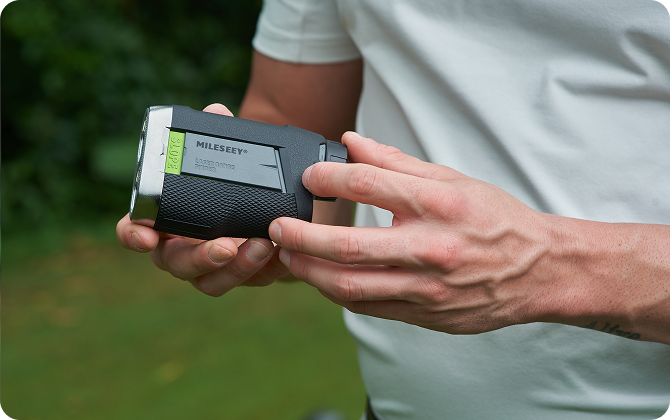
The best budget golf rangefinder is not simply the cheapest model. It should give you a repeatable distance to the target you actually use, confirm when it has acquired the flag, and make slope mode easy to control.
For golfers shopping the MILESEEY range under $200, our current value pick is the PF260 Tour. It combines an up-to-1,100-yard general measuring range, flag lock up to 350 yards, ±1-yard stated accuracy, 0.3-second measuring speed, an external slope switch, vibration feedback, a magnetic mount and a rechargeable CR2 power system. The current listed price was $169.99 when this guide was updated; check the product page for the latest price and availability.
Disclosure: MILESEEY makes the PF260 Tour. The specifications below come from the current product manual and support page. Maximum range describes favorable targets and conditions; practical flag-lock range is the more relevant number for most golf shots.
Quick verdict
|
Question
|
Answer
|
|---|---|
|
Best for
|
Golfers who want a straightforward laser rangefinder with slope, flag-lock vibration and a cart magnet for under $200
|
|
Key verified specifications
|
1,100 yd maximum range; 350 yd flag lock; ±1 yd; 0.3 s; 6× magnification; 7° field of view
|
|
Main trade-off
|
No GPS course maps, app connection or premium green-reading modes
|
|
Choose something else if
|
You need blind-shot course context, a full-hole map, advanced triangulation or stronger weather protection
|
What “best budget” should mean
A budget rangefinder should cover the decisions you make on most approach shots without making you pay for features you will rarely use. For many golfers, that means five essentials:
-
Repeatable distance readings. A stated accuracy of ±1 yard is sufficient for most recreational golfers, provided the device returns a stable number on the same target.
-
Useful flag-lock range. A large maximum range can describe buildings or reflective targets. Flag-lock range tells you more about the small target that matters on the course.
-
Clear lock confirmation. Vibration helps distinguish the flag from trees or other objects behind it.
-
Controllable slope mode. Slope-adjusted distance can help during practice and casual rounds. An obvious off state matters when competition rules prohibit its use.
-
Simple handling. Focus, buttons, power and storage should fit your normal round. Complexity has no value if it slows the shot routine.
Why the PF260 Tour is our budget pick
Core golf performance without GPS pricing
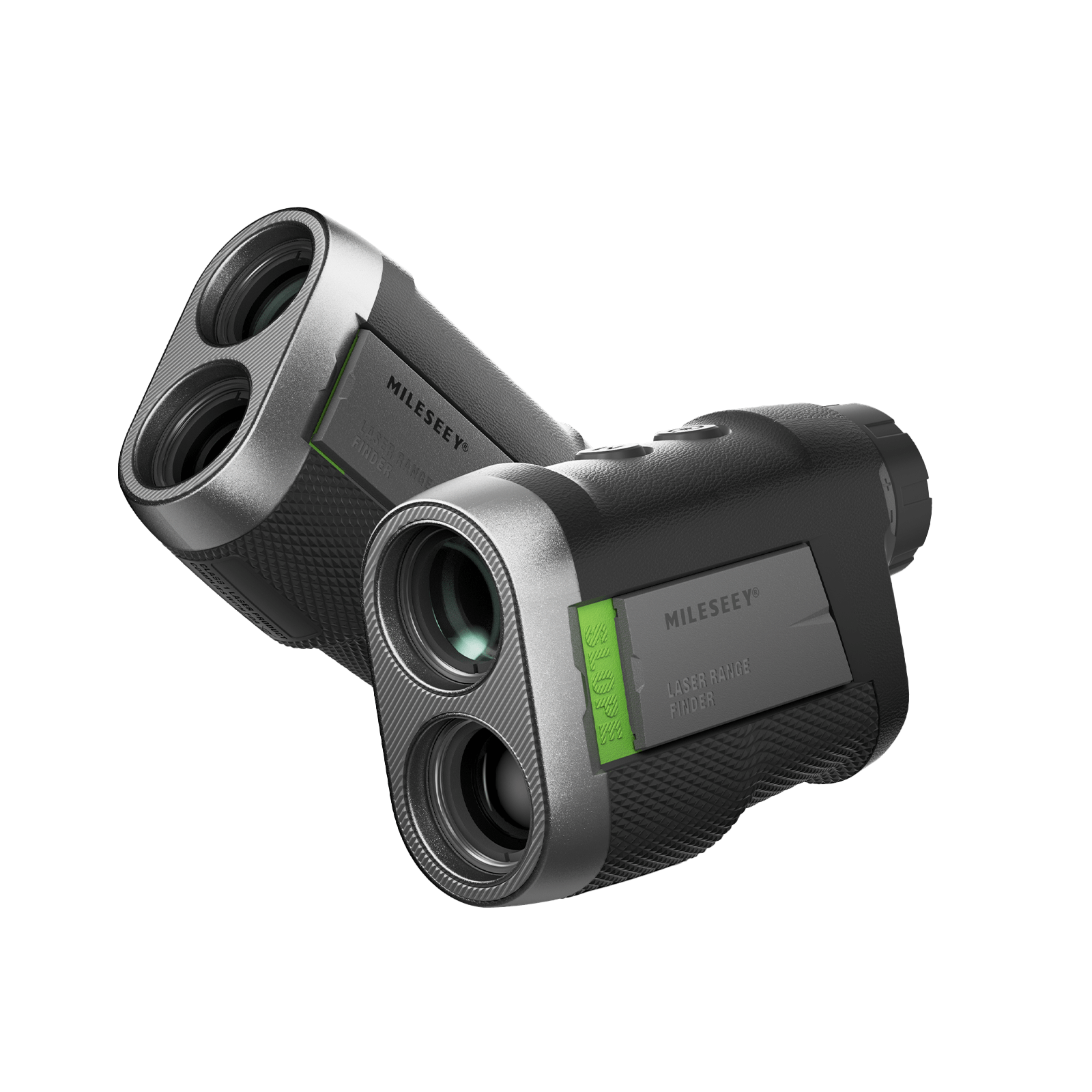
The PF260 Tour is a laser-only rangefinder. It measures a visible target rather than using a mapped course database. That keeps the workflow simple: aim, measure, confirm the flag and use the number. Its current specifications list an up-to-1,100-yard measuring range, 350-yard flag lock, ±1-yard accuracy and 0.3-second measuring speed.
Those figures do not guarantee the same result in every condition. Target size, reflectivity, angle, visibility, rain and fog can shorten practical range. The user manual specifically notes that weather and target surface affect measurement.
External slope control
The external slope switch lets you enable or disable compensated distance without searching through a menu. Slope mode can be useful when learning how elevation changes a shot. During a competition, turn off any prohibited function and check the event’s Local Rules. A slope switch does not make every use automatically legal; the function must be used in accordance with the rules that apply to the round.
Flag-lock vibration and scan behavior
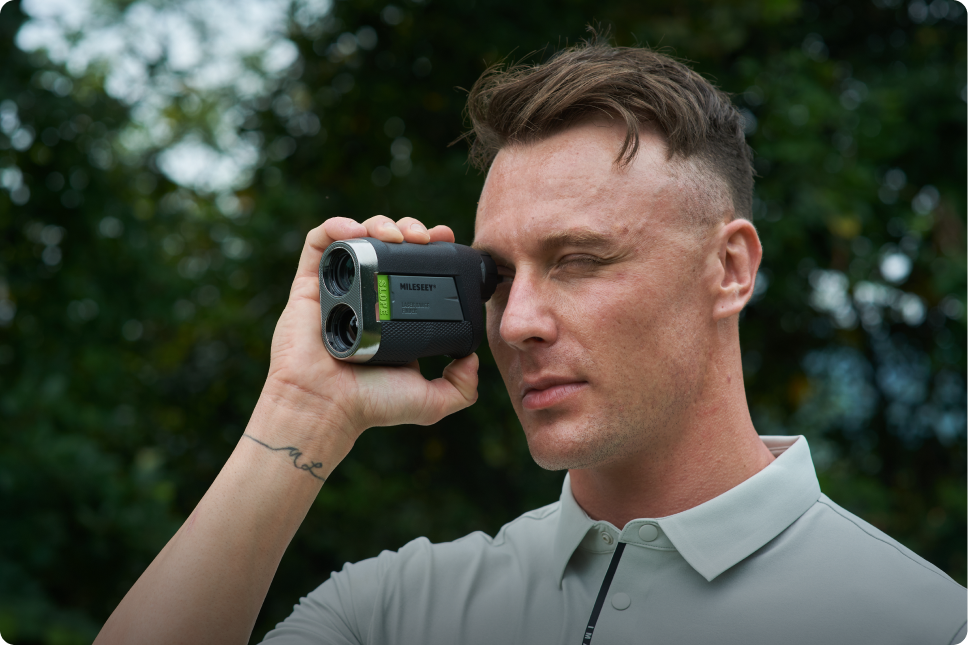
In Golf Pin-seek Mode, pressing and holding the measurement button starts a scan. When the device locks onto the flag, it vibrates and displays the measured distance. This confirmation is more useful than a headline maximum range when trees or other objects sit behind the pin.
Optics and on-course handling
The support specifications list 6× magnification and a 7° field of view. A built-in magnetic strip allows attachment to a compatible metal cart surface, while the 192 g body is substantial enough to hold steadily. Keep the magnet away from pacemakers, cards, watches and other magnet-sensitive devices.
Rechargeable CR2 power system
The PF260 Tour uses a rechargeable 3V CR2 battery and USB-C charging. The manual also recommends removing the battery during a long period of storage. Before a round, confirm that the battery indicator is healthy and carry out charging according to the manual.
What you give up at a budget price
A lower-priced laser can measure a visible target well, but it does not solve every course-management problem. The PF260 Tour does not provide front, center and back green distances, a full-hole map, blind-hazard locations or app-based shot tracking. It is rated IP54 rather than IP65, and its core interface is simpler than a premium OLED or touchscreen system.
If those differences matter to your game, read our budget vs premium rangefinder comparison. If they do not, paying more may add complexity without changing the number you need most often.
Who should choose a budget golf rangefinder?
-
New rangefinder users who want a simple laser workflow.
-
Recreational golfers who mainly need distance to a visible flag, bunker or lay-up point.
-
Cart golfers who value a magnetic mount and quick access.
-
Golfers who want slope for practice but an obvious way to turn it off.
-
Buyers who prefer spending on core ranging rather than GPS maps or app features.
Who should spend more?
Consider a premium laser or hybrid GPS rangefinder if you regularly play blind approaches, need green-depth and hazard context without line of sight, struggle to hold a small target, play frequently in poor visibility, or will genuinely use advanced measurement modes. Our golf rangefinder buyer’s guide explains how to choose by feature and budget.
Budget rangefinder buying checklist
-
Compare flag-lock range, not only maximum range.
-
Confirm the stated accuracy and whether readings repeat on the same target.
-
Check how slope is turned off and how the off state is shown.
-
Test the display and focus in bright and shaded conditions.
-
Decide whether you prefer rechargeable, replaceable or dual-power routines.
-
Check the current manual, warranty and support page.
-
Buy from the features you will use, not from an inflated specification count.
You can also browse the current golf rangefinder collection after deciding whether a budget laser, advanced laser or laser-plus-GPS hybrid fits your game.
Frequently asked questions
What is the best budget golf rangefinder in 2026?
For golfers choosing within the current MILESEEY lineup, the PF260 Tour is our budget pick under $200. It offers a 1,100-yard maximum measuring range, 350-yard flag lock, ±1-yard stated accuracy, 0.3-second measuring speed, slope control, vibration feedback and a magnetic mount. The right choice still depends on whether you need only laser distance or also want GPS course context.
Are cheap golf rangefinders worth it?
They can be, when their core measurements are repeatable and their flag-lock feedback is reliable. A budget model is less worthwhile if it has an unclear slope-off state, weak support, inconsistent readings or features that are not documented. Compare the manual and support page before buying.
Can I get a good golf rangefinder for under $200?
Yes. Under $200, expect core laser ranging, flag lock, vibration and often slope compensation. Do not assume you will also receive GPS maps, a touchscreen, app connectivity or advanced green-measurement modes.
Should a budget golf rangefinder have slope?
Slope is useful for practice and casual play because it provides an elevation-adjusted reference distance. For competition, disable prohibited functions and check the applicable Rules and Local Rules. An external switch makes the status easier to verify.
How much range do I need for golf?
For most golfers, practical flag-lock performance matters more than a very long maximum range. A 350-yard flag-lock specification already exceeds the distance of most approach shots, while a larger general range can help with bigger targets and course planning.
Is a budget laser better than a golf GPS?
A laser is better when you want the distance to a specific visible object. GPS is better when you want mapped front, center and back green distances or hazard information without direct line of sight. Choose the device type before comparing price.
Bottom line
The best budget golf rangefinder gives you a dependable number with minimal friction. Under $200, prioritize flag-lock performance, clear confirmation, slope control, readable optics and a power routine you can maintain. The PF260 Tour covers those core jobs without charging you for GPS maps or a touchscreen—making it a practical value choice for golfers who mainly need fast, visible-target distance.