-23.png?w=1024&h=560)
The best golf rangefinder in 2026 is not automatically the most expensive model or the one with the longest advertised range. It is the device that answers your most common on-course questions with the least friction.
For one golfer, that means a simple laser and a clear slope switch. For another, it means laser precision plus GPS context on the same screen. A cart golfer may care more about audible front-middle-back distances than a handheld viewfinder.
Start with the decision, not the product
Which problem are you trying to solve?
Choose the primary job before comparing specifications:
| Golfer need | Best device type | Why |
|---|---|---|
| Exact distance to a visible pin or hazard | Laser rangefinder | Direct target measurement |
| Front-middle-back and blind-hole context | GPS handheld, watch, or speaker | Course overview without line of sight |
| Both specific targets and hole context | Hybrid laser + GPS | Reduces device switching |
| Simple cart-based updates | GPS speaker or handheld | Information remains accessible away from the ball |
If one device type does not solve the primary problem, a longer specification list will not rescue it.
The six criteria that matter most
Target acquisition and confirmation
A maximum range is less important than stable readings on the targets golfers actually use. Test a clear flag, a flag with trees behind it, a bunker edge, and a lay-up point. Look for repeatability and understandable lock feedback.
Optics and display
The viewfinder must remain readable against bright sky and shaded foliage. Golfers with glasses should test focus adjustment and eye relief. A larger or brighter display can help, but it may add weight, complexity, and battery demand.
Laser, GPS, or hybrid architecture
Laser answers “how far to that object?” GPS answers “where am I relative to the hole?” A hybrid can answer both, but only if the interface makes the information easier—not harder—to interpret.
Slope control and competition use
Slope-adjusted information can help in practice. During competition, the applicable Rules and Local Rules govern what is permitted. Prioritize an obvious way to disable prohibited functions and confirm their status before the round.
Battery and travel routine
USB-C charging is convenient for golfers who already charge devices weekly. Replaceable or backup-cell systems reduce dependence on a charger. GPS and bright screens generally demand more energy than a simple laser, so compare the battery system with your real schedule.
Support and ownership
Check the current manual, support page, warranty, firmware process, and replacement accessories. These are not exciting specifications, but they decide how quickly a small problem becomes a missed round.
Current MILESEEY options, with independent context
Hybrid laser plus GPS: GenePro G1
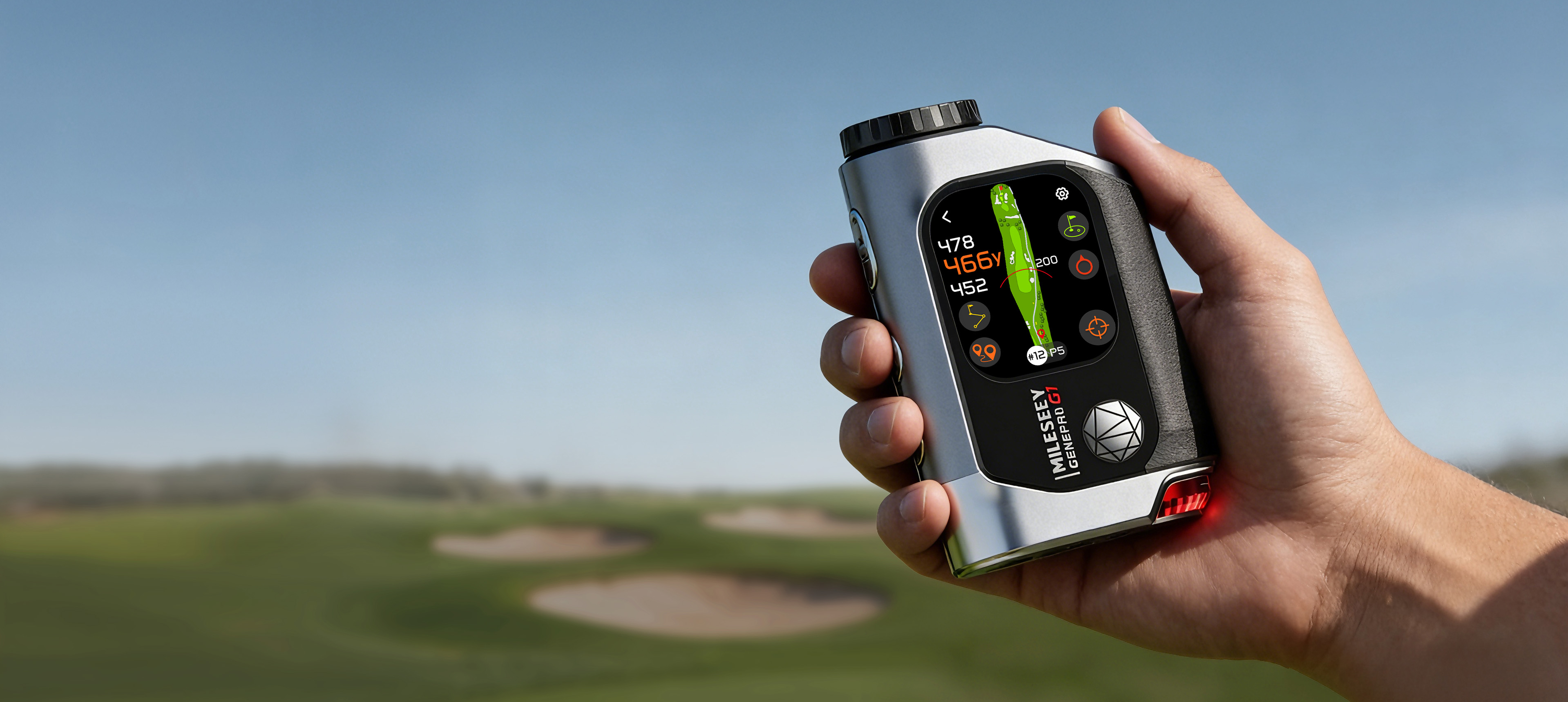
The MILESEEY GenePro G1 combines a laser, on-device course mapping, and an AMOLED touchscreen. Official specifications list IP65 protection, a 1,000 mAh rechargeable battery, and a general measuring range up to 1,300 yards; actual target performance depends on the target and conditions.
MyGolfSpy’s independent review scored the G1 9.8 overall and called it highly multidimensional. Golf Monthly praised the bright display and laser/GPS combination while noting screen lag and automatic-hole-change limitations. For buyers, the value is consolidated information; the trade-off is that a more capable interface still requires attention.
Advanced laser: GenePro S1
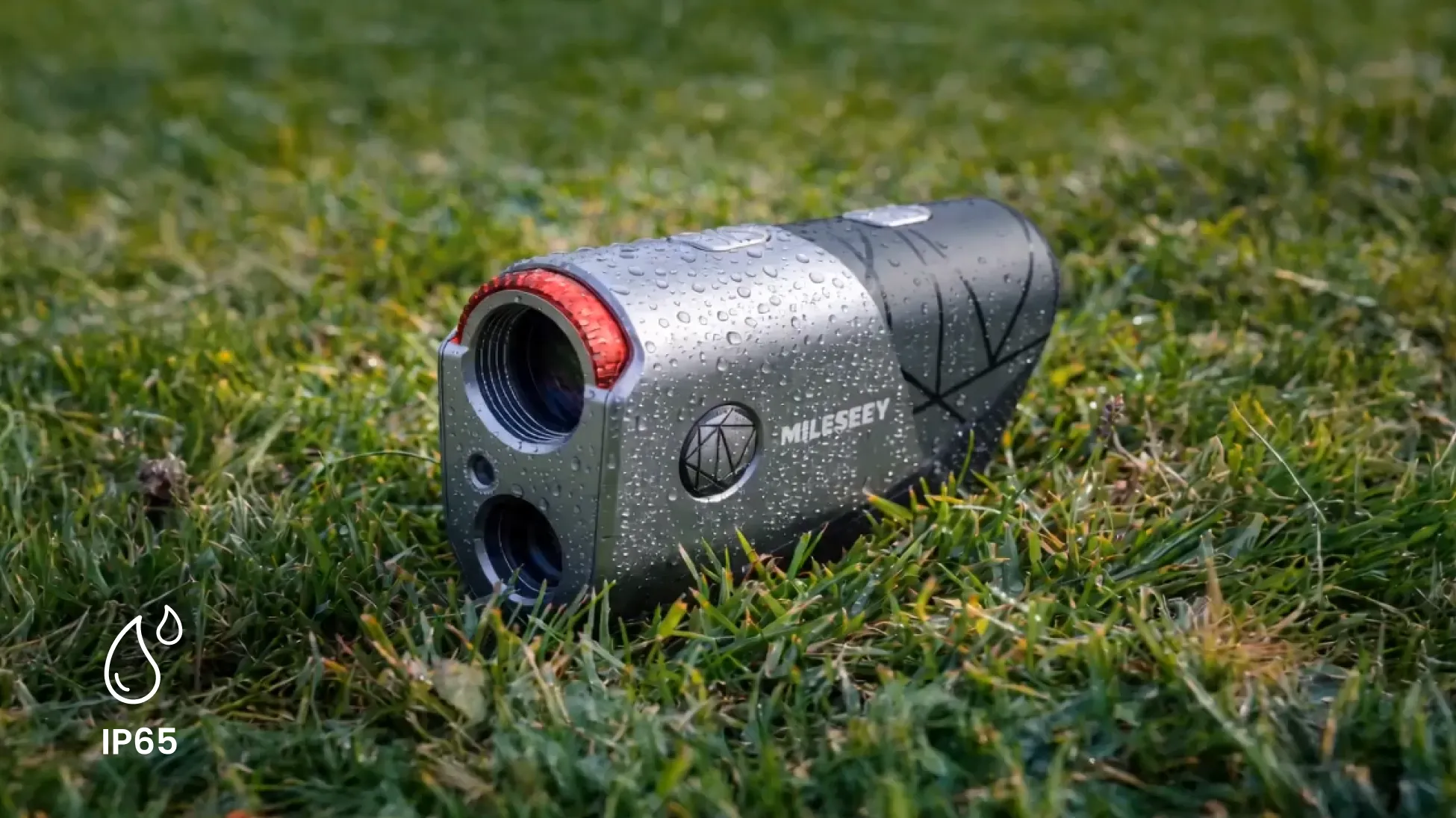
The MILESEEY GenePro S1 focuses on laser measurement and advanced green-related tools. MyGolfSpy gave it a 9.6 overall score and Staff Pick recognition, praising clear optics, fast target acquisition, and Ball-to-Pin usefulness. Golfers should still verify current size and weight from the sales page because source rows in the product database contain conflicting values.
Compact feature-rich laser: IONME2
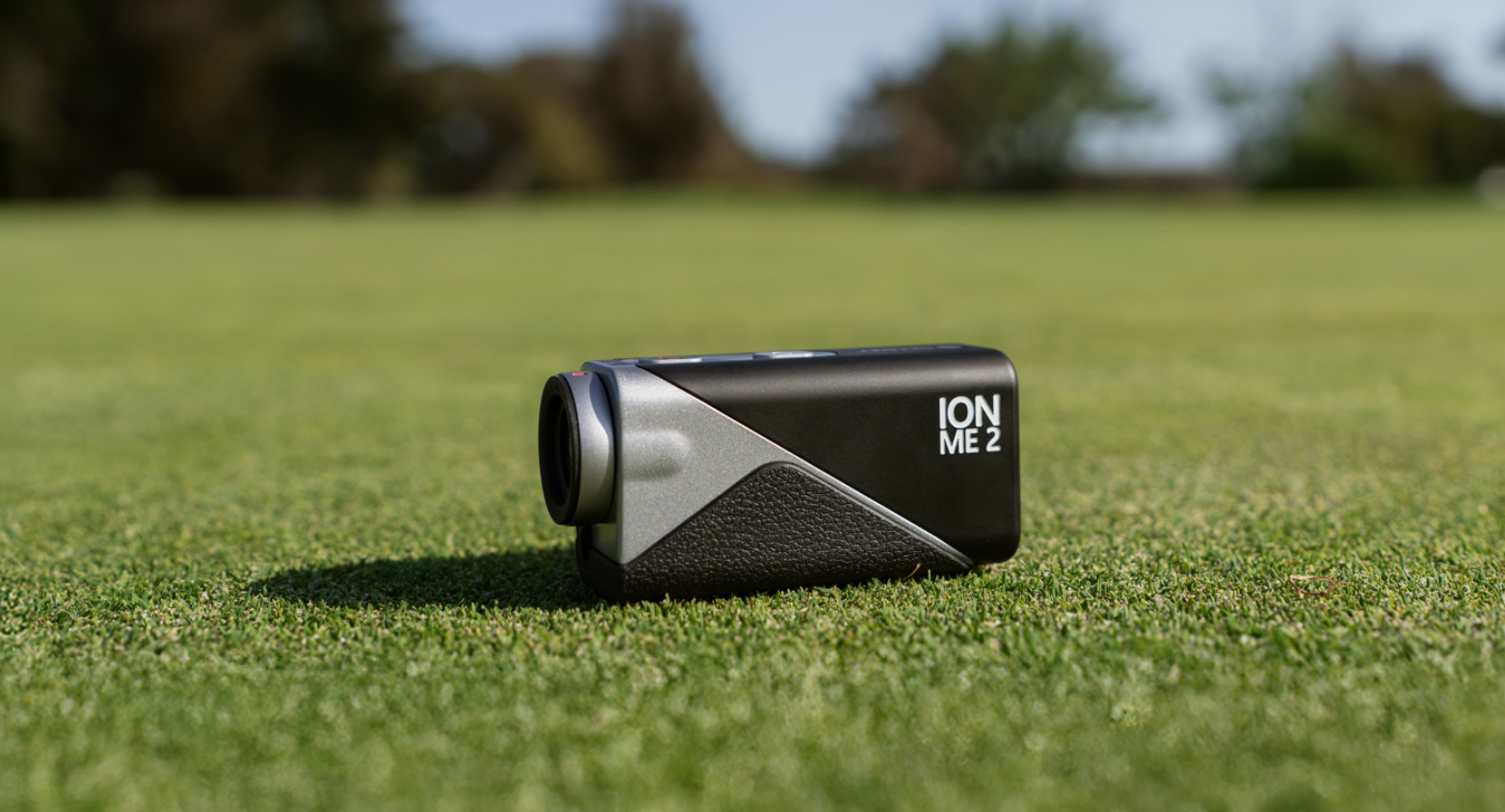
The MILESEEY IONME2 is positioned as a compact laser with PinPoint Green features. Plugged In Golf described it as pocket-sized while retaining high-end functionality, and said PinPoint Green can support pacing and putting decisions when used correctly. The important limitation is that it is a laser device, not a replacement for full GPS mapping.
Value-oriented laser: PF260 Tour
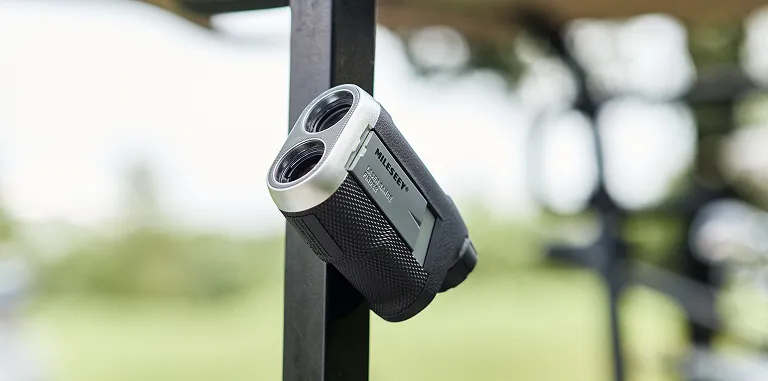
The MILESEEY PF260 Tour is a simpler value option. National Club Golfer awarded five stars and highlighted ease of use and value. Golf Guy Reviews also identified fog performance and material feel as trade-offs. This is the right evidence balance: strengths, source, and boundary condition.
Browse the current golf rangefinder collection after selecting the device type and must-have criteria.
A practical selection matrix
Choose by your recurring failure mode
- You often cannot see the pin or hazard: prioritize GPS context or a hybrid.
- You play familiar, open courses: a stable laser may be enough.
- You second-guess background locks: prioritize clear target confirmation and optics.
- You forget to charge: prioritize a maintainable backup-power plan.
- You play events: prioritize an unmistakable slope-off state.
- You dislike menus: avoid paying for features you will not use.
When the most advanced device is the wrong choice
A hybrid may be unnecessary for a golfer who plays the same open course and wants only a pin number. A compact laser may be frustrating for someone who needs a larger display. A GPS speaker may be unsuitable where audio distracts other players. The best choice can therefore be a simpler product with fewer failure points.
Pre-purchase checklist
- Can I explain the device’s primary job in one sentence?
- Can I read the display in my normal light conditions?
- Can I confirm a flag with a busy background?
- Can I disable slope or advice functions clearly?
- Does the battery system fit my weekly routine?
- Are the manual, support page, and warranty current?
- Are the product claims separated from independent review observations?
Bottom line
The best golf rangefinder for 2026 is the one that covers your real decisions without creating new ones. Start with device type, then judge target acquisition, display, slope control, power, and support. Independent reviews can validate usability, but no review replaces a check against your eyesight, courses, rules, and routine.