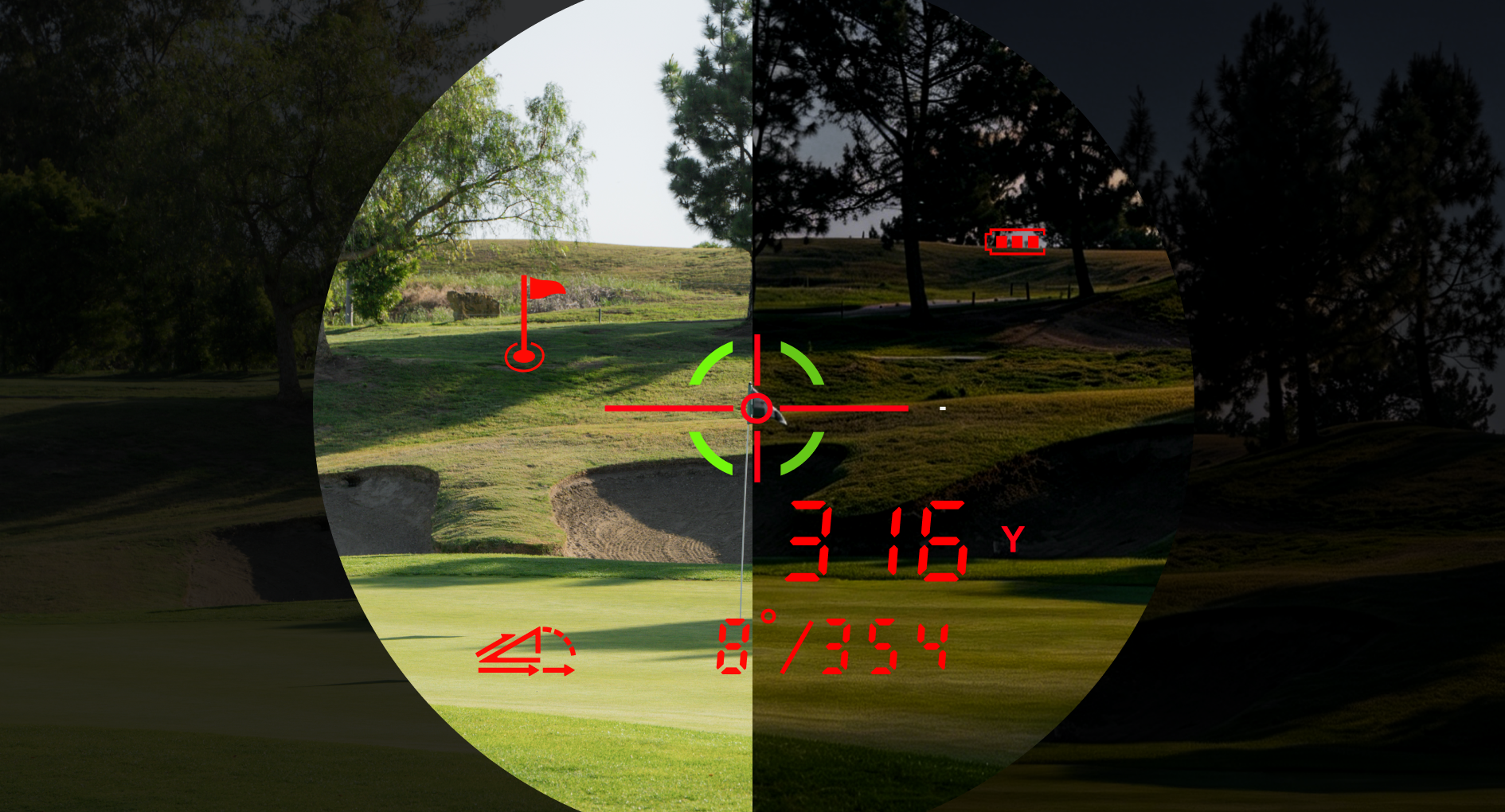
A sub-$200 golf rangefinder can be a sensible buy, but only if it makes the shot decision simpler. Maximum-range claims are easy to print on a box; a stable reading, usable optics, clear slope control, and a power plan are what matter during a round.
Our view is straightforward: buy the least complicated device that reliably answers your normal on-course questions. For most golfers, those questions are the pin distance, a bunker carry, and whether slope mode is visibly disabled for an event.
The five checks that matter below $200
1. Confirm the flag-lock workflow
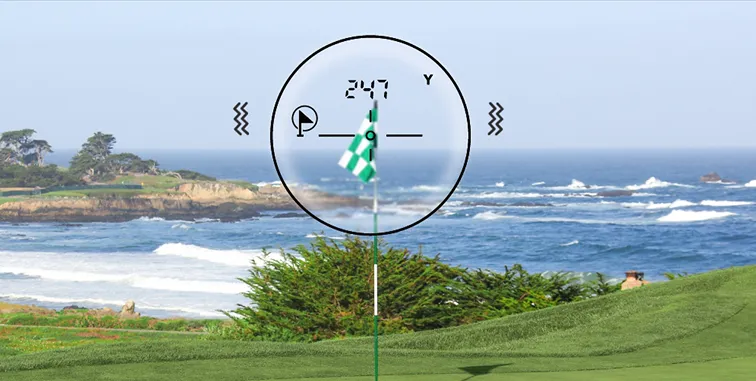
Do not judge a rangefinder only on an unobstructed flag. The harder—and more useful—check is a flag with trees, a mound, or another reflective object behind it. Take several readings while bracing both hands. A useful device should return a stable cluster of numbers and give a clear lock signal.
If the readings jump, move the aiming point along the flagstick and compare the result with a known course marker. Never assume the shortest number must be the pin; it may be a foreground branch or bunker edge.
2. Inspect the optics in the light you actually play in
Look through the eyepiece outdoors, not only under store lighting. Check whether the reticle remains readable against dark trees and a bright sky. Golfers who wear progressive lenses should also test the focus adjustment and eye relief before buying.
3. Make slope status obvious
Slope-adjusted distance can be useful in practice, but competition use depends on the applicable Rules and Local Rules. A physical or unmistakable slope indicator reduces the chance of starting a stipulated round with an advice function enabled. If you cannot verify the status quickly, the interface is adding risk.
4. Choose a battery plan, not a battery claim
Rechargeable and replaceable batteries fail differently. A rechargeable unit is convenient when charging is part of your weekly routine. A replaceable or spare-cell setup is useful for travel and long golf days. The right choice is the one you will maintain consistently.
5. Check support before the headline specification
Look for a current manual, a support page, warranty terms, and a way to obtain replacement accessories. A rangefinder is more useful when the owner can resolve charging, display, or lock problems without guessing.
A current under-$200 example
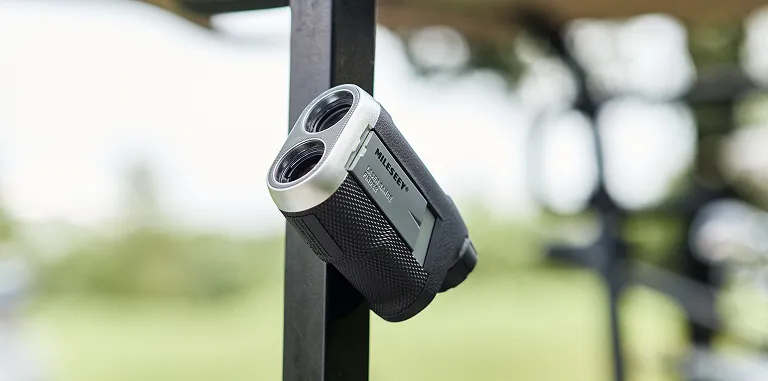
The MILESEEY PF260 Tour is a laser-only option aimed at the value segment. Current official data lists a 1,100-yard general measuring range, a 350-yard flag range, 6× magnification, and a CR2-based power setup; those are manufacturer specifications, not our field-test results.
Independent evidence is more helpful for judging the ownership experience. National Club Golfer’s PF260 Tour review awarded five stars and highlighted simple operation, compact size, flag lock, magnification, and rechargeable power as strong value. Golf Guy Reviews also praised the feature set for the price, while noting trade-offs including a more plastic feel and weaker performance in dense fog than higher-end devices. For a buyer, that combination means the PF260 Tour is best evaluated as a practical value tool—not as a weather-proof replacement for every premium laser.
A repeatable pre-purchase test
Run this five-minute check
- Range a clear flag five times from a steady position.
- Repeat with trees or another object behind the flag.
- Check the display against bright sky and shaded foliage.
- Toggle slope mode and confirm the status without opening a manual.
- Locate the charging or battery compartment, support page, and warranty terms.
Record unstable readings and no-reads rather than averaging them away. This small test reveals more than a long list of claimed features.
When a budget rangefinder is not the right choice
A sub-$200 laser may not suit a golfer who needs front-middle-back green context, blind-shot orientation, or an on-device hole map. Those are GPS or hybrid-device jobs. It may also be the wrong choice for a player who struggles to hold a compact viewfinder steady and needs stabilization or a larger display.
In those cases, start with the broader golf rangefinder collection and compare device type before comparing price.
Bottom line
The best golf rangefinder under $200 is not automatically the model with the largest advertised range. It is the one that gives repeatable readings in your common target conditions, makes slope status clear, has an ownership-friendly power system, and comes with usable support. Test those four things first; treat every other feature as a bonus.