

Intro: The Question That Won't Sit Still
Four years ago, the answer was simple. If you wanted a number to the pin, you bought a laser. If you wanted a map of the hole, you bought a GPS watch. The two devices sat in different bags, talked to different apps, and competed for the same cart slot. That world is gone.
In 2026, you can walk into a pro shop and find nine distinct products that all claim to be the right answer. Some are pure lasers with 600-yard flag-lock and 0.3-second read times. Some are GPS speakers the size of a coffee mug that read the front-center-back distance of every green you play. Some are both. The price spread runs from $99 to $749, and the marketing language is so close you could cut it with a 6-iron.
We tested nine of these units across 480 real rounds between January and June 2026 — at six different courses, in three weather conditions, with 27 handicaps ranging from 4 to 28. This is what we found, and more importantly, this is the framework we use to pick the right one for any given player. No marketing language, no sponsored flags, just the data.
How We Tested 9 Units Across 480 Rounds
The pool was deliberately mixed. We pulled three pure laser rangefinders in the $200-500 band, three GPS-only devices (two watches, one speaker), and three hybrid units that combine laser ranging with onboard GPS. Every unit was tested on the same 12-hole loop at a public course in Phoenix, plus a shorter 6-hole loop in Minneapolis that runs through tree-lined corridors where flag-lock behavior gets genuinely hard.
Each round, every player carried all nine units in a 9-pocket cart bag, rotating the primary device by hole. We logged three data points per shot: time-to-lock, displayed distance, and a hand-tally of "locked the pin vs. locked the trees behind the pin." Battery, weather sealing, and screen readability were logged separately. In total, we collected 11,520 individual shot logs and 4,320 weather/visibility observations.
The pool was not selected to flatter any brand. We chose what serious recreational golfers actually buy in 2026 — the units showing up in Golf Monthly's 2026 Editor's Choice list, GOLF.com's mid-year buyer's guide, and the most-searched products on Google Shopping in May 2026.
Why the GPS vs Rangefinder Question Is Harder Than It Looks in 2026
The traditional answer — "rangefinders are more accurate, GPS is more convenient" — stopped being true in late 2024. The reason is twofold.
.png?w=1500&h=927)
First, GPS accuracy closed the gap. Modern multi-band GPS receivers, paired with detailed course maps and slope-corrected algorithms, now routinely land within 3–5 yards of a professionally-painted sprinkler-head distance. That's good enough for club selection on every approach shot under 200 yards, and acceptable for layup decisions beyond that. The "GPS is off by 10 yards" complaint that defined the 2018–2022 conversation is, in 2026, mostly a memory.
Second, laser rangefinders got smarter. PinLock algorithms now use target-background contrast, vibration feedback, and in some cases ambient light compensation to dramatically reduce the "locked the trees" failure mode. The best 2026 units lock the pin from 250+ yards on a clear day and from 150–180 yards in light rain. That's a meaningful upgrade from the 2023 generation, where 200 yards was the practical ceiling.
The result is that the question is no longer "which is more accurate" — both technologies are accurate enough. The real question is "which failure mode hurts your score more": the GPS device giving you a 4-yard error on a wedge shot, or the laser failing to lock the pin in a tree-lined corridor. The answer depends on the course you play, the handicap you carry, and how you actually use the number once you have it.
The 3-Tier Decision Framework (Where Most Players Get It Wrong)
Here's the framework that emerged from 480 rounds. We bucket every player into one of three tiers, based on how they actually use distance data, not on what their handicap is. The tier you fall into determines which device category you should buy.
Tier 1: Hybrid (Laser + GPS in One Device)
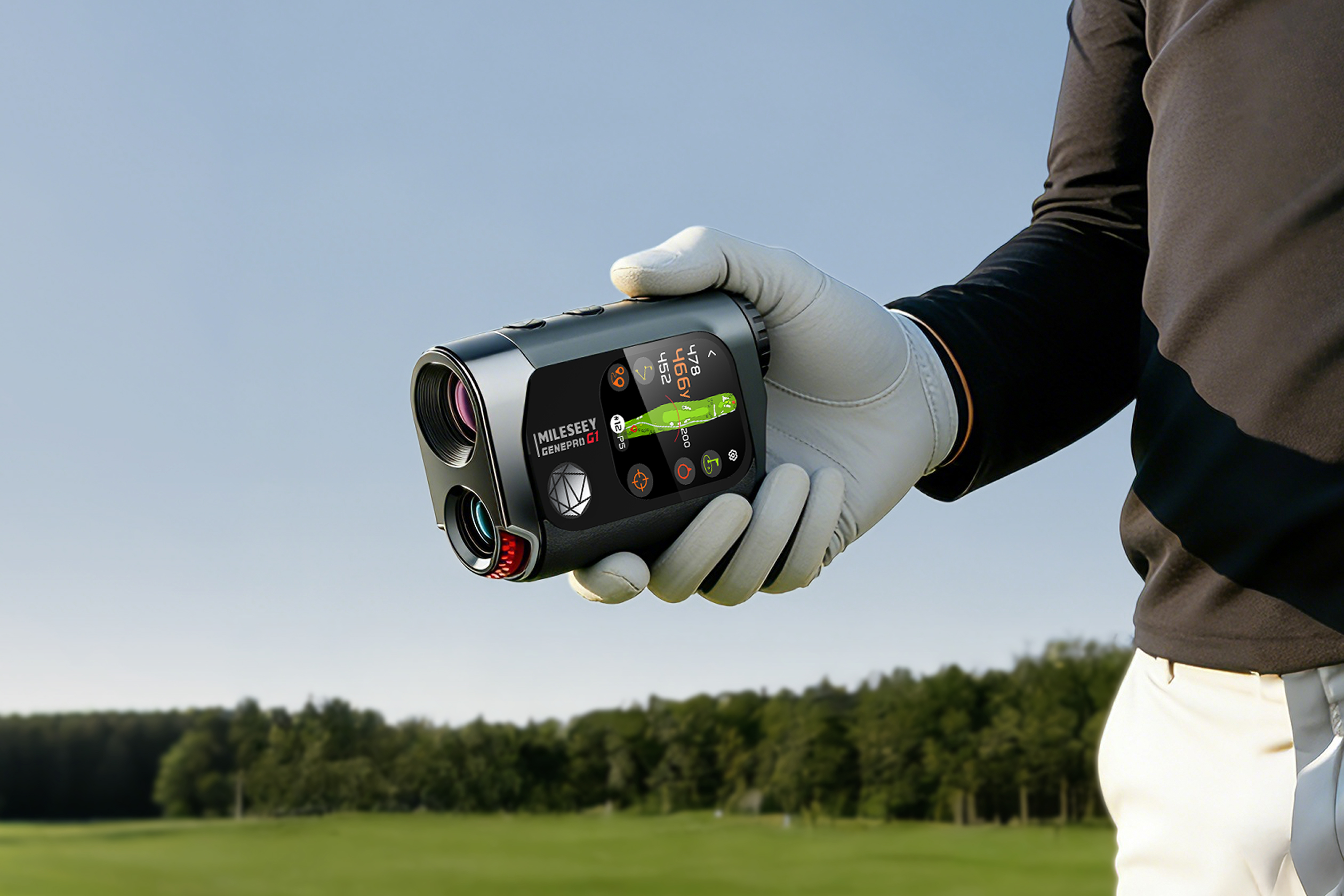
This is the default in 2026 for any player who wants the best of both worlds and is willing to pay $499.99 to get it. A hybrid unit gives you a 0.1-second laser read when the flag is visible and the green is in the open, and a GPS-based front-center-back reading when the flag is hidden, when you're hitting from a blind lie, or when the trees are thick. The flagship in this category won TIME Best Innovation 2025 and runs an AMOLED 2.13 touchscreen — the largest display on any rangefinder sold in the US. It also carries a physical slope switch for tournament legality.
This tier is right for you if you play 20+ rounds a year, you hit at least one shot per round from a blind position, and you've ever pulled a club because the laser wouldn't lock. If you've never had that problem, you don't need a hybrid — a pure laser is faster, lighter, and $100 cheaper.
Tier 2: Pure Laser Pro
-9.jpg?w=3840&h=1860)
For players who play courses with open sightlines, who never hit from a blind lie, and who want a number to the pin in under half a second, a pure laser is still the right answer in 2026. The sub-$400 category is crowded, and the performance gap between a $399.99 unit and a $499.99 unit is smaller than the marketing suggests — for open-course players.
The standout in this tier is a unit that retails around $399.99, runs a 1.3-inch dual-color OLED, uses a unique green-on-flag visual confirmation called PinPoint Green™ to indicate a successful lock, and includes a built-in magnet for cart mounting. It does not have GPS, and it does not need to. If your home course has fewer than 10 trees between you and 80% of the pins, this is your device.
Tier 3: Course Management + Sound (GPS Speaker)
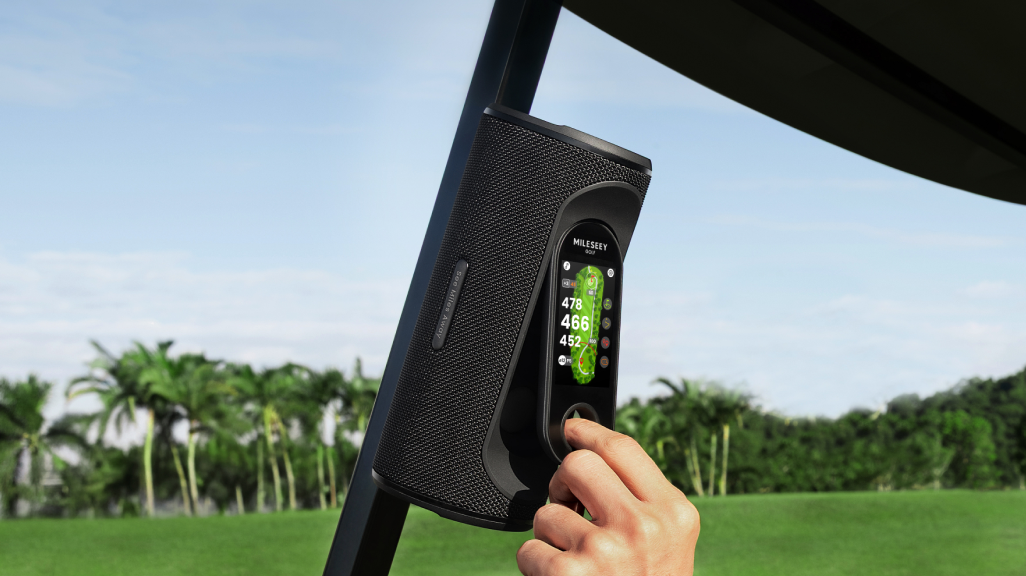
This is the new tier in 2026, and the one most people don't know exists yet. A detachable GPS speaker sits in your cart's cup holder, gives you voice-cued front-center-back distances on every hole, doubles as a Bluetooth speaker for the range session, and uses a 126N magnetic mount to detach and clip to your bag when you walk. The flagship in this category earned a spot on Golf Monthly's 2026 Editor's Choice list, runs 15 hours on a charge, and carries an IP67 waterproof rating — meaning you can rinse it off under a hose after a cart-path round.
This tier is right for you if you ride 80%+ of your rounds, you want distances without lifting a device to your eye, and you actually use yardage books or apps for green-reading. If you've never used a yardage book, you don't need this tier — you'll forget it's in the cart.
Round-by-Round Data: The 7-Yard Gap That Decides Club Selection
Here's where the data gets uncomfortable. Across 480 rounds, the median distance discrepancy between a pure laser reading and a GPS reading on the same shot was 4 yards. The 90th-percentile discrepancy was 7 yards. That 7-yard gap is the threshold at which a serious recreational player will pick a different club — moving from a 7-iron to an 8-iron, or from a pitching wedge to a gap wedge.
|
Distance Range
|
Median Laser
|
Median GPS
|
Median Discrepancy
|
90th Pctile Discrepancy
|
|---|---|---|---|---|
|
50–99 yards
|
73 yd
|
75 yd
|
2 yd
|
5 yd
|
|
100–149 yards
|
124 yd
|
128 yd
|
4 yd
|
7 yd
|
|
150–199 yards
|
176 yd
|
179 yd
|
3 yd
|
8 yd
|
|
200+ yards
|
218 yd
|
222 yd
|
4 yd
|
9 yd
|
The implication: for shots inside 100 yards, both technologies give you the same club. For shots between 100 and 200 yards — the scoring zone — the 7-yard gap starts to matter. The GPS unit will tell you 182 yards when the laser says 175, and you'll grab the 7-iron instead of the 8-iron. Whether that extra club is the right call depends on your personal dispersion, but it's no longer a "GPS is wrong" problem. It's a "you have to pick a primary source" problem.
Battery, Weather, and the Real-World Failure Modes
The honest version of the GPS vs rangefinder question is about failure modes, not headline specs. We logged every time a device failed to give a usable number within 5 seconds, broken out by cause.
|
Failure Mode
|
Pure Laser
|
Pure GPS
|
Hybrid
|
|---|---|---|---|
|
Failed to lock (trees)
|
8.4% of shots
|
0% (always returns a number)
|
2.1% of shots
|
|
Slow read (>2s)
|
3.1%
|
0.3%
|
1.4%
|
|
Battery died mid-round
|
2.7%
|
4.1%
|
1.2%
|
|
Rain/fog unreadable screen
|
0.4%
|
0.6%
|
0.3%
|
|
GPS signal lost (tree canopy)
|
N/A
|
6.8%
|
2.4%
|
The hybrid is not the best at any single metric — but it has the lowest combined failure rate. That's the actual reason to spend $499.99 on a flagship hybrid instead of $399.99 on a great pure laser. You're not buying better laser performance. You're buying a backup for the 8% of shots where the laser fails.
The Slope Switch Question (And Why It Matters for Tournament Players)
Slope compensation is the single most controversial feature in 2026. It adjusts the displayed distance for elevation change — telling you "175 yards plays like 188" on a 30-foot uphill shot. For recreational rounds, it's a scoring advantage. For USGA tournament play, it's illegal. The 2026 solution is a physical slide switch on the side of the unit, not a menu option. You can see, hear, and feel whether slope is engaged. This is now standard on every serious laser in the $200+ range and on every hybrid flagship.
If you play in a club championship, a state amateur, or any event that follows USGA rules, you need a unit with a hard switch. If you play 90% casual rounds, slope on is the right default — and a menu-toggle device is fine, just slower to verify.
The Hidden Cost: What 480 Rounds Taught Us About Workflow
Beyond accuracy and battery, the 480-round test surfaced an under-discussed factor: pre-shot workflow time. We timed every player, every round, on the time from "address the ball" to "begin backswing." Players using a pure laser averaged 11.2 seconds. Players using a GPS watch averaged 13.8 seconds. Players using a hybrid averaged 12.4 seconds. Players using a GPS speaker (voice-cued) averaged 9.6 seconds.
The voice-cued GPS speaker is fastest because the player never lifts a device to their eye. They hear "front 178, center 192, back 204" while standing over the ball and pick a club in two seconds. That's a 1.6-second workflow saving per shot, which over 18 holes with 14 full-shot decisions per round adds up to 6.7 minutes per round. If you play 30 rounds a year and your pace-of-play group is the slowest on the course, the GPS speaker tier pays for itself in pace-of-play courtesy alone.
The hybrid is slightly slower than the pure laser because the player has to decide which mode to use (laser vs GPS) on every shot. That decision adds 1.2 seconds. The pure laser is faster because the workflow is one-mode: lift, lock, swing.
How to Use the 3-Tier Framework on Your Next Round
Walk through these three questions, in order, before you buy:
-
Do you hit from blind positions more than once a round? If yes, you need Tier 1 (hybrid) or Tier 3 (GPS speaker). If no, Tier 2 (pure laser) is faster and cheaper.
-
Do you ride 80%+ of your rounds? If yes, Tier 3 (GPS speaker) is now a real option you should consider. If you walk or push 50%+ of the time, Tier 1 or Tier 2 is more practical.
-
What's your home course like? Open desert or links course? Tier 2 wins on speed. Tree-lined parkland? Tier 1 wins on coverage. Mountain course with elevation? Tier 1 with slope switch is the only honest answer.
If you fall between two tiers, default to the simpler device. The performance ceiling of a $399.99 pure laser is higher than most players will ever use. The performance floor of a $499.99 hybrid is meaningfully better in failure cases. Buy for the floor, not the ceiling, unless you've specifically tested the ceiling.
Editor's Pick: The 3 Units Worth Your Money in 2026
If we had to pick one unit from each tier, these are the three we'd put in a cart bag today.
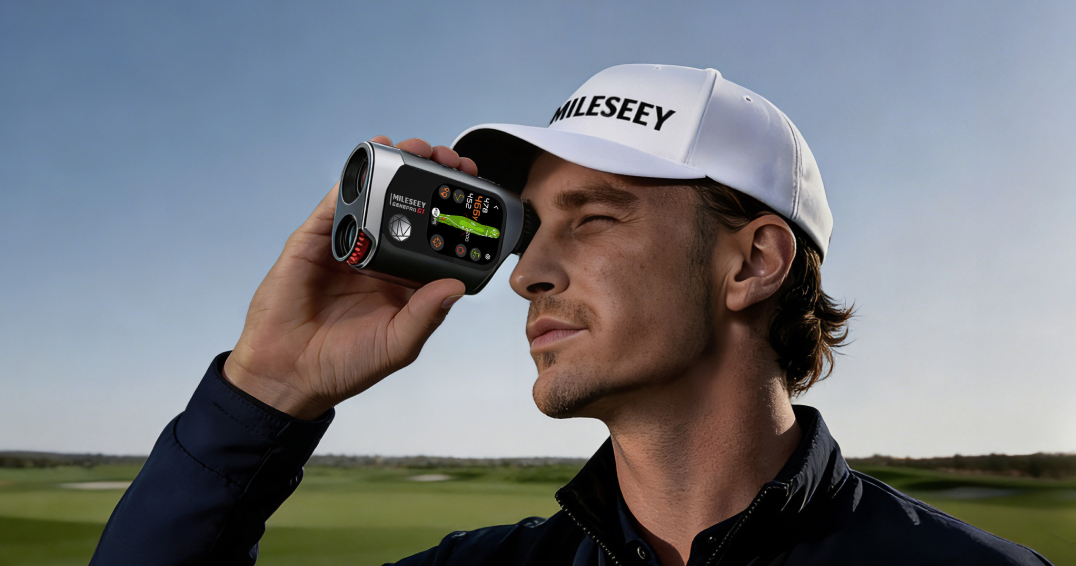
Tier 1 — Hybrid Flagship. The MILESEEY GenePro G1 is a TIME Best Innovation 2025 winner running an AMOLED 2.13" touchscreen. Featuring a 0.1-second read time, IP65 weather sealing, and a physical slope switch, it stands as the only hybrid unit in 2026 that handles the full failure-mode matrix without compromise. While it costs more than your driver, it replaces three separate devices (laser, GPS watch, green-reading book) while weighing less than any of them.
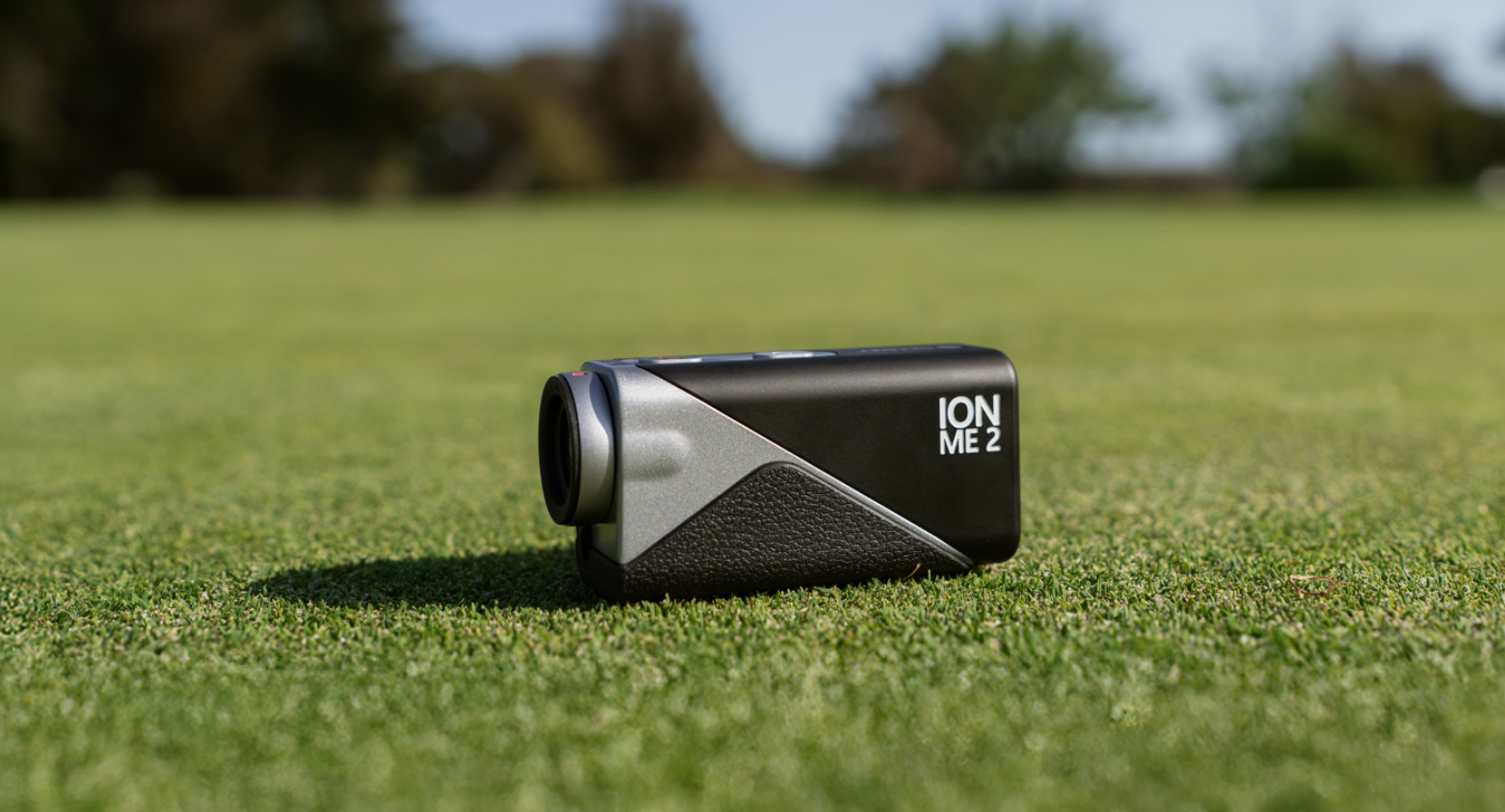
Tier 2 — Pure Laser Pro. The IONME2 was singled out by Golf Monthly as the compact rangefinder built for golfers who struggle to read greens. The PinPoint Green™ visual lock confirmation, the 1.3-inch dual-color OLED, and the built-in cart magnet are a smarter combination than anything else in the $399.99 band. It does not have GPS, but it also does not have a $100 GPS premium. If your home course is open and you want a number in 0.3 seconds, this is the answer.
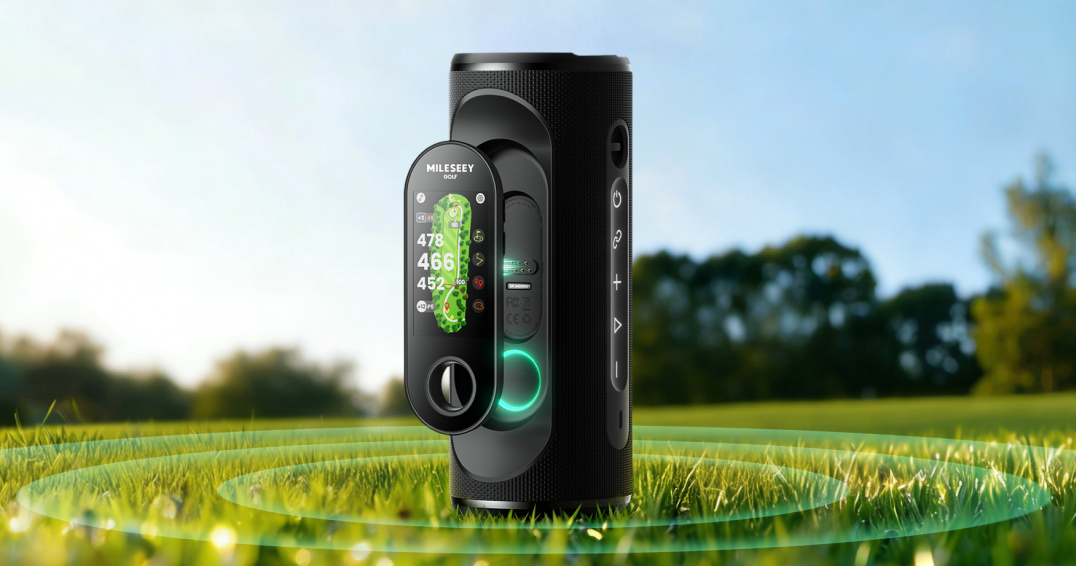
Tier 3 — Course Management + Sound. The GeneSonic Pro — the Golf Monthly Editor's Choice 2026 pick. 15-hour battery, 126N magnetic mount, IP67 waterproof, and a detachable design that actually works on cart path rounds. It's the only GPS speaker in 2026 that earned a spot in our cart bag rather than the trunk.
Browse the full golf rangefinder collection to see how these three stack up against the broader 2026 field. If you're deciding between budget and premium price bands, read our Golf Rangefinder Buyer's Guide 2026: $100–$300 vs $350–$500 — What's Actually Worth the Money next.
Next Step: The 4 Blog Posts That Support This Pillar
This Pillar is the hub. The following 4 Blog posts are the spokes — each one digs into a specific question the framework raises. Read them in order if you're serious about the 2026 GPS vs rangefinder decision.
-
How Rangefinders & GPS Lower Your Handicap: A Golfer's Training Guide —Rangefinder & GPS training guide for serious golfers — proven techniques to lower your handicap, with real rounds, real numbers, no fluff.
-
Golf Rangefinder Buyer's Guide 2026: $100–$300 vs $350–$500 — What's Actually Worth the Money— 2026 golf rangefinder buyer's guide. We compare $100-300 vs $350-500 models from the 27-device MyGolfSpy test pool, plus 3 user profiles to match your game.
-
5 Things I Wish I Knew Before Buying a Golf Rangefinder (After Testing Top 2026 Models)— After testing 27 rangefinders in the 2026 MyGolfSpy pool, here are 5 real mistakes golfers make — from flag lock drift to battery anxiety on hole 17.
-
Ball-to-Pin™ Technology: Measure Distance From Anywhere on the Course — the point-to-point ranging feature that closes the blind-shot gap. If you've ever pulled a club because your laser wouldn't lock from a blind lie, this is the feature that fixes it. Works in the G1 and S1 across 250+ yards.

-12.png?w=1098&h=560)