-8.png?w=3840&h=1920)
A golf GPS should make the next shot simpler. If it adds charging anxiety, phone setup, tiny-screen friction or information you never use, its feature count does not matter. Our view is straightforward: choose the device format around how you actually move through a round, then compare maps, battery and cost inside that format.
This guide explains the main types of golf GPS devices, where each works best, and the tradeoffs that product pages often bury.
What a golf GPS actually tells you
Most golf GPS products use your position and a mapped course database to show distances to useful targets. Basic displays focus on the front, center and back of the green. More visual devices may add hole maps, hazards, layup points, movable target points, scorekeeping or shot records.
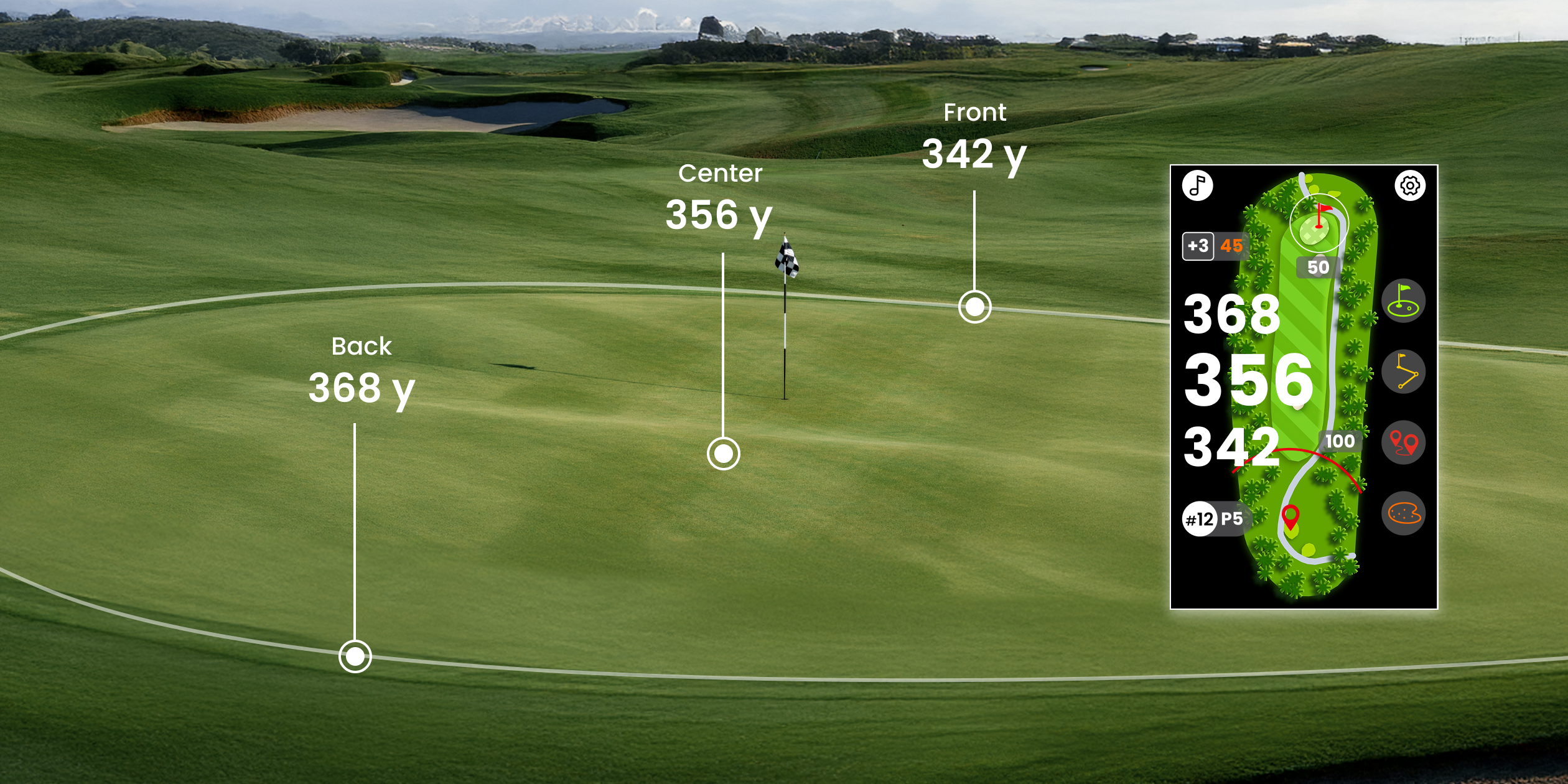
Those features solve different questions. Front-center-back numbers help when the flag location is uncertain. A full-hole map helps on an unfamiliar dogleg or when a bunker is hidden. A laser remains better when you need a direct distance to a visible target. If that distinction is central to your choice, read our golf GPS versus rangefinder comparison.
The five common GPS formats
| Format | Best for | Main friction |
|---|---|---|
| Phone app | Low-cost entry and golfers who already carry a phone | Notifications, battery sharing and repeated phone handling |
| GPS watch | Fast glanceable yardages while walking | Small maps and wrist-wear preference |
| Handheld GPS | Dedicated controls and larger visual maps | One more device to carry and charge |
| Cart-mounted GPS | Shared visibility and cart-based rounds | Less useful away from the cart |
| Hybrid GPS + laser | Course context and exact visible-target distance in one unit | Higher price and learning load |
For a deeper device-level comparison, use our planned guide to choosing a handheld golf GPS. Cart-first golfers can jump to the golf cart GPS guide.
Use the Round Friction Matrix
Rate each statement from zero to two: zero means never, one means sometimes, and two means often.
- I play unfamiliar courses and need a hole map.
- I walk or leave the cart frequently.
- I dislike taking out my phone during a round.
- I want exact distance to a visible flag as well as map context.
- I often play more than 18 holes before charging.
A high score on map need favors a visual handheld or hybrid. A high walking score favors a watch or compact handheld. A high phone-friction score favors a standalone device. A high exact-target score favors a laser or hybrid. A high endurance score makes battery behavior a deciding factor rather than a specification footnote.
Maps matter more than the course-count headline
A large database is useful only if it includes the courses and tees you play and receives updates. Before buying, check your regular courses, learn how missing-course requests work, and confirm whether updates require a phone, desktop app or subscription. The planned offline golf GPS guide separates on-course independence from occasional setup or synchronization.
Battery: plan for your longest realistic day
Do not compare battery numbers without a use case. Brightness, map interaction, Bluetooth, audio and temperature can change runtime. A practical minimum is your longest round plus a margin for warm-up, delays and a forgotten partial charge. If you play 36 holes, the margin matters more than the headline maximum. Use the golf GPS battery-life worksheet before purchasing.
Phone app or dedicated device?
An app can be the right answer when cost matters and your phone already lasts a full round. A dedicated GPS can be worth paying for when you want one-purpose controls, fewer interruptions and a battery that is not shared with calls, photos and transportation. Our app-versus-handheld comparison walks through that decision without assuming the more expensive option wins.
Where MILESEEY Golf products fit
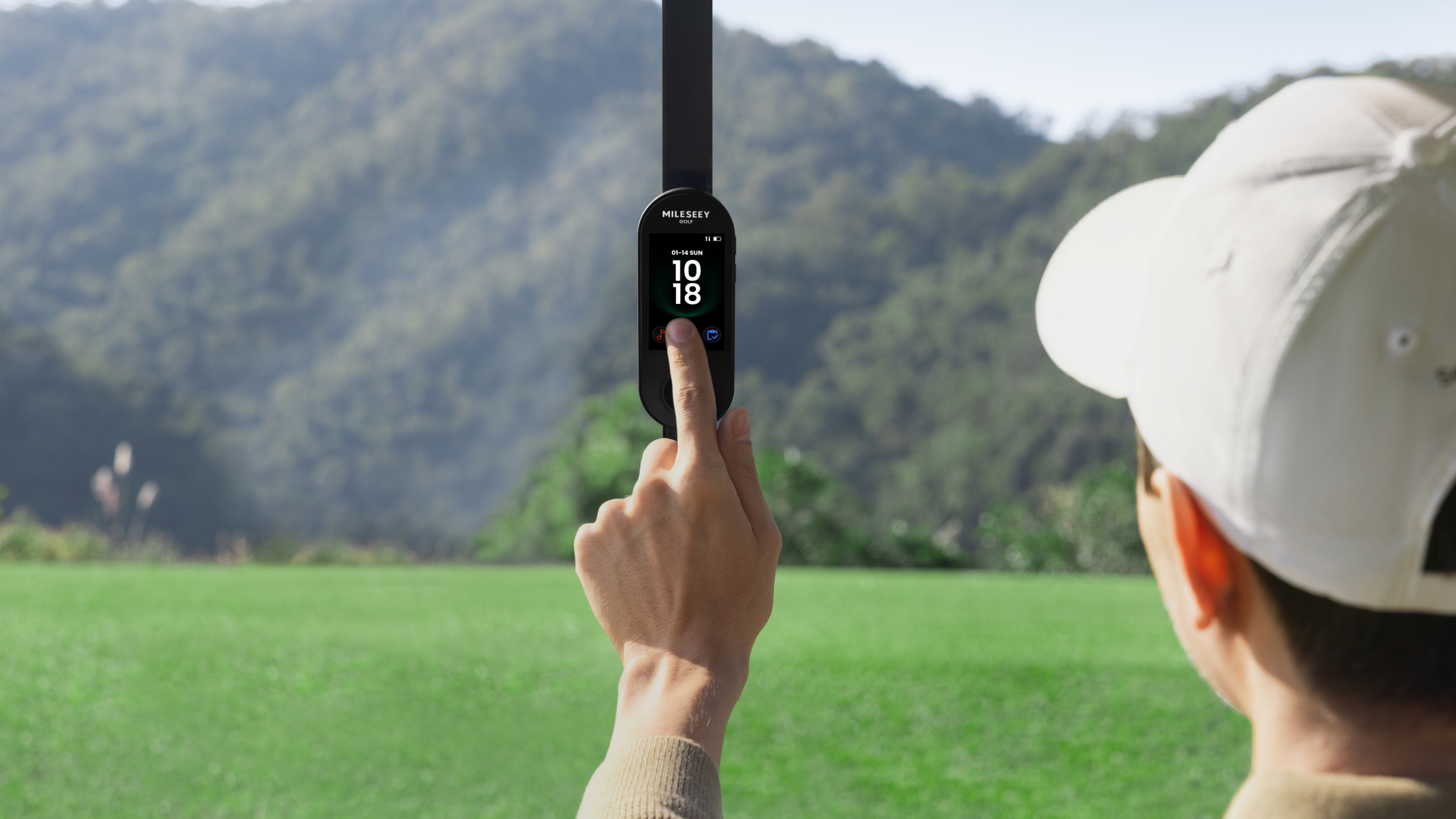
The MILESEEY GeneSonic Go Golf GPS Handheld is the dedicated handheld option: the official specification lists a 3-inch touchscreen, 43,000+ preloaded courses, IP67 protection, 110 g weight and about 15 hours of operation. It suits golfers who want a pocketable map without using a phone on every shot.
The MILESEEY GeneSonic Pro Detachable Golf GPS Speaker serves cart-based rounds but lets the GPS module leave the speaker when the cart cannot follow. The MILESEEY GenePro G1 Touchscreen & GPS Rangefinder combines a 2.13-inch AMOLED course view with laser measurement. These are different workflows, not a simple good-better-best ladder.
Editorial simulation: two golfers, two correct answers
Simulated scenario A: Maya walks nine holes after work, checks only green and hazard distances, and keeps her phone in her bag. A compact handheld reduces interruption and gives more map area than a watch.
Simulated scenario B: Daniel rides, plays unfamiliar resort courses and wants music plus a shared map. A cart-mounted GPS speaker may remove more equipment than it adds. Neither case is a claim about measured scoring improvement; it shows how workflow changes the decision.
When this advice does not apply
If you play one familiar course, trust permanent markers and rarely use distance data, no GPS may be the best value. Tournament rules and local committee conditions can also limit features such as slope-adjusted recommendations; confirm the event rules and disable any prohibited function.
Final buying checklist
- Verify your regular courses and update process.
- Choose a format before comparing brands.
- Confirm screen readability in your normal light conditions.
- Budget battery for the longest day, not the average round.
- Check whether phone, app, account or subscription is required.
- Separate must-use features from features that only look impressive.
- Confirm return, support and warranty terms before purchase.
The right golf GPS is the one you can consult quickly, understand immediately and keep powered for the whole day. Start with your round, then choose the technology.