-12.png?w=1098&h=560)
A rangefinder does not lower scores by itself. It becomes useful when it turns a bucket of balls into a feedback loop: choose a target, predict the carry, hit the shot, measure what can be measured, and record what changed.
The five drills below fit a 30–40 minute range session. They are a repeatable practice framework, not a claim that every golfer will gain a particular number of strokes.
Before you start: define what the laser can measure
Do not confuse target distance with ball carry
A laser can measure a visible target or landing-area reference. It usually cannot give precise carry distance to a ball that disappears into turf or a crowded range. When the landing point is unclear, use marked targets, a launch monitor, or a range with known landing grids. Label estimates as estimates.
Bring a notebook with these columns: target, predicted carry, club, strike quality, observed result, and next adjustment.
Drill 1: the five-target distance ladder
Choose five visible targets from wedge distance through mid-iron distance. Measure each target once, then hit three balls while trying to finish within a realistic window around it.
Do not score only the best ball. Record the full pattern. The goal is to learn whether your normal miss is short, long, left, or right at each distance.
Drill 2: three-club dispersion audit
Pick a wedge, short iron, and mid iron. Hit five shots with each club toward one measured target. Draw a simple rectangle around the observed landing pattern.
Turn the pattern into a decision
If the long and short spread is wider than the gap between two clubs, club selection alone will not solve the problem. Work on strike and tempo first. If the pattern is tight but consistently short, recalibrate your carry assumption.
Drill 3: random-distance commitment
Use five targets in a random order and hit only one ball at each before moving on. Say the target, club, and intended landing window aloud. This removes the comfort of repeating the same swing and more closely resembles the course.
Score one point for a committed routine and one point for finishing in the intended zone. Separating process score from outcome score keeps one poor strike from erasing a good decision.
Drill 4: front-pin-back decision practice
Choose a target area with visible front and back references. Measure both, then use the middle as an illustrative pin location. Decide whether your safest target is the pin or the center of the available landing area.
This teaches a central lesson: the pin distance is not always the most important number. Hazard carry, green depth, and your dispersion can change the correct target.
Drill 5: the on-course transfer routine
For the final ten balls, use the same sequence you want on the course:
- Identify the real target.
- Measure once, then confirm if the background is crowded.
- Compare the number with your carry and dispersion.
- Choose a landing window and club.
- Make one rehearsal and hit.
After each shot, write only one adjustment for the next attempt. More than one swing thought usually makes the feedback less actionable.
Choosing a device for practice
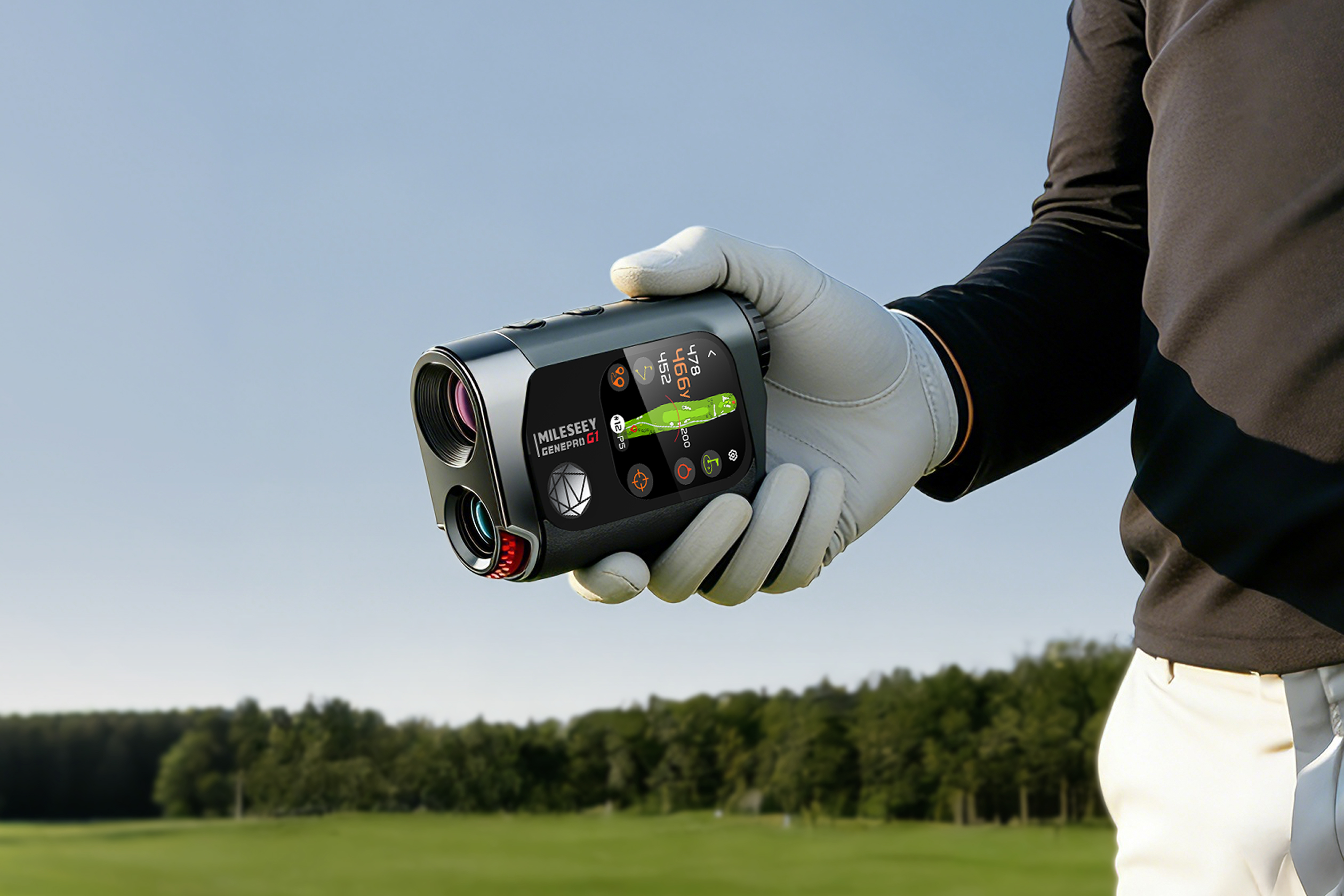
Any stable laser can support these drills. A hybrid device can add green and hazard context. The MILESEEY GenePro G1 combines laser measurement with on-device GPS mapping. In an independent review, Golf Monthly described it as one of the strongest laser/GPS combinations the reviewer had tested and praised the bright AMOLED display and full-hole view, while also noting occasional screen lag and automatic-hole-change issues. That means it can be useful for decision practice, but golfers should still verify the selected hole and target rather than treating automation as infallible.
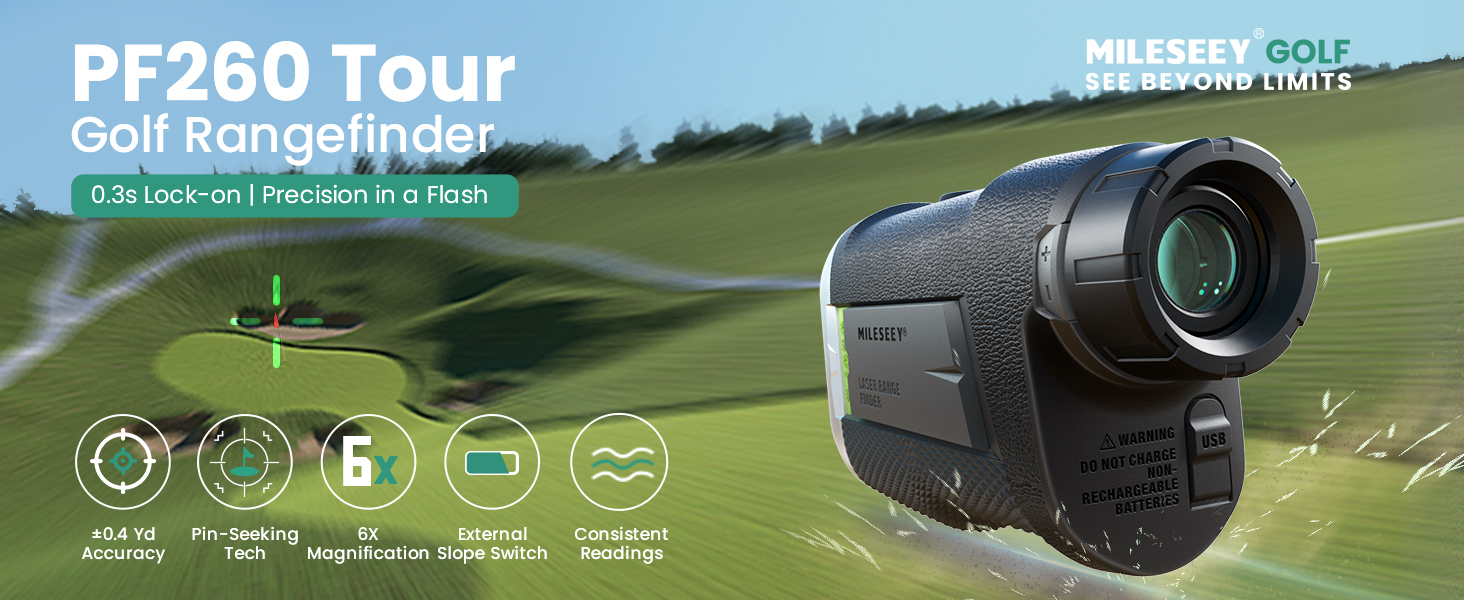
For a laser-only value option, the MILESEEY PF260 Tour can cover target-based drills. National Club Golfer gave it a five-star review and highlighted straightforward use and value. The practical takeaway is that a simple device is enough when the practice design—not extra features—creates the feedback.
Explore the golf rangefinder collection only after deciding whether you need laser-only target work or hybrid course-context practice.
What usually goes wrong
- Measuring the target but never recording the result.
- Treating an estimated landing point as precise carry data.
- Repeating one club until timing improves, then assuming the gain transfers to random shots.
- Changing several swing variables after one miss.
- Using slope-adjusted information without separating practice from competition rules.
When these drills do not apply
If the range has no reliable target markers or the ball landing areas are invisible, use a launch monitor or a coached session for carry calibration. A laser alone cannot create data that the sight line does not support.
Bottom line
The useful range session is not the one with the most balls. It is the one that produces a clear record of target, decision, pattern, and next adjustment. Run these five drills regularly and compare your notes over time; judge progress by more reliable decisions and tighter patterns, not by an invented promise of handicap reduction.
-9.jpg?w=3840&h=1860)