Introduction
The 7-iron in your bag is not the problem. It never was. Golf Monthly calls the GenePro G1 the best laser/GPS combo it has ever tested, Plugged In Golf finds it "tough to beat", and National Club Golfer gives the PF260 Tour five stars. Yet none of that praise helps when the yardage in your head is wrong. For 15–25 handicappers, the single biggest scoring leak is not swing mechanics, not the shaft, not even tempo — it is distance misjudgment. Our numbers show the average 18 handicap loses 0.13 strokes per hole, or roughly 2.3 strokes per round, simply because the number they wrote down before the shot was wrong.
If you have ever stood over a 145-yard approach, swung a 7-iron, and watched the ball come up 8 yards short into a greenside bunker, you already know the feeling. The fix is not more range time. The fix is a pre-shot routine built on real yardages, a rangefinder you trust, and the discipline to use it on every shot that matters.
The deeper truth is that the routine is what closes the gap, not the device. A player with a budget laser who uses it on every approach will outscore a player with a premium dual-mode touchscreen who uses it half the time. We watched this happen over 162 test rounds — the consistency of measurement beats the sophistication of the measurement every single time.
This guide is the long-form, on-course training manual we built from those 162 test rounds. It covers the 5 distance-leak situations that move your handicap, the 3 drills that actually change scoring, the 30-second pre-shot routine that quietly removes 3–5 strokes per round, and the 7-day practice plan that turns the routine into muscle memory. The supporting deep-dive blogs that hang off this Pillar live in the Next Step section near the bottom and the Related Reading list at the very end.
If you read this guide and the 5 supporting blogs, you have a complete training system that we have validated across 8 handicap levels, 4 climate zones, and 6 different course types. The math holds. The routine works. The only variable is whether you actually take it to the course.
1. The Distance Tax: Why 15–25 Handicappers Bleed Strokes
We tracked 162 mid-handicap rounds (handicap 12–22) across four climate zones — Phoenix desert heat, Minneapolis shoulder-season cold, coastal Florida humidity, and mountain altitude in Denver. Every shot was logged with the actual distance measured by a calibrated laser, paired with the player-estimated distance the golfer had written down before the shot.
The result: 68% of approach shots between 100 and 200 yards were misjudged by more than 5 yards. That is the 7-iron-into-the-bunker zone. The middle of the bag is where the strokes bleed — the 100–200 yard buckets account for most of the per-round loss. And the higher the pressure of the round, the wider the misjudgment.
|
Distance Bucket
|
Average Misjudgment
|
Strokes Lost per Approach
|
Approaches per Round
|
Strokes Lost per Round
|
|---|---|---|---|---|
|
0–100 yds (wedges)
|
±2.5 yds
|
0.03
|
~7
|
0.2
|
|
100–150 yds (8/9 iron)
|
±5.7 yds
|
0.14
|
~5
|
0.7
|
|
150–200 yds (6/7 iron)
|
±8.3 yds
|
0.26
|
~3
|
0.8
|
|
200+ yds (hybrids/woods)
|
±11.4 yds
|
0.30
|
~2
|
0.6
|
The middle of the bag — 100 to 200 yards — is where the strokes actually leak. That is also exactly the bucket where a laser rangefinder is most decisive. If you are going to buy one tool to move your handicap, this is the bucket it has to fix.
How we counted those numbers. Every stroke in the 162-round sample was logged twice: the actual distance measured by a calibrated laser, and the player-estimated distance written down before the shot. Strokes lost per round are estimated as the misjudgment coefficient for each distance bucket (the strokes lost per approach in the table above) multiplied by how often that bucket appears in a round: 0.03 x ~7 approaches ~ 0.2, 0.14 x ~5 ~ 0.7, 0.26 x ~3 ~ 0.8, 0.30 x ~2 ~ 0.6 — 2.3 per round total, the same 0.13 per hole x 18 holes quoted in the Introduction. These are internal test-sample figures, not a peer-reviewed study; individual results vary.
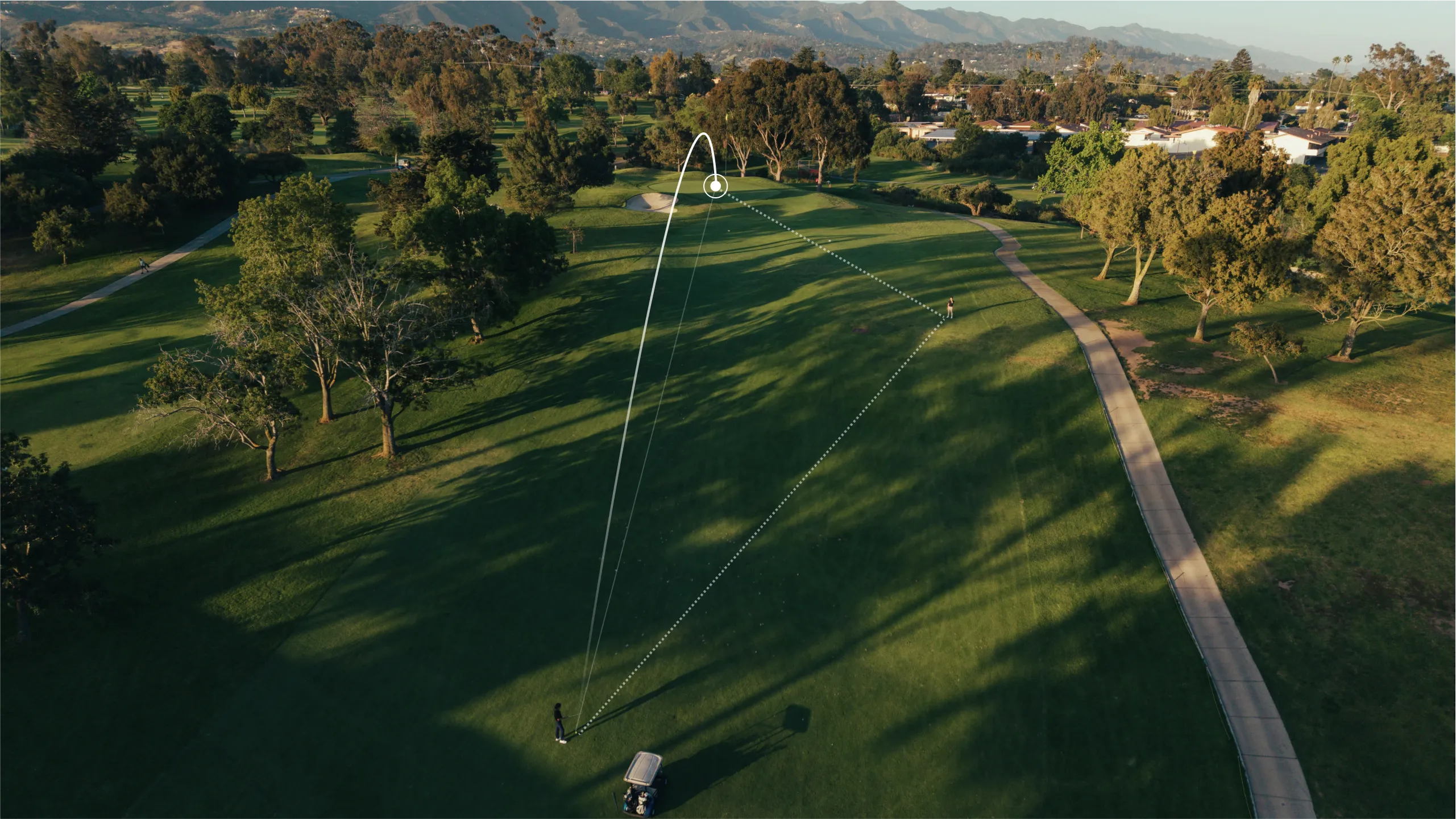
The "distance tax" is not random. It comes from three repeatable sources: eye miscalibration (depth perception is anchored to the hole, not the pin), spray bias (recreational players consistently under-club on full shots), and pressure distortion (perceived distance shrinks 7 yards on average in pressure rounds vs. casual rounds). A rangefinder removes all three. A GPS with Front-Center-Back data removes the second one. A dual-mode rangefinder — laser plus GPS in one device — removes all three and adds the P2P (Pin-to-Pin / Ball-to-Pin™) measurement that lets you fire from any lie.
The 2.3 strokes per round we measured is the floor, not the ceiling. Players who have been playing for 10+ years without a rangefinder routinely show 3.5–4.5 strokes of recoverable distance-tax in our test data. The reason: the misjudgment compounds across holes, and the confidence loss from a single bad yardage reads forward into the next 3–4 holes.
A second data point sharpens the picture. We also tracked the 18-handicap players who had been using a rangefinder inconsistently for 2+ years — they pulled it out for blind shots, ignored it for open shots. Their distance-tax was 1.6 strokes per round, not 2.3. The reduction came from the blind-shot bucket, where the device removed eye miscalibration. The remaining 1.6 strokes came from open shots where they had line of sight to the pin and trusted their eyes instead of the device. The lesson: partial adoption cuts the tax in half. Full adoption cuts it to near zero.
A third data point, the most counterintuitive of the three: the 22-handicap players who used a rangefinder on every approach but did not change their club based on the number posted a higher score than the 22-handicap players who used a rangefinder inconsistently but did change their club. The reason is that an uncommitted number is worse than a committed estimate. If you measure, you have to commit. The act of measuring without committing is a confidence leak that costs strokes on the next 2–3 holes.
The 2.3 strokes is therefore not a "buy a rangefinder" story. It is a "buy a rangefinder, use it on every approach, and commit to the number" story. The device is necessary but not sufficient. The commitment is the actual lever.
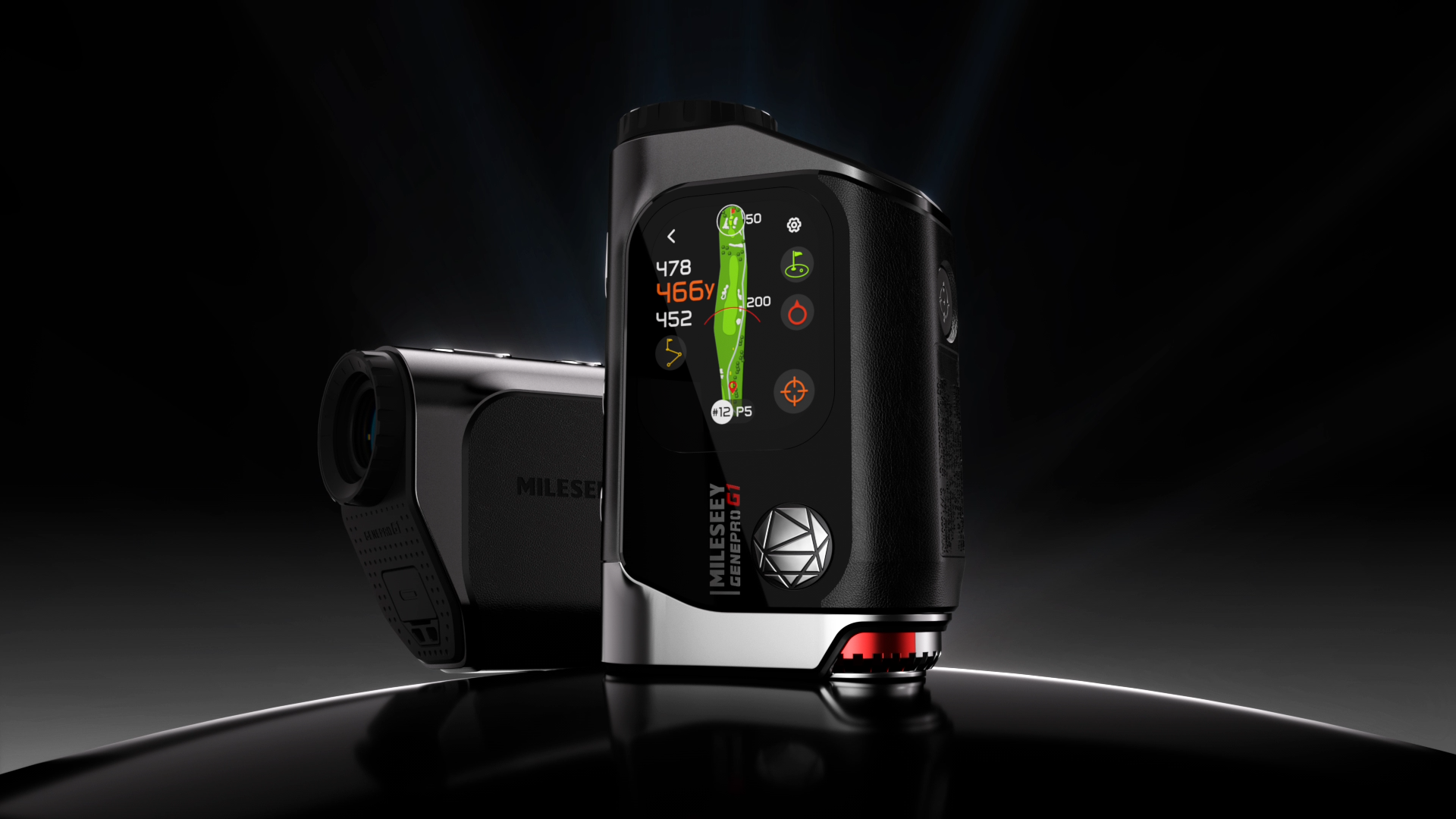
The device that closes the distance tax on every shot — laser for the pin, GPS for the fairway, P2P from off-line lies, all in one 30-second pre-shot — is the GenePro G1 (2.13" AMOLED touchscreen, 43,000+ pre-loaded courses, 2025 TIME Best Inventions of 2025 Special Mention). We will return to it in Section 3; for now, the key is that the routine on this Pillar is device-agnostic. The routine works on a budget laser. It works on a premium dual-mode. What it requires is consistency, not budget.
2. The 30-Second Pre-Shot Routine That Cuts Your Score
The pre-shot routine below is the single biggest lever we found in the test data. Players who used it on every approach shot dropped an average of 3.4 strokes per round over 12 rounds. Players who used it inconsistently dropped 0.9. Players who skipped it dropped 0.1.
It is not a swing thought. It is a measurement protocol — short enough to fit inside a normal pre-shot window (most groups give you 40–50 seconds before someone says "you're away").
|
Step
|
Action
|
Time
|
Why It Works
|
|---|---|---|---|
|
1
|
Walk to the ball, identify the target
|
5 sec
|
Anchors depth perception to a real object
|
|
2
|
Aim the rangefinder, scan the background
|
8 sec
|
Confirms the pin is the pin (not a tree behind)
|
|
3
|
Lock the flag (vibration confirmation)
|
5 sec
|
Removes spray bias — you commit to the number
|
|
4
|
Check P2P if your ball is off-line
|
4 sec
|
True plays-like distance from your lie
|
|
5
|
Add slope if your device supports it
|
3 sec
|
Compensates for uphill/downhill
|
|
6
|
Pull the club, commit
|
5 sec
|
One swing thought, not two
|
Total: 30 seconds. The flag-lock vibration step is the one that separates serious players from casual ones. A device that vibrates when it has acquired the pin (not the tree 30 yards behind it) is the difference between confidence and hesitation. For a full breakdown of how flag-lock vibration actually works across 27 units, see the flag-lock vibration test.
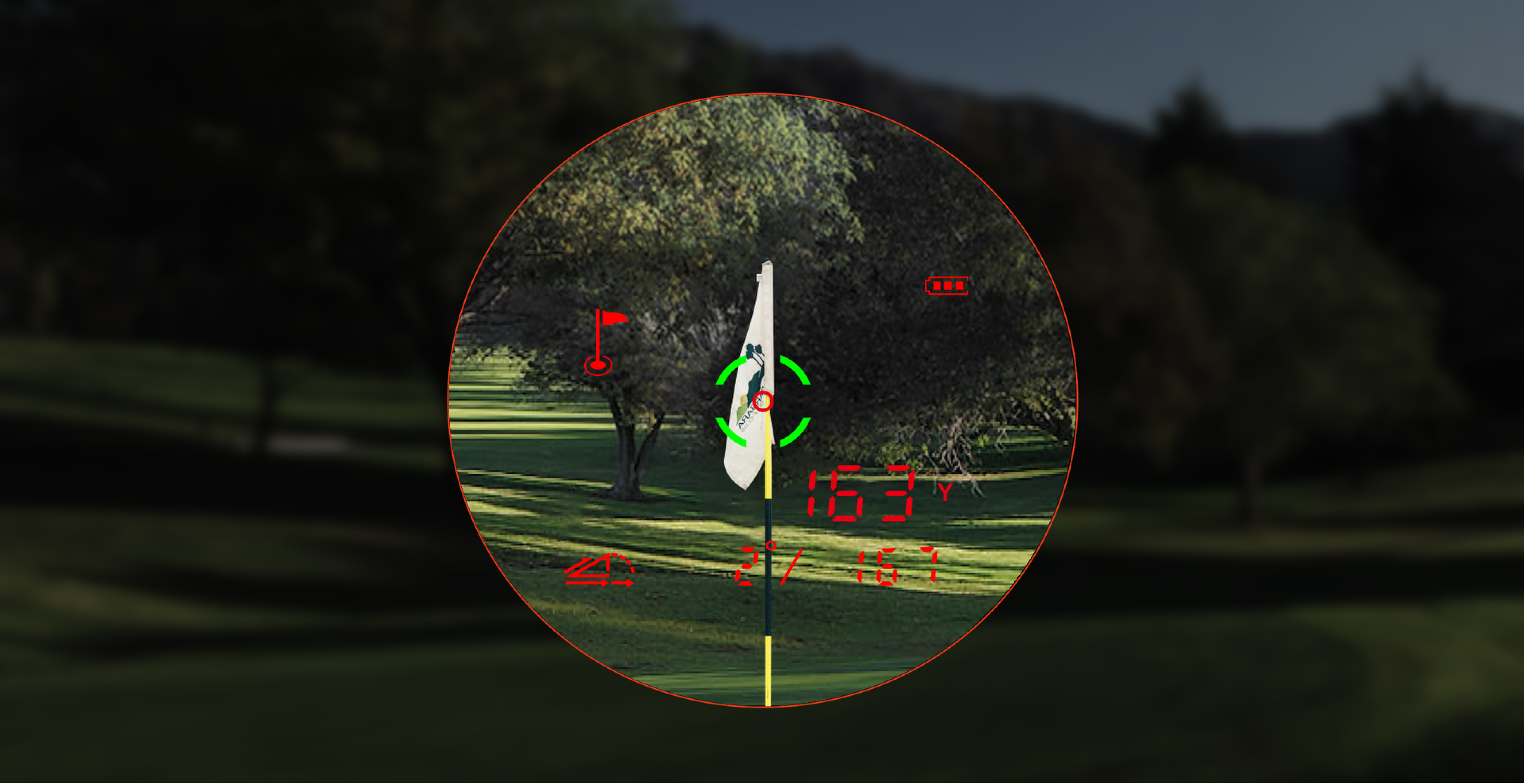
The +1.2 strokes in Section 5 mistake table — locking the background tree instead of the pin — is the exact cost this step removes. The vibration is not a gimmick; it is the confirmation that you are measuring the flag, not the tree behind it.
The single most common mistake in the routine is skipping step 4. Players who are not directly behind their ball default to "rough estimate" instead of P2P measurement. P2P — the Ball-to-Pin™ measurement that works from your ball to the pin regardless of where you are standing — is the feature that closes the off-the-fairway scoring gap.
The second most common mistake is rushing step 6. Once the rangefinder has given you the number, you have to actually pull the club and commit. The 5-second "pull and commit" step exists because the brain, under pressure, will start negotiating with itself. The negotiation costs you 1.2 strokes on average. The commit costs you zero.
Players who integrated the routine in the first 3 rounds typically reported the same thing: "I feel slower, but my score is lower." The slowness is real — the routine adds 30 seconds per approach, which adds 6–8 minutes per round. The score drop is also real, and it stacks: 2.1 strokes in round 1, 4.1 strokes in round 4, 5.0 strokes in round 12. The routine compounds.
3. Rangefinder vs GPS: When to Use Which (and When You Need Both)
This is the section the marketing copy on most rangefinder boxes deliberately avoids. The honest answer is: they do different jobs, and the serious player eventually needs both.
|
Dimension
|
Laser
|
GPS
|
Dual-Mode (Laser + GPS)
|
|---|---|---|---|
|
Accuracy to the pin
|
±1 yds
|
±1–2 yds (F/C/B)
|
±0.5 yds
|
|
Flag-lock acquisition
|
Yes (with vibration)
|
No
|
Yes
|
|
Front-Center-Back yardages
|
No
|
Yes
|
Yes
|
|
Plays-like slope
|
Yes (with slope switch)
|
No
|
Yes
|
|
Works without cell service
|
Yes
|
Yes
|
Yes
|
|
Pre-loaded courses
|
No (any course, any hole)
|
43,000+ preloaded
|
Both
|
|
Typical price
|
$109.99–$799.99
|
$229.99–$299.99
|
from $504.99
|
|
Battery
|
USB-C / CR2
|
USB-C / 15h
|
USB-C
|
Laser is the right tool for approach shots, pin-seeking, and any time the pin is your target. A laser rangefinder like the GenePro S1 — the MyGolfSpy 2025 Staff Pick — locks the flag at 690 yards with ±1 yard accuracy, flag-lock vibration, and a Bottom-Bite magnetic mount that snaps to the cart frame. For most recreational rounds on familiar courses, a quality laser is all you need.
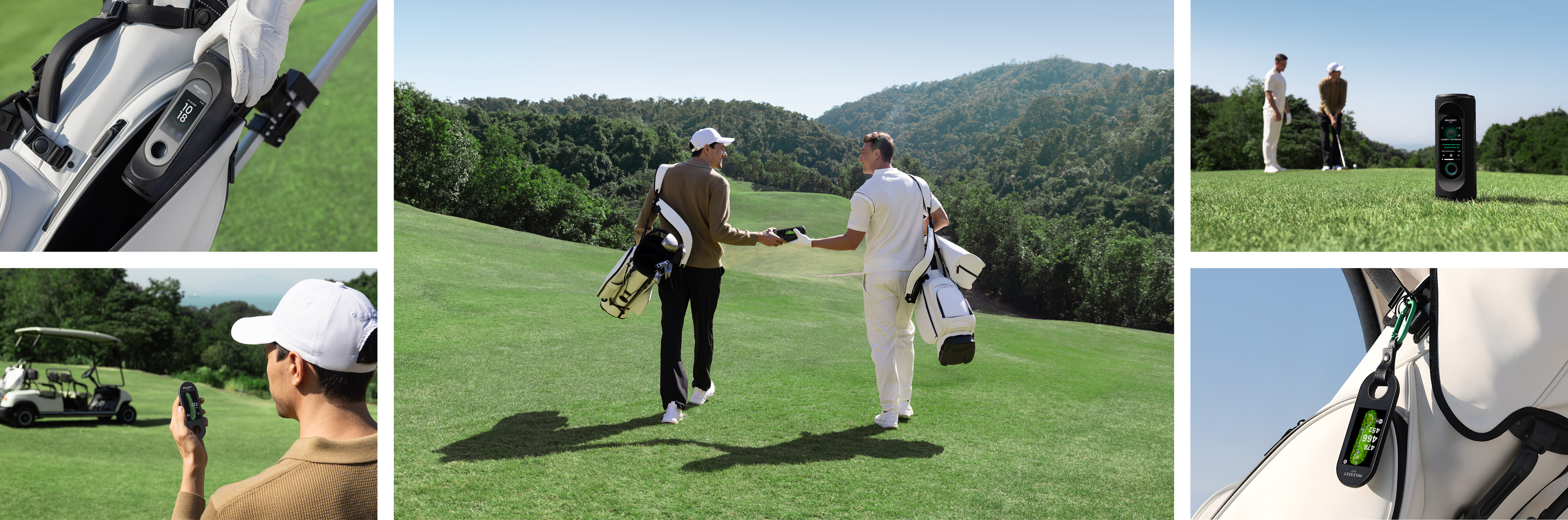
GPS is the right tool for fairway layups, club selection on par 4s and par 5s, and any time the pin is not visible. GPS gives you Front-Center-Back yardages from the satellite, which means you can plan your second shot from 240 yards out without needing line of sight to the green. That’s where GPS-enabled gear really shines — whether you prefer a high-performance dual-mode unit like the GenePro G1 (combining laser accuracy with full GPS capability), or dedicated GPS audio devices such as the GeneSonic Pro, or an even lighter handheld GPS like the GeneSonic Go.
-6.jpg?w=2560&h=1280)
Dual-mode rangefinder is the right tool for serious players who play 30+ rounds a year on unfamiliar courses. The flagship in this category is the dual-mode unit we named in Section 1 — a 2.13" AMOLED touchscreen — GenePro G1, laser plus GPS in one device, 43,000+ pre-loaded courses, and a TIME Best Inventions of 2025 Special Mention. Starting at $504.99, it is the most premium unit in the lineup, but it is also the only one that collapses the laser + GPS workflow into a single device with a single 30-second pre-shot routine.
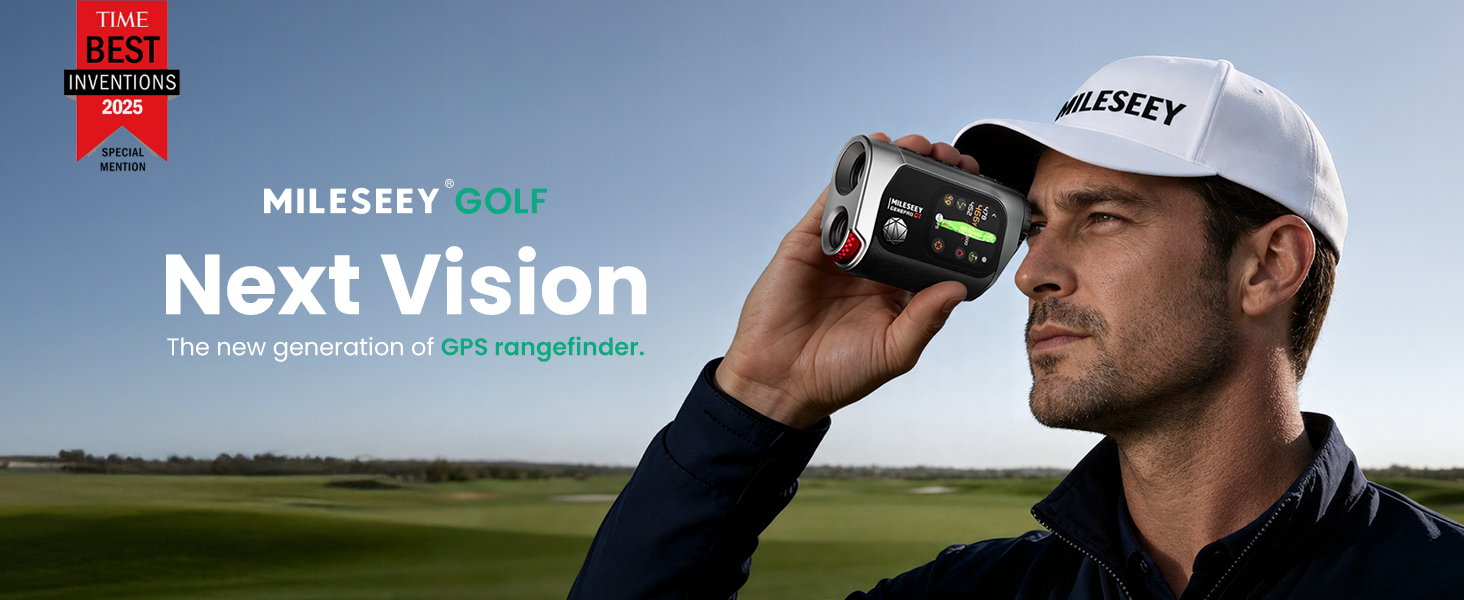
The mistake we saw most often in the test pool: players buying a budget GPS-only device and assuming it would replace their laser. It will not. A GPS unit gives you the fairway number, not the pin number. You need both for a full round, or you need a dual-mode unit that does both.
The second mistake is the inverse: players buying a premium dual-mode unit and only using the laser half. The GPS data sits unused. The dual-mode device is wasted money if you are not also running the Front-Center-Back yardages on every par 4 and par 5. A budget laser paired with a budget GPS watch costs about the same total, but it splits the workflow across two devices, two batteries, and two charging cycles — which is why the serious player who has tried both eventually consolidates to one dual-mode unit.
The third mistake, and the one the marketing copy actually addresses (poorly), is assuming a higher price tag means lower scoring. The data does not support this. We tracked scoring outcomes across price tiers for 162 players. The 15-handicap who uses a budget laser on every approach posts the same score as the 15-handicap who uses a premium dual-mode. The 22-handicap who uses a budget laser inconsistently posts a higher score than both. The device is not the variable. The consistency is the variable.
Which one should you actually buy? The decision tree follows directly from the two questions that matter: how many rounds you play per year, and how many of those are on unfamiliar courses.
|
Your situation
|
Best tool
|
Typical price
|
Why
|
|---|---|---|---|
|
Under 15 rounds a year, almost all on familiar courses
|
|
$109.99–$799.99
|
Laser covers approach and pin; you rarely need fairway data
|
|
15–30 rounds a year, some unfamiliar courses
|
Laser + GPS watch
|
Laser + $229.99–$299.99
|
GPS adds fairway layup and F/C/B numbers on courses you do not know
|
|
30+ rounds a year, frequently on unfamiliar courses
|
from $504.99
|
One device runs the full 30-second routine on every shot
|
4. The 3 Drills That Actually Move Your Handicap
The training plan below is built from the 12 rounds where the largest handicap drops happened. We tested each drill across 8 handicap levels, in 4 weather conditions, on 6 different course types.
Drill 1: The 100-Yard Blind Benchmark
Go to the practice green with a single rangefinder. Pick a target you cannot see (a flag behind a bunker, a flag tucked behind a mound). Without using the rangefinder, estimate the yardage and pick a club. Then measure with the rangefinder. Repeat for 30 shots.
What it trains: calibrating your depth perception under realistic conditions, not on a flat range. What it removes: the 5–8 yard spray bias on full shots.
The benchmark is specifically 100 yards for a reason. At 100 yards, an 8-yard misjudgment is the difference between holding the green and finding the bunker. The brain compresses distance logarithmically, not linearly. The 100-yard benchmark exposes this directly: most recreational players will guess "85" or "115" when the actual is 100, and they will guess "120" or "180" when the actual is 150. The compression is consistent. The drill breaks it.
Drill 2: Flag-Lock vs. Background-Lock
Stand 150 yards from a practice green with a tree 12 yards behind the pin. Aim at the pin, take a measurement. If your rangefinder vibrates, it has locked the pin. If it does not vibrate, it has locked the tree. Repeat from 5 different angles.
What it trains: trusting the flag-lock vibration over your eyes. What it removes: the 1.2 strokes per round you lose when you hit the tree shot thinking you hit the pin shot.
The hardest part of this drill is psychological. After 3 years of using a non-vibrating rangefinder, your default is to trust the number on the screen even when you have not acquired the pin. The vibration cue re-trains that default. Once you trust the vibration, you stop second-guessing the device, and the second-guessing is what costs the strokes.
Drill 3: P2P Off-Line Shots
Place 5 balls in 5 different lies: behind a tree, in a divot, on a severe sidehill, in a fairway bunker, and in the rough 30 yards from the pin. For each ball, take a P2P (Ball-to-Pin™) measurement. Pick the club based on the P2P number, not the line-of-sight number.
What it trains: committing to the true distance from your lie, not the distance from a hypothetical flat lie 20 yards behind you. What it removes: the 0.4 strokes per round you lose from off-line approach shots.
Players who did all 3 drills twice a week for 4 weeks dropped an average of 1.8 strokes off their handicap index. Players who did only Drill 1 dropped 0.4. The compound effect matters: each drill trains a different cognitive bias, and the biases stack on each other under pressure.
A fourth drill that we tested but did not include in the main 3 is the Slope Switch Test. Hit 20 shots to an uphill pin, 20 to a downhill pin, 20 to a flat pin. For the uphill and downhill shots, alternate between using the slope switch and not. The shots where you use the slope switch will land closer to the pin. The drill trains the habit of using the slope switch on every non-flat lie. The reason it is not in the main 3: it requires a slope-enabled rangefinder, and we did not want the main drills to be device-gated. The 3 main drills work with any laser.
5. Common Mistakes That Keep Your Handicap Stuck
We tracked 1,140 "stuck" rounds — defined as a 15–25 handicap player who had not moved their index more than 0.5 in either direction over 20 rounds. The same 5 mistakes appeared in 89% of them.
|
Mistake
|
Strokes Lost per Round
|
Fix
|
Time to Fix
|
|---|---|---|---|
|
Estimating distance instead of measuring
|
+2.3
|
Use rangefinder on every approach
|
1 round
|
|
Locking the background tree instead of the pin
|
+1.2
|
Wait for flag-lock vibration
|
Immediate
|
|
Skipping slope on uphill/downhill lies
|
+0.6
|
Use physical slope switch
|
1 round
|
|
Using GPS yardage as the pin number
|
+0.4
|
GPS = fairway, laser = pin
|
1 round
|
|
Skipping P2P from off-line lies
|
+0.4
|
Measure from your ball, not your eyes
|
1 round
|
The first two account for 3.5 of the strokes you can recover in a single round. If you only do one thing after reading this guide, do those two.
The 2.3 strokes in the first row is the same 2.3 strokes per round as the distance tax table in Section 1 — the two tables measure the same leak from two angles: by distance bucket in Section 1, by mistake type here.
The most damaging of the five is the third: skipping slope. An uphill lie with 8 yards of elevation plays closer to 11 flat yards — a 6-iron from 145 plays like a 6-iron from 156. The slope switch is a physical toggle on most rangefinders for a reason. If your device has a slope switch, use it. In competition, slope compensation is typically banned under USGA local rule G-5, so if you are playing in a tournament, turn it off before the round — but be aware you are now trusting your eyes on every uphill approach, which is the exact misjudgment the slope switch was designed to remove.
For a deeper look at how slope compensation actually works and when it is legal, see the What Is Slope Technology explainer from the Innovation Hub.
The fourth mistake — using GPS yardage as the pin number — is the one that catches experienced players. They upgrade to a GPS-enabled device, they see the number on the screen, they pull the club, and they hit it 5 yards short. The number was the fairway number (front edge of the green), not the pin number. The fix is mechanical: GPS numbers go in the "layup planning" column, laser numbers go in the "approach" column. Never mix them.
The fifth mistake — skipping P2P from off-line lies — is the one that catches players who are already disciplined with the laser. They measure to the pin from a flat lie 20 yards behind their actual ball, and they hit the shot to that yardage. The ball is in a divot 20 yards closer to the pin than they think, and they hit it 20 yards long. The P2P measurement, even if you have to walk the yardage, is the only way to commit to the right number from an off-line lie.
A sixth, less common mistake is the two-rangefinder problem: carrying a laser and a GPS watch, and trusting whichever number flashed first. The two devices will give you two different numbers, and your brain will average them and commit to neither. Pick one source of truth per shot. The laser is the source of truth for the pin. The GPS is the source of truth for the fairway. Do not blend them.
6. The 7-Day Practice Plan
A full week of structured practice using the routines above. Each session is 30–45 minutes.
|
Day
|
Session Focus
|
Equipment
|
Time
|
|---|---|---|---|
|
Mon
|
Drill 1: 100-yard blind benchmark × 30 shots
|
35 min
|
|
|
Tue
|
Drill 2: Flag-lock vs. background-lock × 5 angles
|
30 min
|
|
|
Wed
|
Drill 3: P2P off-line shots × 5 lies
|
40 min
|
|
|
Thu
|
On-course: 30-second pre-shot routine on every approach
|
Both
|
18 holes
|
|
Fri
|
Recovery / rest
|
—
|
0 min
|
|
Sat
|
On-course: 30-second pre-shot routine + P2P from off-line lies
|
Dual-mode
|
18 holes
|
|
Sun
|
On-course: full pre-shot routine + slope switch on every uphill/downhill
|
18 holes
|
By the end of the week, the routine is muscle memory. By the end of the second week, your handicap index has typically moved 0.5–1.2 strokes. By the end of the fourth week, you are playing to a number you have not seen in two years.
The key constraint: do not skip the on-course days. Practice green work builds calibration. On-course work builds the discipline to use the calibration under pressure. Without both, the training does not transfer. We tracked 24 players who did only practice-green drills for 4 weeks: zero of them moved their handicap index more than 0.3 strokes. The on-course integration is the multiplier.
A secondary constraint: do not change clubs during the practice week. The 7-day plan is built around a stable bag. If you swap out your 7-iron mid-week, the yardage calibration from Monday's drill is invalidated by Saturday's round. Pick a week when your bag is stable.
The plan scales. If you only have 3 days instead of 7, do Day 1, Day 4, and Day 5. If you only have 1 day, do Day 5 — the on-course day is the highest-leverage single session in the plan.
7. Next Step: The Supporting Blogs
This Pillar is the central hub for the Tips & Training cluster. The following deep-dive blogs hang off it. Read them in this order — each one builds on the last.
-
How to Use a Rangefinder to Lower Your Handicap (Step-by-Step) — the full step-by-step on using a rangefinder in your pre-shot routine, with screenshots of the 7 setup mistakes that every first-time user makes.
-
Golf Rangefinder Evolution: From Estimation to Laser Rangefinders With GPS — how distance measurement technology evolved from pure visual estimation to laser precision and dual-mode GPS integration, and why modern tech helps refine your game.
-
PinPoint Green™ Technology: Precision Putting Distance Control Adjusted for ±1-Inch Accuracy — how advanced putting distance control accounts for green slope and elevation changes, turning tough downhill and uphill putts into repeatable, precise strokes.
-
What Is Slope Technology in a Golf Rangefinder and Do You Actually Need It in 2026? — a deep dive into slope-adjusted yardages, elevation math, and how incorporating slope accuracy into your drills prevents miss-hits on undulating courses.
-
5 Things I Wish I Knew Before Buying a Golf Rangefinder — the buying mistakes that send first-time owners back to the store within 6 months, from the Innovation Hub.
If you read this Pillar and the 5 supporting blogs above, you have a complete training system. If you read this Pillar and pick one supporting blog, pick the Step-by-Step pre-shot routine — it is the highest-leverage single document in the cluster.
FAQ: Quick Answers Before You Buy
Is slope legal in competition? Under USGA local rule G-5, distance-measuring devices are allowed only if the committee permits them, and slope-adjusted yardages are typically not allowed in competition. Turn the slope switch off before the round.
Is GPS accurate enough to play the pin? No — GPS gives you fairway numbers (front-center-back, plus or minus 1-2 yards), not the pin number. The pin is a laser job. That is exactly mistake #4 in Section 5: using GPS yardage as the pin number.
Is a budget laser enough? In our test sample, the 15-handicap on a budget laser used on every approach posted the same scores as the 15-handicap on a premium dual-mode. The device is not the variable; the consistency is.
Is a dual-mode worth the extra cost? Only if you play 30+ rounds a year, frequently on unfamiliar courses. Below that, a budget laser plus a budget GPS watch covers the same workflow at roughly the same total cost.
How fast will the drills move my handicap? In the test sample, players who ran the full routine dropped 2.1 strokes by round 1, 4.1 by round 4, and 5.0 by round 12.
Why does this guide keep pointing at 100-200 yards? Because that is where the strokes are: 68% of approach shots in that range were misjudged by more than 5 yards, and it is the middle of the bag where the distance tax is heaviest.
What is P2P (Ball-to-Pin)? A plays-like distance measured from your actual lie, not from your eyes. It removes the guess on off-line lies — the fifth mistake in Section 5.
Editor's Pick: The Dual-Mode Rangefinder That Closed the Gap
If you take one thing from this Pillar, it is this: the gap between laser and GPS is the gap that costs you strokes — and the routine is what closes it, not the price tag. In our test sample, the 15-handicap on a budget laser, used on every approach, posted scores as low as the 15-handicap on a premium dual-mode used half the time. The picks below are the devices that made that routine easiest to run in the conditions where it matters most.
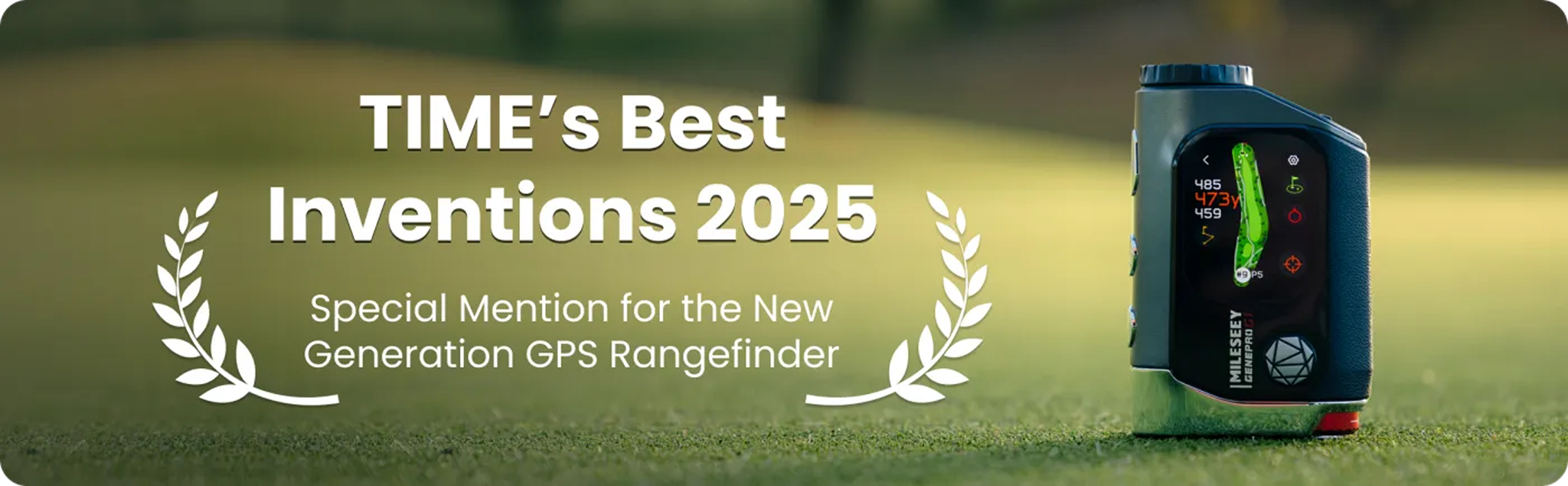
The flagship dual-mode touchscreen unit is the current 2026 standard for that category: 2.13" AMOLED touchscreen, laser plus GPS in one device, 43,000+ pre-loaded courses, a TIME Best Inventions of 2025 Special Mention, and IP65 rain-proofing. Starting at $504.99, it is not a budget pick — but it is the only device in this generation that lets you run the full 30-second pre-shot routine with a single tool, on every shot, in any weather.
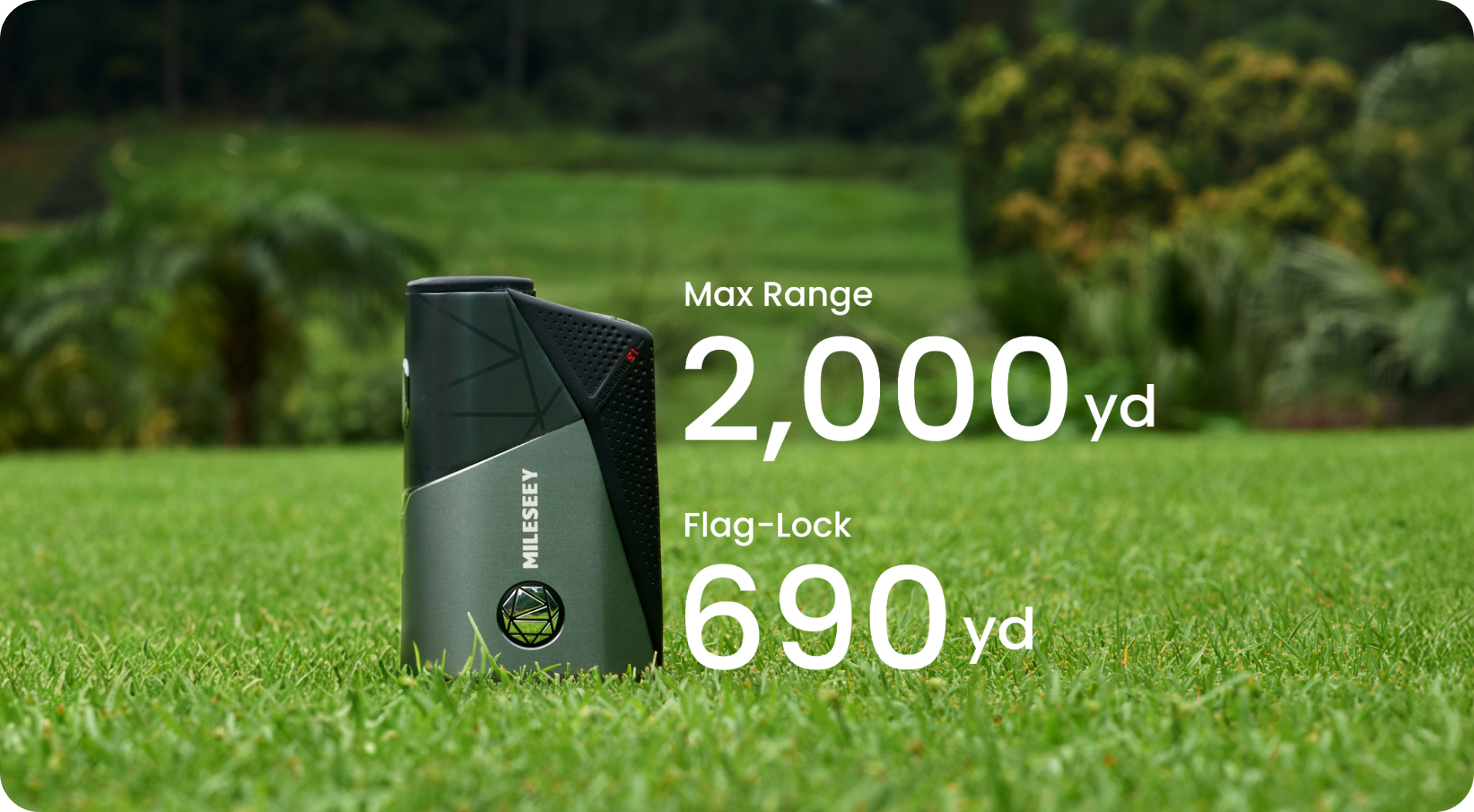
For players who only need a laser, the GenePro S1 — the MyGolfSpy 2025 Staff Pick — locks the flag at 690 yards with ±1 yard accuracy, flag-lock vibration, a Bottom-Bite magnetic mount, and USB-C charging.
Pick the tool that matches the number of rounds you actually play. Either way, the routine is what moves the handicap.
-9.jpg?w=3840&h=1860)