One of the biggest mistakes average golfers make with GPS is assuming one number tells the whole story.
They get a number to the middle of the green, pull a club and swing away. Sometimes that works. A lot of times, it does not. And when it does not, the miss is not random. It is usually the result of ignoring one of the most important pieces of approach-shot information in golf: green depth.
How deep is the green from front to back?
That sounds simple, but it changes everything.
A green that is only a few paces deep plays nothing like one that gives you plenty of room to work with. A front pin on a shallow green can turn a perfectly decent middle-yardage swing into a nightmare. A back pin on a deep green can tempt golfers into forcing extra club when the smarter play is still somewhere short of the hole.
This is where golfers can save real shots. Not with a swing overhaul. Not with some miracle tip. Just with better information and better decisions.
That is why front, center and back yardages matter so much.
The Green Is Not a Dot
Too many golfers treat the green like a single destination. It is not.
It is a landing area with shape, depth, tiers, slopes and edges that influence every club-selection decision you make. If you only know one number, you are simplifying a target that is anything but simple.
Let’s say you have 155 yards to the center. That sounds clear enough until you learn the green is only 22 yards deep and the pin is tucked just a few paces over the front bunker. Now that 155 to the center may be far too much if your normal shot releases, especially if the penalty for going long is severe.
Flip that around. Say the center is still 155, but now the green is 36 yards deep and the pin is cut near the back shelf. Suddenly, 155 to center is leaving you well short of the actual hole location. In one situation, center-green thinking keeps you safe. In the other, it may leave you with a putt that crosses half the property.
That is why green depth intelligence matters. The number to the center only starts the conversation.
Shallow Greens Change the Margin for Error
As a coach, I can tell you that shallow greens make golfers uncomfortable for a reason. They shrink the landing zone and punish indecision.
On a shallow green, the difference between being safely on and being short-sided or long-sided can be just a few yards. That means your front yardage is crucial. Your back yardage is equally crucial. And the gap between those numbers tells you how much room you really have to work with.
When that front-to-back gap is small, your priority should shift from chasing flags to controlling dispersion. In other words, start thinking less about attacking and more about where your normal shot pattern fits.
If your 8-iron carries 150 on a stock swing but can jump to 154 when you really catch it, that matters a lot more on a shallow target than on a deep one. The depth tells you whether your stock shot is safe, whether you need to take something off and whether the right answer is simply to play for the fat side and accept a longer birdie putt.
That is smart golf. That is scoring golf.
Deep Greens Create Opportunity, But Only If You See It
Deep greens are different. They offer more flexibility, but only if you use the information correctly.
On a deep green, front, center and back yardages help you understand where the pin actually lives within that larger space. A center number alone can leave you too conservative or too aggressive depending on the day’s hole location.
If the pin is back and you know there is plenty of green behind the front edge, you may have room to take one more club and hit a controlled shot without bringing serious trouble into play. If the pin is front on a deep green, you may be far better off playing to the middle and relying on the putter rather than trying to force a perfect number.
The point is not always to fire at the flag. The point is to understand the full target, then choose the shot that gives you the best scoring opportunity relative to your skill level.
That distinction matters.
Pin Position Is Only Useful If You Understand the Green Around It
Golfers love to talk about pin position, but pin position without context is incomplete information.
A back pin is not automatically dangerous. A front pin is not automatically attackable. Everything depends on green depth, surrounding trouble and your own shot tendencies.
If the pin is back but the green is deep and open, you may have room to be assertive. If the pin is front on a green that narrows near the entrance, being aggressive may be the exact wrong play.
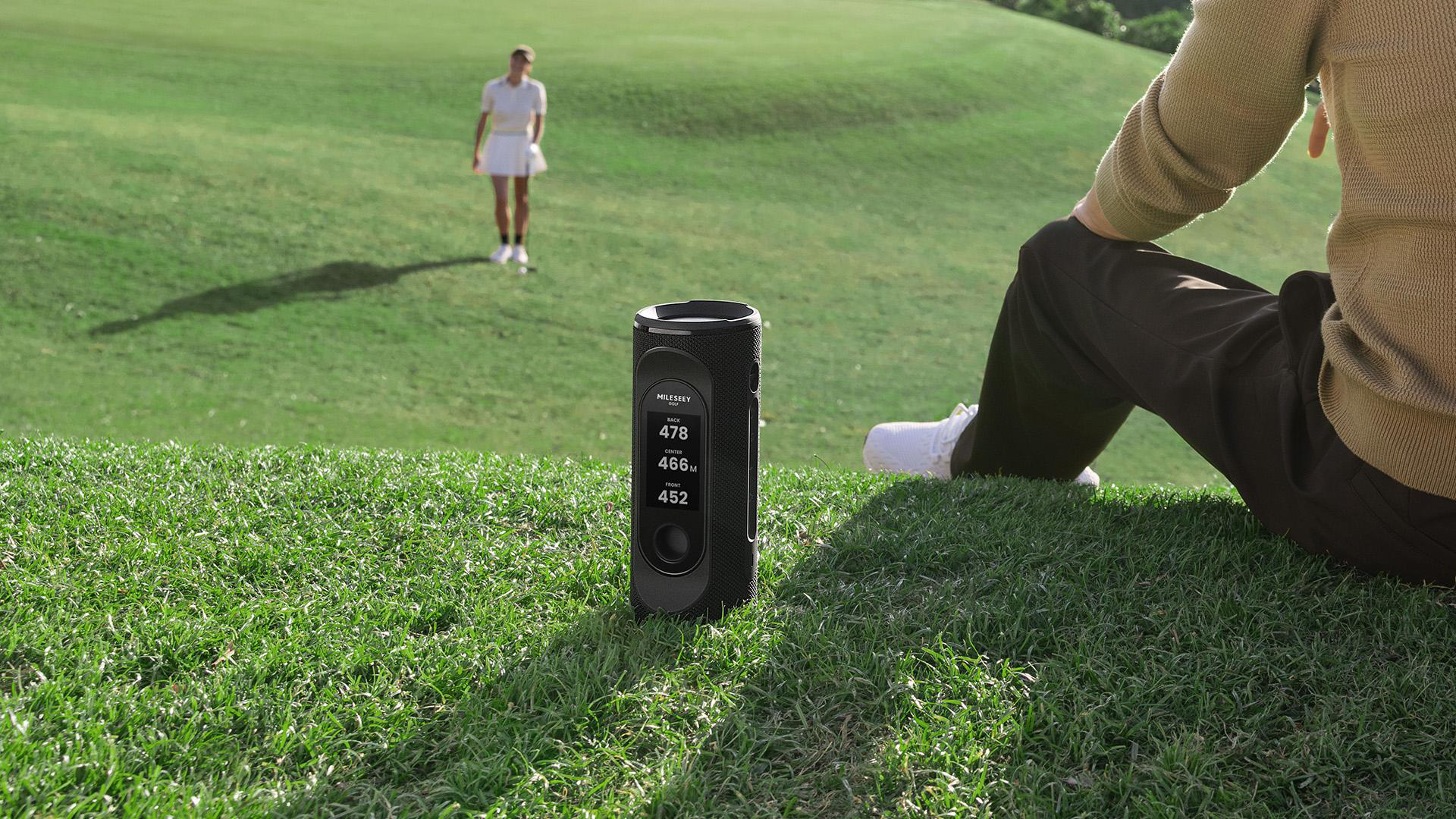
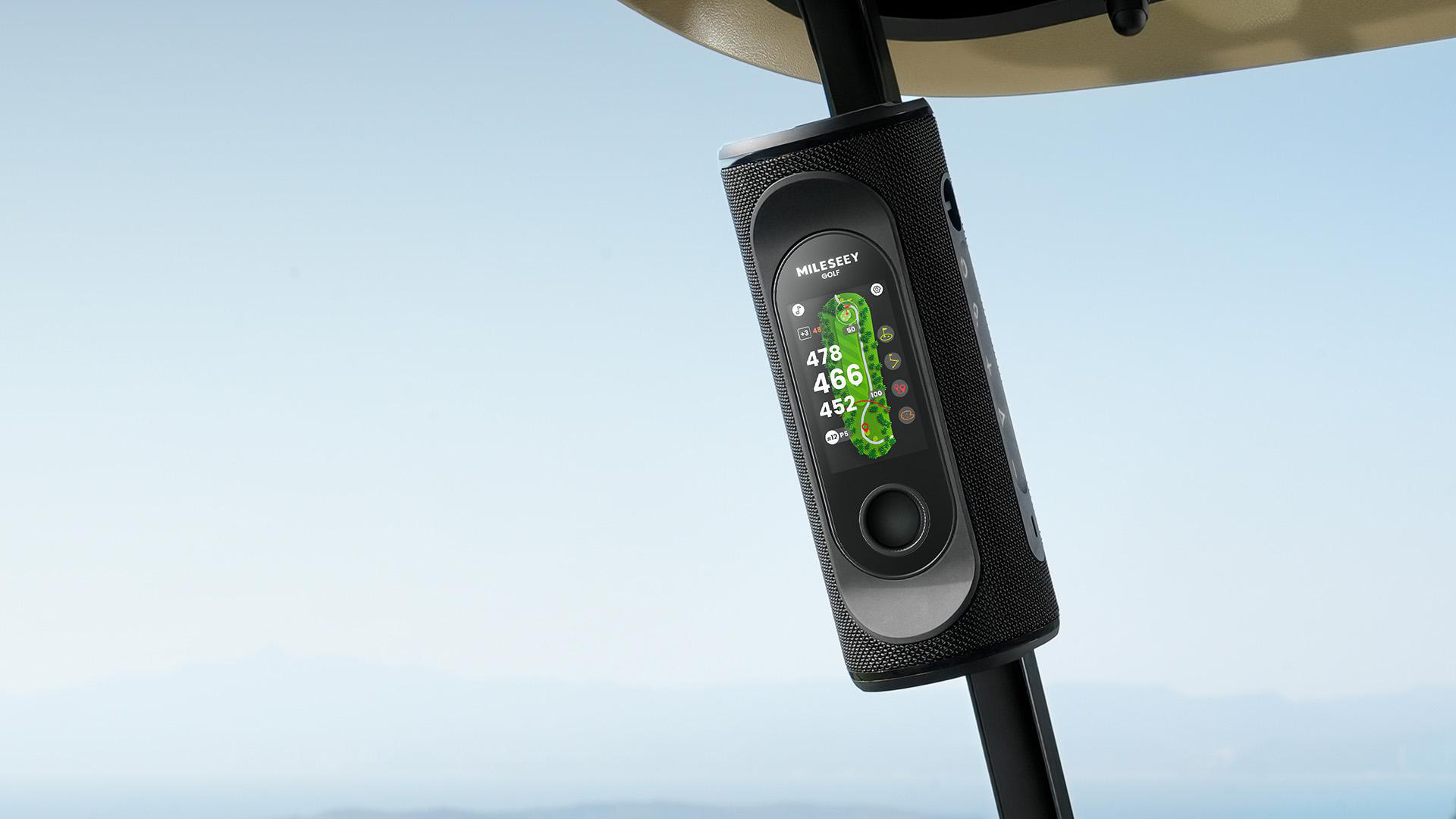
This is where the GeneSonic Pro becomes more than a simple distance device. Front, center and back yardages help you understand the size of the target, not just its location. That gives you a far better sense of what the pin position actually means. Instead of thinking only about “the hole,” you start thinking about the usable landing area around the hole.
That is a huge shift in on-course decision-making.
The Number You Need Is Often the One That Protects Your Miss
One of the best concepts I teach students is this: choose the yardage that protects your most likely miss.
Most amateur golfers do not miss in both directions equally. Some tend to come up short. Some flare shots right. Some get long when they get quick in transition. Your strategy should reflect that.
If you are a player who tends to miss a little short, the front number matters even more because you need to know what absolutely must be carried. If you tend to hit one that jumps long now and then, the back number becomes your guardrail. If the green is shallow, both numbers may tell you to back off the hero shot and play to the safest third of the surface.
That is what good course management looks like. It is personal. It is not one-size-fits-all.
A Better Way to Use Front, Center and Back Yardages
Here is a simple system.
First, check the front number. That tells you what must be covered.
Second, check the back number. That tells you where dead long begins.
Third, look at the difference between the two. That is the green’s working depth.
Fourth, place the pin within that space. Is it front, middle or back? Is there room beyond it? Is there trouble short or long?
Fifth, choose the shot that fits your normal pattern, not your perfect swing.
That process takes only a few extra seconds, but it changes the quality of your decision in a big way.
Why the GeneSonic Pro Helps
One of the strengths of the GeneSonic Pro is that it gives golfers that bigger picture. You are not stuck with a single center-green number and a guess. The front, center and back yardages let you visualize the green as a real landing area, and the broader course-view information helps you understand the context of the shot.
That matters because better decisions usually come from better visuals.
Golfers often think strategy is complicated. A lot of times, it is not. It is simply the discipline to gather the right information before you swing.
The Bottom Line
Green depth changes club selection, target choice and scoring more than many golfers realize.
A shallow green asks for restraint. A deep green can offer opportunity. A front pin is only as dangerous as the front edge and the trouble around it. A back pin is only worth chasing if the green gives you room to do it.
When you use front, center and back yardages well, you stop treating the green like a single point and start seeing it for what it really is: a three-dimensional target with smarter and dumber ways to attack it.
That is where the GeneSonic Pro earns its keep.
Not by giving you just one number, but by helping you understand the whole target so your next decision has a much better chance of being the right one.
By Brendon R. Elliott, PGA PGA Professional | Coach | Industry Consultant | Golf Writer