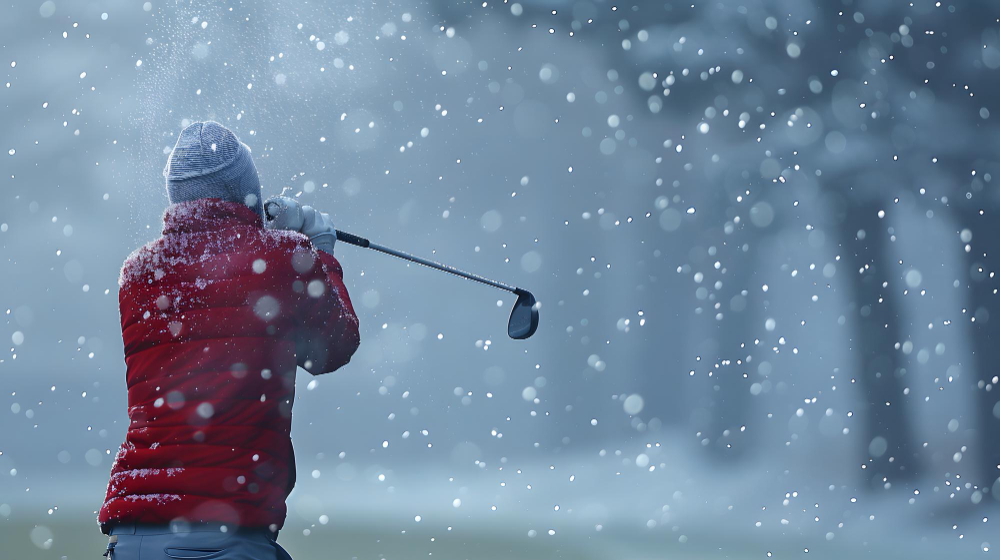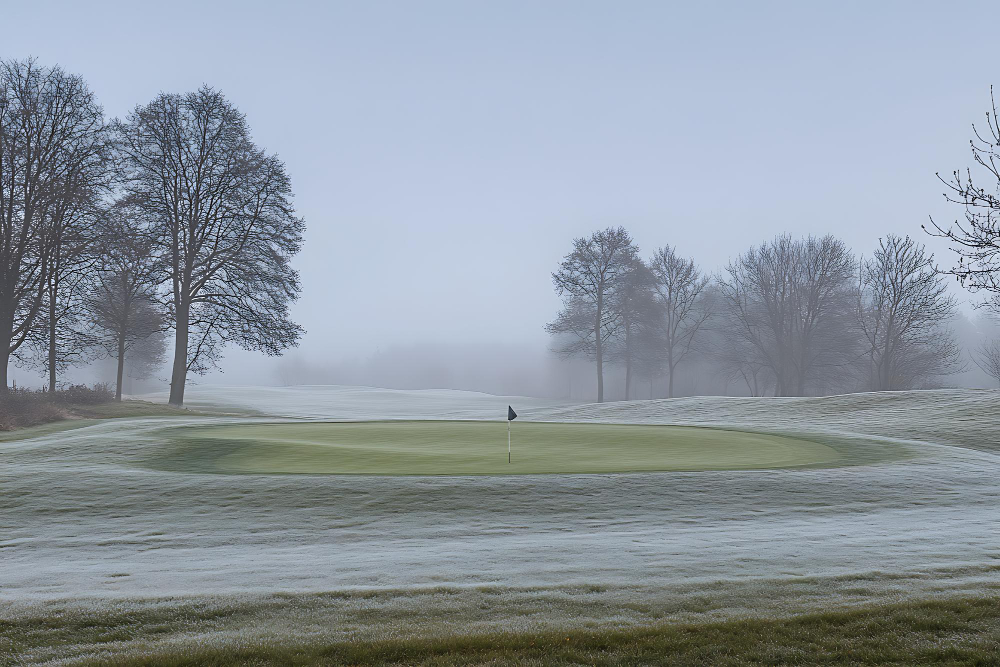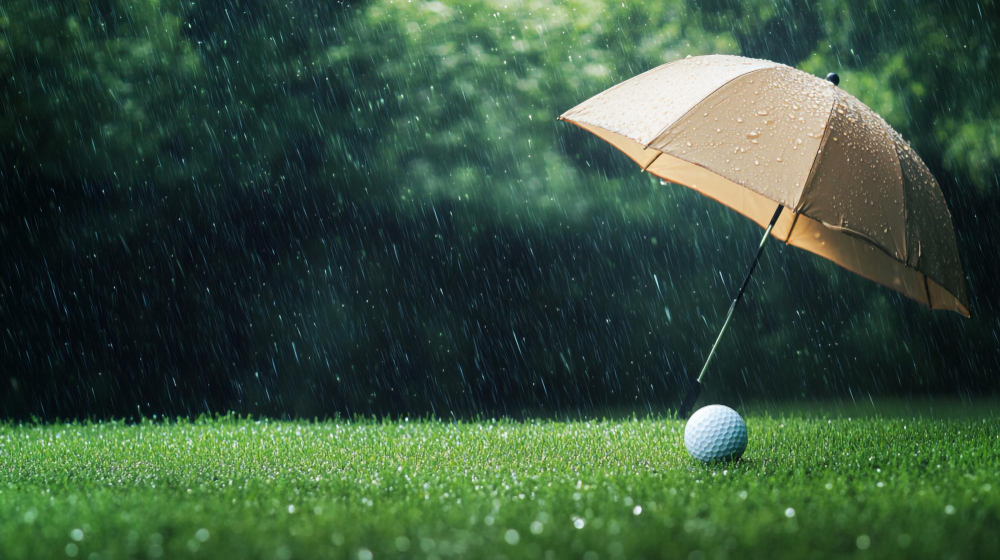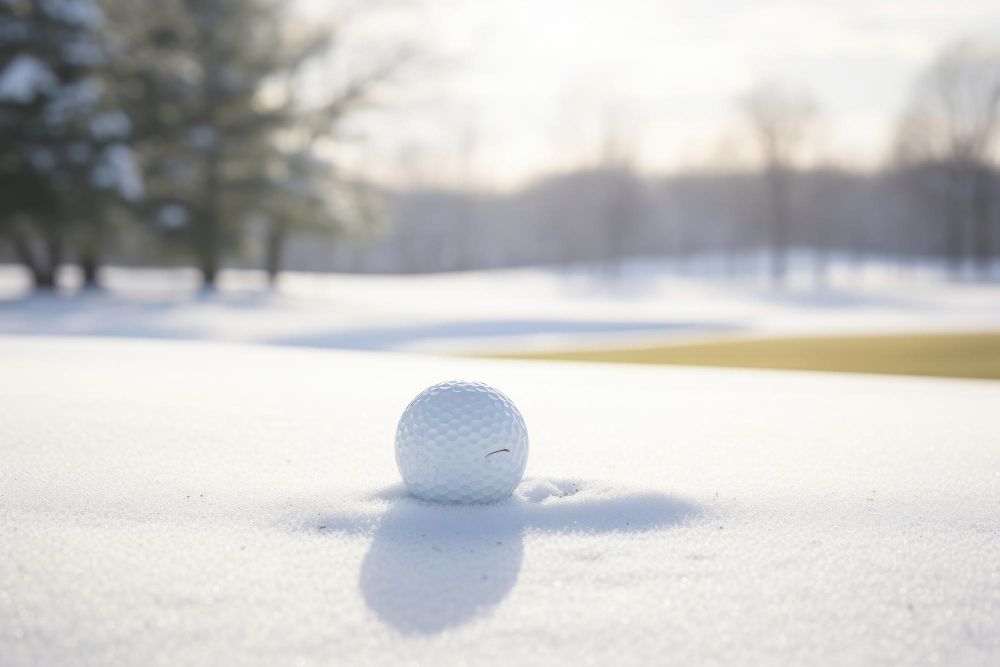
Winter golf can be excellent: quieter tee sheets, crisp air, and a round that rewards thoughtful decisions more than brute force. But it is not ordinary golf with a thicker jacket. Cold air, wet turf, dormant grass, frost restrictions, shorter daylight, and reduced mobility can all change the same shot at once.
Our editorial view is simple: play the condition, not the calendar. A 48°F sunny afternoon on firm ground may require only one extra layer. A 48°F morning with frost, saturated turf, and a two-club wind may not be playable at all. This guide gives you a system for deciding before the round, adapting during it, and protecting both your score and the course.
Start With the Five-Factor Winter Condition Stack
Do not make the go/no-go decision from temperature alone. Check five layers of information in order.
1. Safety
Rain is uncomfortable; lightning is dangerous. If thunder is audible, leave the course and use an enclosed building or hard-topped vehicle as directed by course staff. The National Weather Service says there is no safe place outdoors during a thunderstorm and recommends staying sheltered until 30 minutes after the last thunder.
Also stop when footing becomes unreliable, cold affects hand control, or visibility makes it difficult to track people and balls. A prepaid tee time is never a reason to override those signals.
2. Course access
Check the course's own update, not just the neighborhood forecast. Frost can persist in shaded, low, or north-facing areas even when your driveway is clear. The USGA's frost-delay guidance explains that traffic on frost-covered turf can rupture vulnerable plant cells and that maintenance crews still need time after thawing to prepare the course.
Ask about delayed starts, temporary greens, cart-path-only rules, closed holes, and whether scores are acceptable for handicap posting under local seasonal rules. The detailed frost delay golf guide explains how to plan around an uncertain start without pressuring the staff.
3. Body mobility
Warmth is useful only if you can rotate, hinge, and maintain grip pressure. Build removable layers and test them with a club before leaving home. The full cold weather golf attire system shows how to combine moisture control, insulation, and wind protection without turning the swing into a wrestling match.
Hands are their own system. Dry cold, wet cold, and waiting between shots call for different solutions. Use the winter golf gloves decision guide to choose among a normal glove plus mitts, paired thermal gloves, and rain gloves.
4. Carry distance
Cold weather can reduce distance through a combination of denser air, a colder ball, extra clothing, and a less complete warm-up. Those effects are not identical for every player or club, so a universal “add one club” rule is too crude.
Start with your normal carry, hit a few measured shots in the day's conditions, and create a temporary adjustment rather than rewriting your permanent yardage chart. The cold-weather golf ball test separates ball temperature, model choice, carry, visibility, and short-game control.
5. Surface response
Winter turf can be firm, frozen, muddy, dormant, or saturated—and sometimes all four across one property. Carry may be shorter while total distance becomes longer on frozen ground. On wet fairways, rollout may disappear. Around soft greens, the landing spot matters more than the usual bounce pattern.
The USGA's overview of winter course realities notes that cold-season turf recovers slowly and that cart restrictions, temporary greens, and protected areas are normal tools for limiting lasting damage. Treat those restrictions as part of the course condition, not an inconvenience to work around.
Use a Go/Modify/Stop Decision Card
The following card turns the five factors into an actual decision.
| Status | What you see | What to do |
|---|---|---|
| Go | Course open; stable footing; no lightning; full hand control; enough daylight | Play, establish a first-hole distance baseline, and keep layers adjustable |
| Modify | Cart-path-only; wet turf; light rain; reduced mobility; uncertain carry; shortened daylight | Walk only where permitted, choose safer targets, play fewer holes, or use forward tees |
| Stop | Thunder; course closure; active frost restriction; unsafe footing; numb or poorly controlled hands; insufficient visibility | End or postpone the round and follow staff instructions |
“Modify” is the overlooked category. Winter golfers often treat a round as either normal or canceled. In reality, nine holes, a forward tee, a three-quarter swing day, or a practice session can preserve the purpose of the outing without pretending conditions are normal.
Dress for Motion, Not Just Warmth
Build from the skin outward
A practical system has three jobs:
- A base layer moves moisture away from the skin.
- A light insulating layer holds warmth without excessive bulk.
- A wind- or rain-resistant outer layer blocks the condition actually making you cold.
The outer layer should be easy to remove. Overheating on the walk to the second tee and then chilling when you stop is a common failure pattern. Vent or remove a layer before sweat builds, then replace it while waiting.
Run a 90-second mobility test
Wear the complete outfit and make five slow swings, five normal swings, and three putting strokes. Check whether the collar touches your chin, sleeves pull at the shoulders, waistband restricts rotation, or pockets interfere with your hands. If your finish changes, the clothing has failed even if it feels warm standing still.
Recalibrate Distance Without Guessing
Establish a first-hole baseline
Use a mid-iron or wedge shot with a clear landing area. Compare the expected carry with the observed result, while noting strike quality and wind. One shot does not create a new rule, but three ordinary strikes can reveal whether the day is meaningfully different.
When distance context is genuinely useful, the first mention of a golf rangefinder or golf GPS should lead to the relevant category, not to an unrelated sales pitch. If you are deciding between those tools, the existing laser rangefinder versus GPS guide explains the workflow differences.
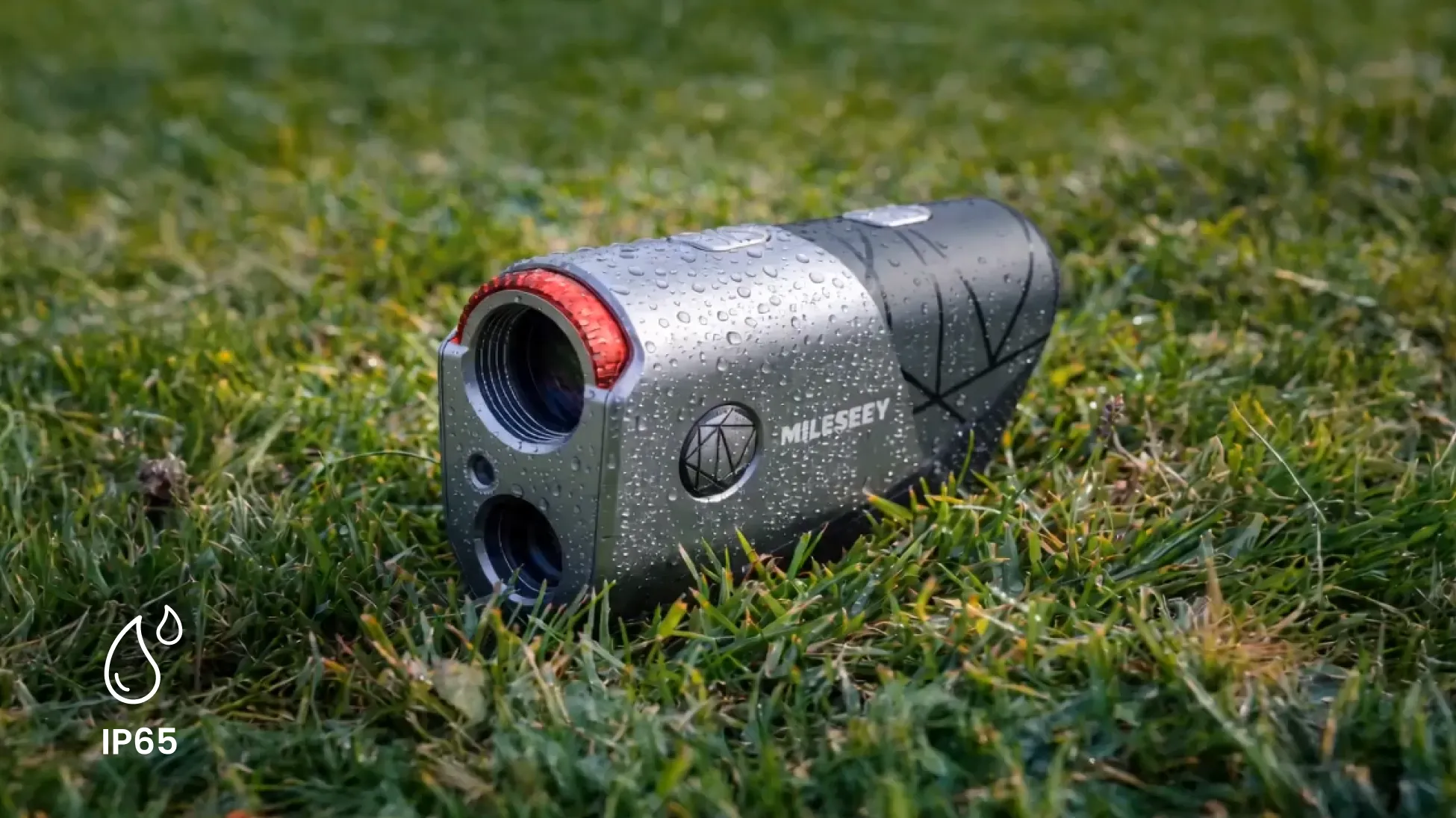
One weather-relevant example is the MILESEEY GenePro S1: its official specification lists SmartSlope compensation using elevation, humidity, temperature, and altitude, plus SmartFiltering for rain and fog. In its independent evaluation, MyGolfSpy scored the model 9.6 overall and named it a 2025 Staff Pick, while also noting that it was among the heavier devices tested. Those are decision inputs, not permission to ignore actual wind, lie, turf, or tournament rules.
Separate carry from rollout
Ask two questions before choosing a club:
- What must the ball carry?
- What will the surface probably do after landing?
On wet ground, favor the club that safely carries the obstacle because rollout is uncertain. On frozen or very firm ground, plan a landing area short of the normal target. If neither landing area is predictable, aim away from the penalty and accept a longer next shot.
Adapt to Rain and Fall Course Conditions
You can usually play in ordinary rain if the course remains open and there is no lightning, but wet play changes grip, footing, ball flight, rollout, and the Rules. The rain-round guide covers temporary-water relief, equipment organization, and a shot-by-shot routine.
Fall leaves create a separate rules issue. The USGA's fall-course guide explains that free relief from a leaf pile is available only when the Committee has adopted Model Local Rule F-14 and the required facts are known; otherwise, a ball not found within three minutes is lost under Rule 18.2. Check the local rules instead of inventing a friendly-group “leaf rule” during a competition.
Build a dry zone inside the bag
Use one protected compartment for a spare glove, towel, scorecard, and electronics. Keep the towel's working section under the umbrella or bag hood. Dry the grip immediately before the shot—not five minutes earlier—and return the glove to protection between shots.
Editorial Simulation: A 45°F Nine-Hole Round
This is a decision simulation, not a report of a MILESEEY field test.
Scenario: The forecast is 45°F, light rain begins on hole 3, the course is cart-path-only, and sunset is 2 hours 20 minutes after the tee time. Your normal 7-iron carry is 150 yards.
Option A: Treat it like a summer round
Wear one bulky coat, assume 150 is still the number, chase every pin, keep the only towel outside the bag, and attempt 18 holes. The risks compound: restricted rotation, wet grips, uncertain carry, long walks from the cart path, and darkness pressure.
Option B: Apply the condition stack
Commit to nine holes, wear two movable layers plus a shell, protect one towel and spare glove, and use the first two holes to observe carry and rollout. On a 148-yard approach over a front bunker, choose the club that clears the bunker with the day's conservative carry, then aim center-green. The expected outcome is not a guaranteed lower score; it is fewer decisions made from false assumptions.
The point of the simulation is the sequence: safety and access first, mobility second, carry third, target last.
What Usually Goes Wrong
Buying warmth before testing movement
A warm jacket that shortens the backswing changes contact. Test the full outfit with the actual glove and club.
Using temperature as the only distance adjustment
Strike, wind, ball temperature, altitude, layers, and turf can outweigh air temperature. Calibrate the day instead of memorizing a universal yard-per-degree formula.
Ignoring the course's recovery problem
Dormant or frozen turf cannot repair traffic damage quickly. Respect ropes, temporary greens, frost holds, and cart rules even when your own ball appears playable.
Trying to “make up” lost distance
Overswinging in layers and uncertain footing increases strike and balance risk. More club with a controlled finish is usually the cleaner experiment.
When This Advice Does Not Apply

This guide does not override course closures, tournament instructions, lightning procedures, local Rules, or personal health guidance. Cold tolerance varies widely. Stop if you cannot maintain hand control, stable footing, or normal awareness.
The distance process also does not apply unchanged on frozen ground, temporary greens, mats, or unusually high elevation. In those cases, define a separate winter baseline and do not mix it into your normal-season chart.
One-Page Winter Golf Checklist
Before leaving
- Check the course update, frost status, cart policy, and expected closing time.
- Check lightning risk and identify real shelter.
- Pack removable layers, a spare glove, two towels, water, and a charged phone.
- Keep golf balls indoors before the round.
- Decide whether nine holes is the smarter commitment.
Before the first shot
- Complete the mobility test.
- Confirm local rules and temporary greens.
- Create a dry zone inside the bag.
- Choose a conservative first-hole target.
During the round
- Observe carry and rollout separately.
- Reassess footing and hand control.
- Follow ropes, cart restrictions, and frost instructions.
- Stop immediately for lightning or unsafe conditions.
Winter golf becomes far more predictable when you stop asking, “How cold is it?” and start asking, “Which part of the condition stack changes this decision?” That question protects the course, reduces avoidable penalties, and leaves room to enjoy a season most golfers write off too quickly.
Continue the Winter Golf Series
- Build a mobile outfit with the cold weather golf attire guide.
- Match hand protection to dry, wet, and windy conditions in the winter golf gloves guide.
- Use the safety, Rules, and shot checklist for golf in the rain.
- Compare your normal ball with a candidate using the cold-weather golf ball test.
- Understand course timing and etiquette in the frost delay golf explainer.
Frequently Asked Questions
Is winter golf bad for a golf course?
Not automatically, but cold-season turf recovers slowly and frost or saturated soil can make traffic especially damaging. Follow the course's restrictions and do not walk or drive onto closed areas.
Should I club up in cold weather?
Often, but not by a fixed amount. Establish the day's carry with several normal strikes, account for wind and lie, and choose a club from the required carry rather than a blanket rule.
Can I post a winter score for handicap purposes?
It depends on the local active season, the format played, and whether the round meets the applicable Rules and handicap requirements. Check the authorized golf association and the course before assuming the score is acceptable.