Golf rangefinders and hunting rangefinders offer similarities, but each is unique in its own way. Today, we will discuss the difference between golf rangefinders and hunting rangefinders.
Generally, most rangefinders have similar features and capabilities. However, there are types of rangefinders that cater to your specific needs. Not all rangefinders can be used for various activities, so check the details.
A laser rangefinder is best known for its use of lasers. It can measure the distance to a target more accurately by using the principle of laser reflection. There are also ultrasonic rangefinders and infrared rangefinders.
Table of Content:
What is the difference between golf and hunting rangefinders?
How to choose the best rangefinder for both golf and hunting
What is a rangefinder?
A rangefinder also called a range-finding telemeter depending on the situation, is a tool used to measure how far away something is. The word "telemeter" comes from the Greek words for "far away" and "something used to measure."
They were first used for surveying, but were soon used in other areas, like photography and the military. Rangefinders were especially helpful in naval gunnery and anti-aircraft artillery, where they were used to figuring out how far away a target was.
What is the difference between golf and hunting rangefinders?
1. Target Mode
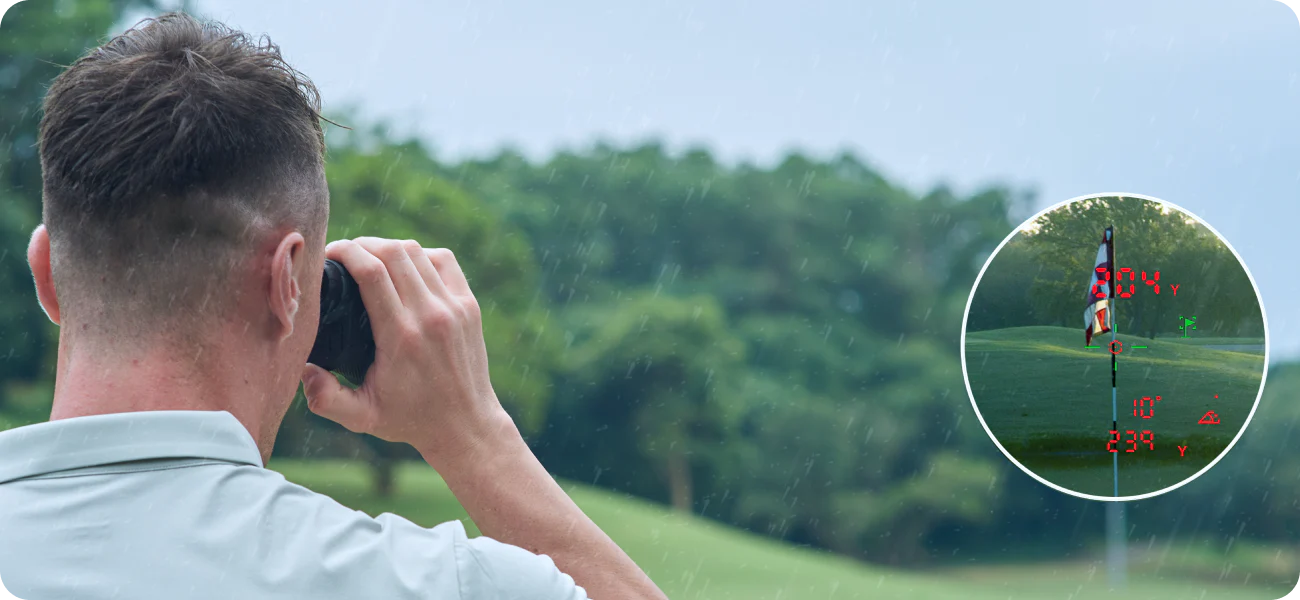
Golfers typically use "First Target Mode" to find the flag or pin on an open course. Hunting rangefinders can't pick up small targets. "Distant Target Mode" is best for hunting far from the treeline. Modern rangefinders can toggle between first- and distant-target modes, but these extra features can be expensive.
2. Magnification
You may know that hunting rangefinders always have higher magnification than golf rangefinders. Golfers require the distance to the next hole, up to 400 yards. Four hundred-yard rangefinders are also suitable for bow hunters and hunting, and the maximum magnification ranges of 1000 to 1500 yards are required for rifle hunting or long-distance shooting.
3. Result
Golf rangefinders can be used for hunting, but may not be as efficient as hunting rangefinders. Golfers should avoid using rangefinders designed for hunting, as they are ineffective.
The best golf rangefinders feature pin-seeking technology that locks onto flags and vibrates or beeps when you are within striking distance. Hunting rangefinders have trouble detecting the pins.
4. Types of rangefinders
Golf Rangefinders (Laser, Optical, GPS)
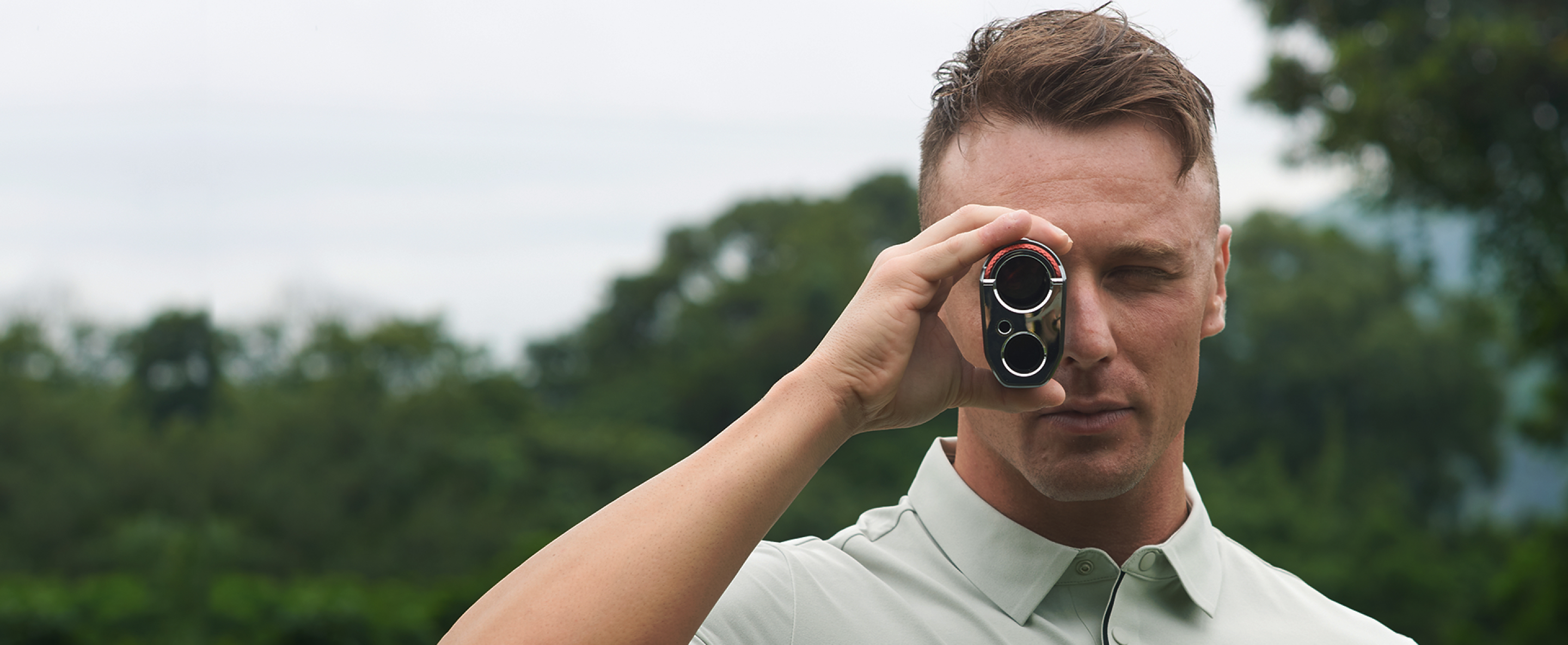
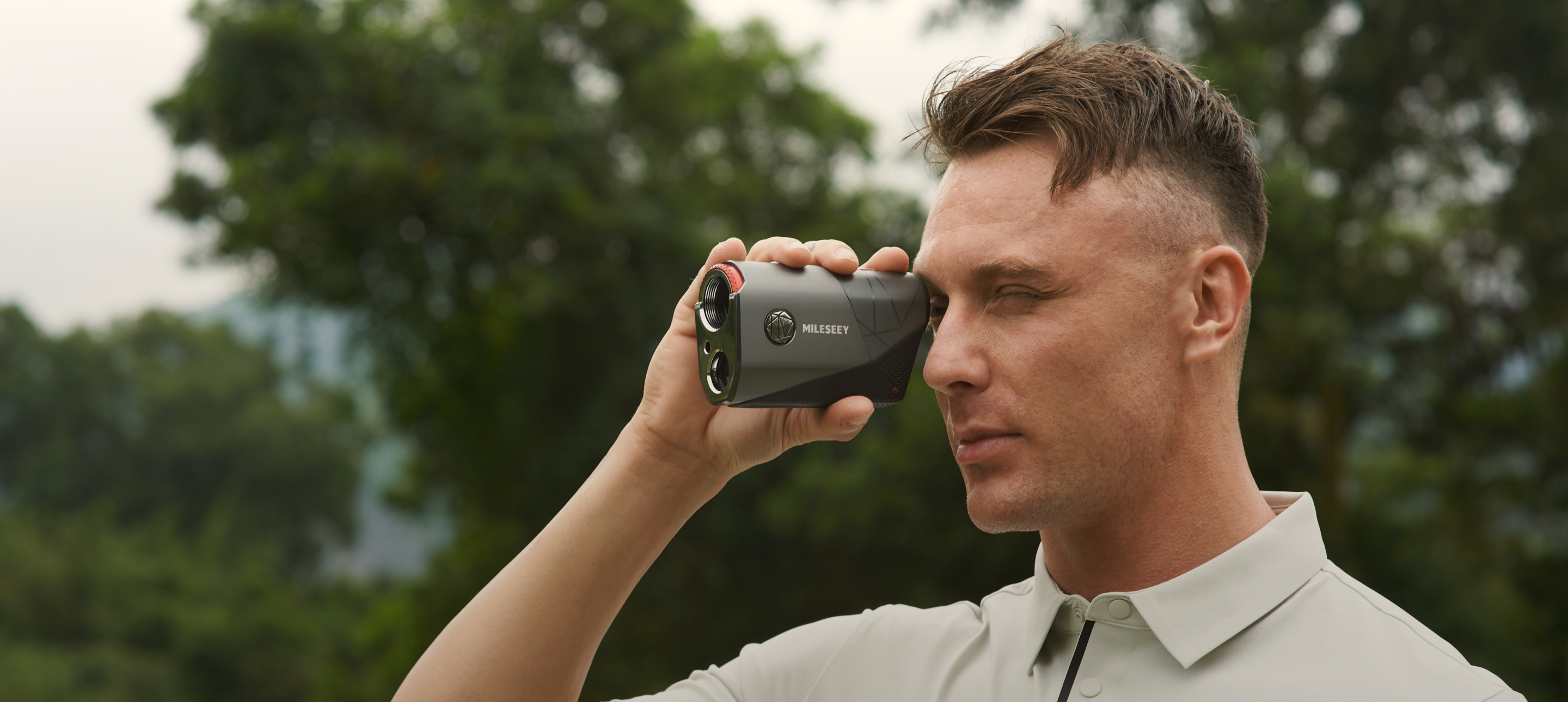
Golf laser rangefinders help golfers identify their goals. You can zap the flag or hazard with the best golf laser rangefinders and get yardages in seconds. This affects which clubs you use and how you play, helping you avoid mistakes and score better. The best models are accurate, user-friendly, waterproof, long-lasting, durable, and affordable.
Hunting Rangefinders (Archery, Rifle-hunting, Precision-shooting)
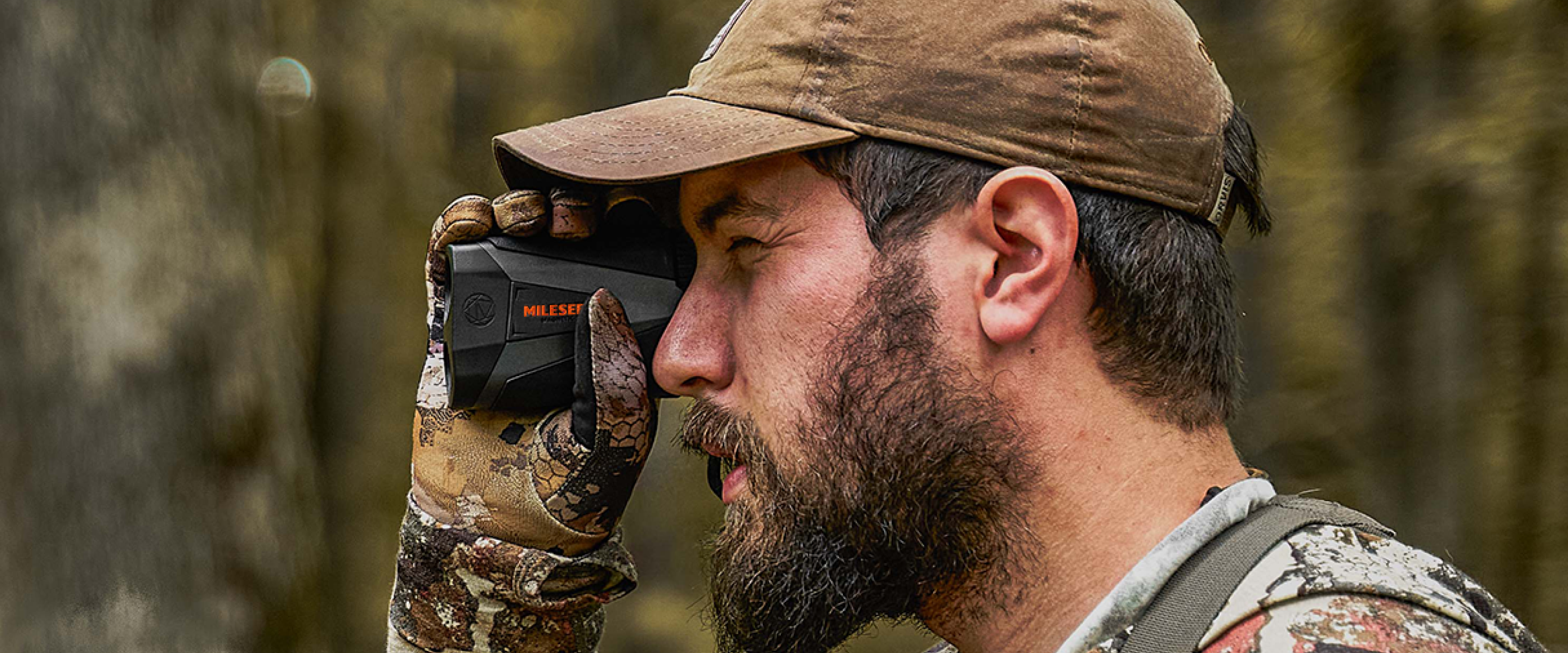
Archery and rifle hunters need a hunting rangefinder to make clean, accurate shots. It helps golfers plan shots more accurately. These pocket-sized, laser-driven devices allow you to aim.
5. Rangefinder Pricing
Golf rangefinders are relatively more affordable than hunting rangefinders. You can quickly get a golf rangefinder for around $100-$400. Hunting rangefinders can be costly. You can get a cheap one for about $100, but the price increases depending on the lenses.
How to choose the best rangefinder for both golf and hunting
Consider the differences in distance
A rangefinder is designed to lock onto the nearest target, typically the flagstick, while filtering out background distractions like trees or other players. The Mileseey GenePro G1 enhances this experience with 6X magnification and a wide 7.5° field of view, delivering bright visuals with 90% light transmission—helping you quickly identify and focus on the pin, even in cluttered surroundings.
Some advanced rangefinders are better suited for picking out distant targets by minimizing interference from nearby obstacles such as brush or terrain. The Mileseey GenePro S1 excels in these situations, featuring 7.5X magnification and a wider 7.9° field of view. With enhanced light transmission, it helps you clearly spot targets farther down the course, even when visibility conditions are less than ideal.
No device can switch between golf and hunting due to target priority modes. Using a rangefinder may cause you to miss the flag. You may miss the deer if you use a golf rangefinder. Close and far-range methods are ideal.
Double-check yardage distances
Rangefinders have limited ranges. Typically, hunting rangefinders have a much longer range than golf rangefinders. Golf rangefinders usually have a target range of around 600 yards, while hunting rangefinders can pick up distances of 1300+ yards. Golf courses don’t usually exceed a to-the-pin reading over 250 yards or 350 yards.
The Mileseey GenePro G1 Golf Rangefinder offers a maximum range of up to 1,300 yards, with precise flag-lock capability at distances up to 600 yards—making it well-suited for accurate pin targeting during approach shots.
Meanwhile, the Mileseey GenePro S1 Golf Rangefinder extends its reach even further, with a maximum range of up to 2,000 yards and flagpole lock up to 690 yards, providing added confidence when measuring longer distances across the course.
Choose a display (LCD or LED)
Golf and hunting rangefinders have LCD and LED displays. Each offers advantages and setbacks, depending on when each rangefinder would be used. For golf, you’re using it for daytime use, and when you’re hunting, it is typically early mornings, to twilight and dusk.
LED displays are great for cloudy days on golf courses, and it does have advantages for hunting as daylight hours end. You can adjust its brightness setting. Using it at nighttime may be a challenge, though. In nighttime activities, it’s better to use a rangefinder with an LCD screen and a backlight, so you can still see readings without destroying your night vision.
Find out if they have rain & fog moda
Laser rangefinders that are weatherproof are ideal for both golf and hunting. You can't finish your round if it's raining on the golf course anyway. But for hunting, rain, or shine, it can continue. Find a rangefinder that is weatherproof.
Check out the Mileseey GenePro S1 Golf Rangefinder. It features an IP65 protection rating for reliable use in various weather conditions. Equipped with a smooth diopter adjustment, it easily adapts to both near- and far-sighted users—especially helpful for those wearing glasses—ensuring a clear view when lining up shots on the course.
On the other hand, MILESEEY IONJET 2 Hunting Laser Rangefinder, is also waterproof, designed with multimode functions of Bow, Rain, and Fog Modes to help you see clearer under various weather conditions.
Examine the activity-specific features
A golf-specific rangefinder will include features like club recommendations, swing rate measurement, short distance calculators, and simple reticles. If you're hunting, you'll need a rangefinder with a more extended range and the ability to preload ballistic data. Hunting rangefinders can be purchased with camouflage skins to hide your location from predators.
When you use a rangefinder for a specific activity, you'll miss out on its full potential and the ability to improve your skills. However, buying a dual-purpose rangefinder will save you more money than buying one for each sport separately.
Wrapping It Up
Golf rangefinders and hunting rangefinders provide unique features that may be more advantageous in specific activities. There are various factors that affect the performance of these tools.
Golf rangefinders may be used in hunting, albeit only on shorter distances while hunting rangefinders can be used in golf, but it does not focus on the immediate target objects.
Mileseey is the leading brand for golf rangefinders, laser distance measures, and night vision equipment used by athletes, engineers, and professionals today.
Related blogs from Mileseey
How to Choose Your Best Digital Night Vision?
How to Choose the Best Golf Rangefinder for Beginner
Be the first to know for latest updates, tips, how-tos, exclusive deals, and discounts from Mileseey. Sign up for our newsletter today!