I played with a 10-handicapper not long ago who hit two approach shots from almost the exact same number.
Both were right around 145 yards.
On the first hole, he hit one to about 15 feet and walked off with a stress-free par.
A few holes later, from nearly the same distance, he hit one into the water.
He looked at me and shrugged.
“Almost the same number, similar club,” he said. “What changed?”
“Direction,” I told him. “Not the direction the ball started. The direction you were coming from.”
He looked back toward the fairway, then up at the green.
That was the moment it clicked.
After nearly 20 years of coaching, I can tell you this with confidence: a lot of golfers obsess over the number and ignore the picture. They get locked in on 145, 162, 178, whatever it is, and forget that not every shot from the same yardage asks the same question.
Same number. Different angle. Different decision.
Why the Angle Changes the Shot
Greens are not giant circles waiting to receive whatever you hit at them.
They have shape. They have edges. They have entrances. They have trouble on one side and room on the other. Sometimes they are deep from one angle and shallow from another. Sometimes a tucked pin looks tempting from one side of the fairway and reckless from the other.
That is why approach angle matters.
Distance still matters first. It is the starting point. But angle is often the strategy layer on top of that number. Titleist instruction makes this exact distinction by treating strategy as the game plan for playing a hole and teaching players to analyze the hole from the green back to the tee in order to map the best route.
A golfer who only looks at the yardage can miss what the hole is really asking. A golfer who studies both the number and the angle usually gives himself a better chance.
When Angle Matters Most
Approach angle matters most when the hole demands precision.
Think front-right pin over a bunker. Think water hugging one side of the green. Think a green that opens from one side but narrows sharply from the other. Think a dogleg where the shortest route leaves the most awkward line.
Those are the situations where a golfer can hit the correct distance and still choose the wrong play because the angle made the target smaller, brought more trouble into play or made the miss far more expensive.
That is also why “hit the fairway” is sometimes incomplete advice.
Yes, the fairway matters.
But sometimes the right side of the fairway is much better than the left. Sometimes the left side clearly opens the green and takes the biggest trouble out of play. Sometimes the smart tee shot is not the longest one. It is the one that leaves the cleanest next shot.
When Angle Matters Less
This is where golfers need some balance.
Approach angle is important, but it is not magic.
If the green is big, deep and open, and there is no real penalty for missing on one side, angle may not be the deciding factor. If the lie is poor, that may matter more than angle. If one route gives you a perfect angle but asks for a tee shot you do not really own, that is not smart strategy either.
Good course management is not about chasing the ideal angle at all costs.
It is about stacking the odds in your favor.
Sometimes that means choosing the better angle. Sometimes it means choosing the safer line, even if the angle is only decent instead of perfect.
That is real golf.
Play the Hole From the Green Back
One of the best strategic ideas in golf is also one of the simplest: start at the green and work backward.
Where is the trouble?
Where is the safe miss?
Which side of the fairway opens the most green?
If the pin is tucked, what angle gives you the most room to land the ball without bringing a big number into play?
Titleist’s instruction content repeatedly teaches this green-back approach, noting that planning the hole this way can widen fairways, make greens more accessible and keep players out of trouble.
That is a smarter way to choose a tee-shot target than just automatically aiming at the middle every time.
A lot of golfers play the hole from the tee forward. Better players, and usually smarter players, learn to reverse that process.
Stop Treating Fairway Center Like the Only Goal
This is one of the easiest strategy upgrades most golfers can make.
The center of the fairway is not always the best place to be.
Sometimes it is. Plenty of times, actually.
But on holes with angled greens, tucked pins or obvious danger on one side, the better play might be left-center. Or the right half. Or a specific layup number that leaves the shot coming in from the safer side.
That is not overly conservative golf.
That is smart golf.
GOLF’s instruction coverage makes a related point on approach strategy: do not short-side yourself if you can help it, especially when the pin is tucked, because leaving yourself more green to work with makes the next shot much easier.
The goal is not just to be in the short grass. The goal is to give yourself the clearest, least stressful look at the next shot.
Doglegs and Par 5s Are Where This Really Shows Up
Doglegs are great teachers because they force the question into the open.
Do you cut the corner and shorten the hole, even if it leaves a poor angle?
Or do you play to the outside, accept a few more yards and give yourself a much cleaner look at the green?
There is no one answer for every player or every hole. But the question matters, and too many golfers never ask it.
Par 5s are similar.
The layup is not just about your favorite number. It is also about where that number is coming from.
A comfortable wedge from the wrong side of the hole can still be a lousy scoring setup. A slightly longer number from a better angle can actually be the easier shot.
That is the kind of thinking that lowers stress and saves strokes.
Where GeneSonic Pro Can Help
This is where the GeneSonic Pro can be genuinely useful without pretending it is doing more than it is.
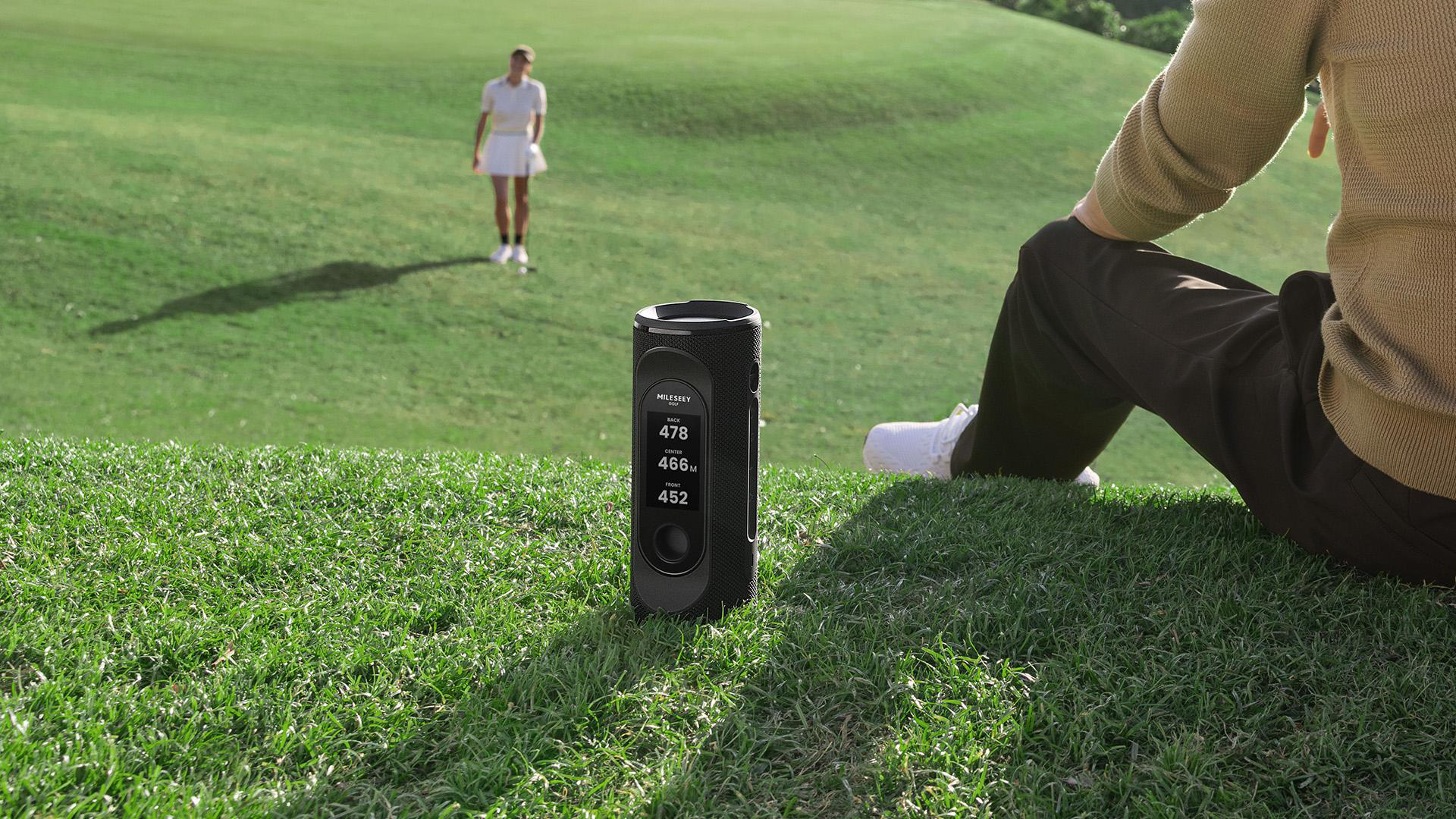
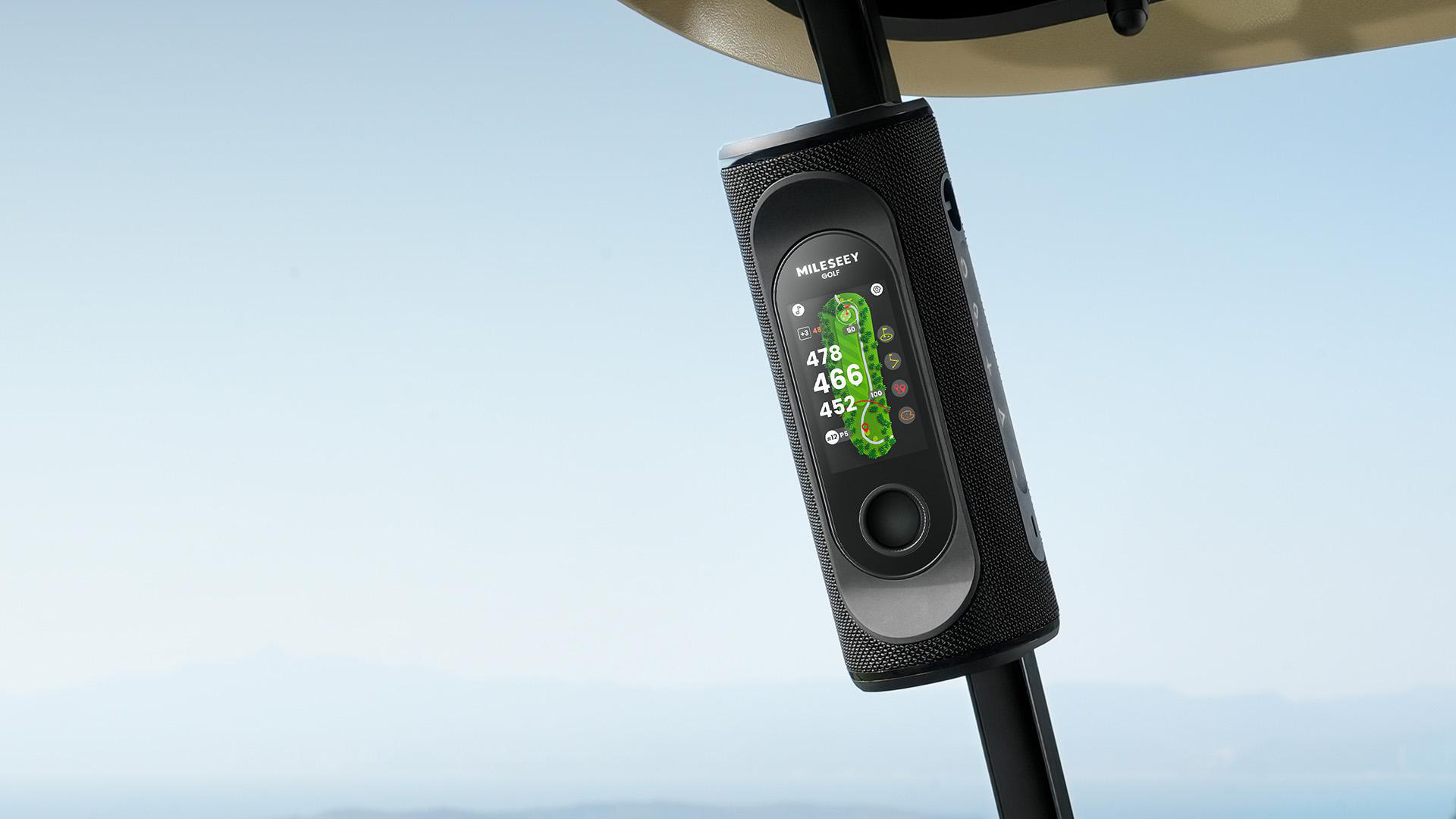
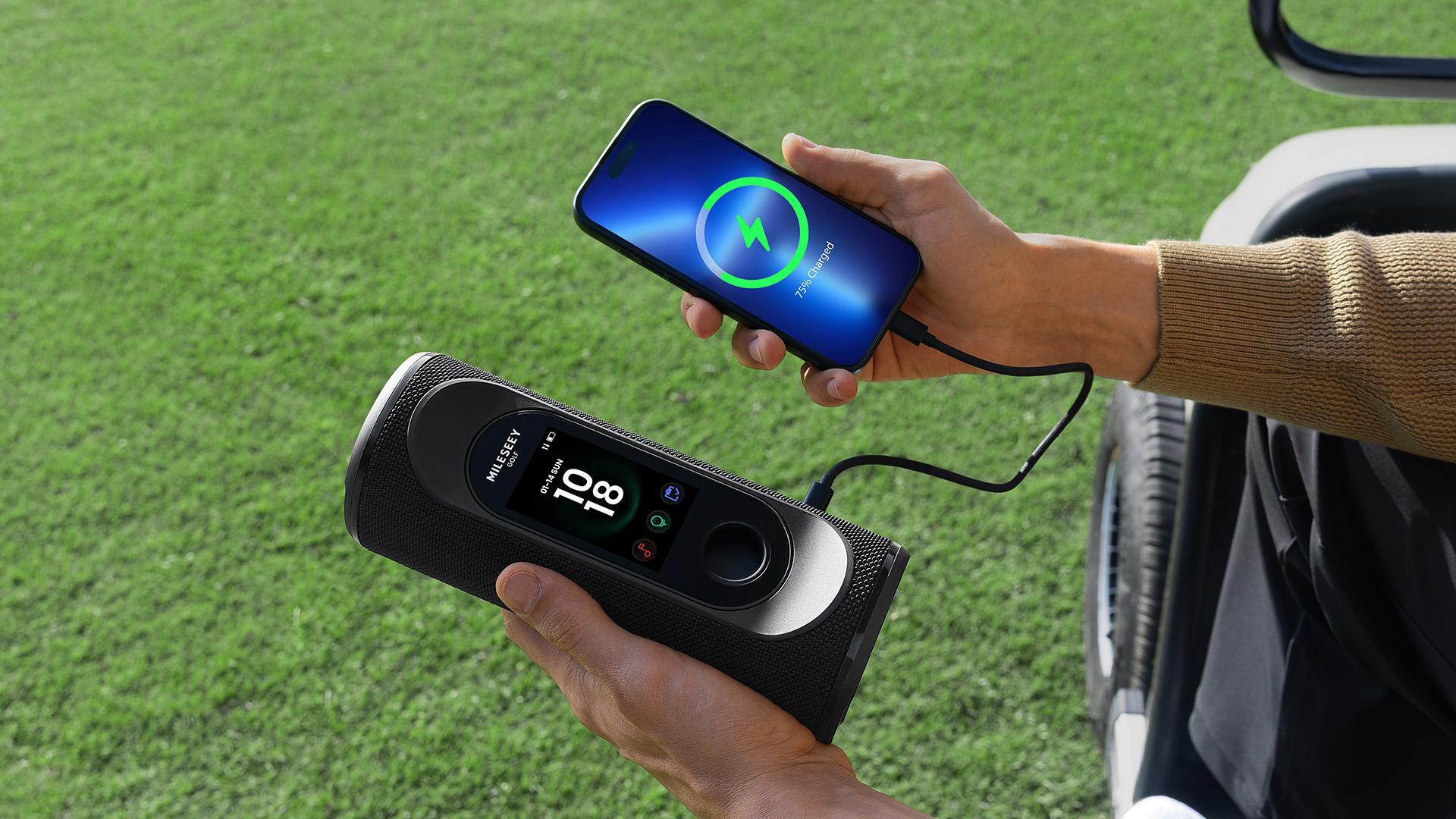
Official MILESEEY materials describe GeneSonic Pro as a detachable GPS speaker with a 3-inch touchscreen, 43,000-plus course views, front-center-back distances, audible yardages and visual course information. The MILESEEY Golf app materials also describe course maps, hazard information and shot-tracking support for GeneSonic Pro.
That matters because the visual information can help golfers see the hole as a picture instead of just a number.
If you can see the general green shape, the front and back numbers, the placement of hazards and the overall layout of the hole, you are in a much better position to think strategically about the shot in front of you. You can start asking better questions. Which side gives me more room? Where is the better miss? Does the hole open from one side? Is the layup I want actually leaving the angle I think it is?
It does not replace judgment.
It does not choose the shot for you.
But it can absolutely help you make a smarter decision.
A Simple System to Use on the Course
Here is the version I would actually teach.
First, check the pin and the overall shape of the green.
Second, identify the worst place to miss.
Third, decide which side of the fairway or layup zone gives you the most room and the least stress.
Fourth, compare that plan to your real shot pattern, not your dream shot pattern.
That last part matters more than people want to admit.
Course management falls apart when golfers plan for their best swing instead of their normal one. Titleist teaching on on-course play makes the same broader point: on the course, players have to think, plan, commit and then execute.
If your stock miss is a little right, do not choose a line that turns your usual miss into a penalty stroke. If your driver is shaky that day, stop pretending one perfect swing is going to solve the hole. Play the picture honestly.
Then commit.
The Bottom Line
Distance matters.
But direction matters, too.
Sometimes the smartest thing you can do is stop asking, “How far is it?” and start asking, “What angle do I want into this green?”
That one shift can make a huge difference.
Not because it turns you into a different golfer overnight, but because it helps the golfer you already are make better choices.
Same swing.
Better place.
Lower stress.
And usually, better scores.