I watched one of my students, a 5-handicap, hit what looked like a perfect 8-iron from 155 yards not long ago. The ball landed well short of the green, took a hop, and rolled back into a bunker.
“What happened?” he asked. “I flushed it.”
“You did,” I told him. “But you’re hitting 30 feet uphill. That’s not a stock 155-yard shot.”
He looked at the green again, squinted, and shook his head.
“It doesn’t look that uphill.”
That right there is the problem.
After nearly 20 years of coaching, I have learned that elevation changes are one of the easiest ways for golfers to give away shots without realizing it. They make a solid swing, strike the ball well, and still miss because they trusted what they saw instead of what the shot actually required.
Why Your Eyes Get This Wrong
Golfers are usually pretty good at judging a flat shot. Give most decent players a normal 150-yard approach on level ground and they have a fairly good sense of what club gets the job done.
Add a meaningful elevation change, though, and that sense gets fuzzy in a hurry.
An uphill shot often plays longer than it looks. A downhill shot often plays shorter. That is why so many players come up short to elevated greens and fly the back edge on downhill approaches. The issue is not always a bad swing. A lot of the time, it is a bad decision built on a misleading picture.
Your eyes are processing a scene. They are not doing the math for you.
Elevation Change Is Not the Same as an Uneven Lie
This is an important distinction, and one a lot of golfers blur together.
This article is about elevation change to the target, not the slope under your feet. In modern instruction, an uphill lie or downhill lie usually refers to the ball sitting on a slope at address. That affects setup, balance, ball position and often the shape of the shot. PGA instruction on uneven lies emphasizes matching your shoulders more closely to the slope, organizing your balance correctly and adjusting ball position to fit the terrain.
Sometimes, of course, you get both at once. You may have an uphill shot to an elevated green while also standing on an uphill lie. When that happens, you need to solve two problems, not one. You need the right club for the elevation change and the right setup for the slope beneath your feet.
That is one reason hilly courses can expose even good players. They oversimplify the shot.
Why Uphill and Downhill Shots Play Differently
The easiest way to think about it is this: elevation changes alter effective playing distance.
On uphill shots, the ball needs more help to get to the target. On downhill shots, gravity is helping the shot along. That is why the same raw yardage can call for very different club selections depending on the rise or drop between you and the target.
A lot of golfers want a universal formula here. I understand why. We all like simple rules. But there is no perfect one-size-fits-all answer because trajectory, club choice, wind, firmness and the individual player all matter.
That is also why I do not love treating any “one club for every X feet” rule like gospel. Those can be useful starting points, but only as starting points. Smart golfers learn to think in terms of playing yardage, not just marker yardage.
Why Downhill Shots Create So Many Bad Decisions
Downhill shots mess with golfers in two ways.
First, they often look closer than they really are. When you are standing above the target, the view can compress the picture and make the hole feel almost inviting. That visual can pull you toward the wrong club.
Second, downhill shots often come in flatter and can release more once they land. That matters on firm greens, tucked pins or any situation where short-sided trouble lurks behind the target.
That does not mean every downhill shot is impossible to hold. Spin, club choice, firmness and trajectory still matter. But as a coaching principle, downhill approaches demand more thought about first bounce and rollout than most golfers give them.
Uphill Shots Create a Different Kind of Miss
Uphill shots usually punish indecision and under-clubbing.
Players see the rise. They know, in theory, that the shot plays longer. But they still do not adjust enough. They split the difference in their head, make a slightly guarded swing and then watch the ball come up short.
I see this all the time on elevated par 3s. The player makes what feels like a decent swing with what they believe is the correct club, then blames contact when the ball finishes short of the putting surface. In reality, the bigger mistake happened before the club ever moved.
Uphill approaches can also come down on a steeper descent and stop a bit faster than a flatter-flying shot. Again, that is a tendency, not a law. But it is another reason elevation changes affect more than just the number on the yardage marker. They affect how the shot behaves when it gets there.
A Smarter Way to Handle Elevation
Here is the system I teach players when elevation becomes part of the equation.
First, stop relying only on what your eyes tell you. They are useful, but they are not enough.
Second, separate the raw yardage from the yardage the shot actually seems to require. That difference tells you how much the elevation is really affecting the shot.
Third, think beyond carry distance. Ask yourself how the ball is likely to land. Is this a shot that should fly all the way there and stop? Or is it one that needs room to release?
Fourth, if the ball is also on an uneven lie, handle that separately. Match your body more closely to the slope, organize your balance and make a swing that fits the terrain instead of fighting it. That lines up with mainstream PGA coaching on uphill and downhill lies.
Finally, build a memory bank. During practice rounds, pay attention to the holes where elevation really matters. Make note of the spots where the course consistently asks for more or less club than your eyes want to choose. Those notes become valuable when the pressure is on.
Where GeneSonic Pro Can Help
This is where it is important to be precise.
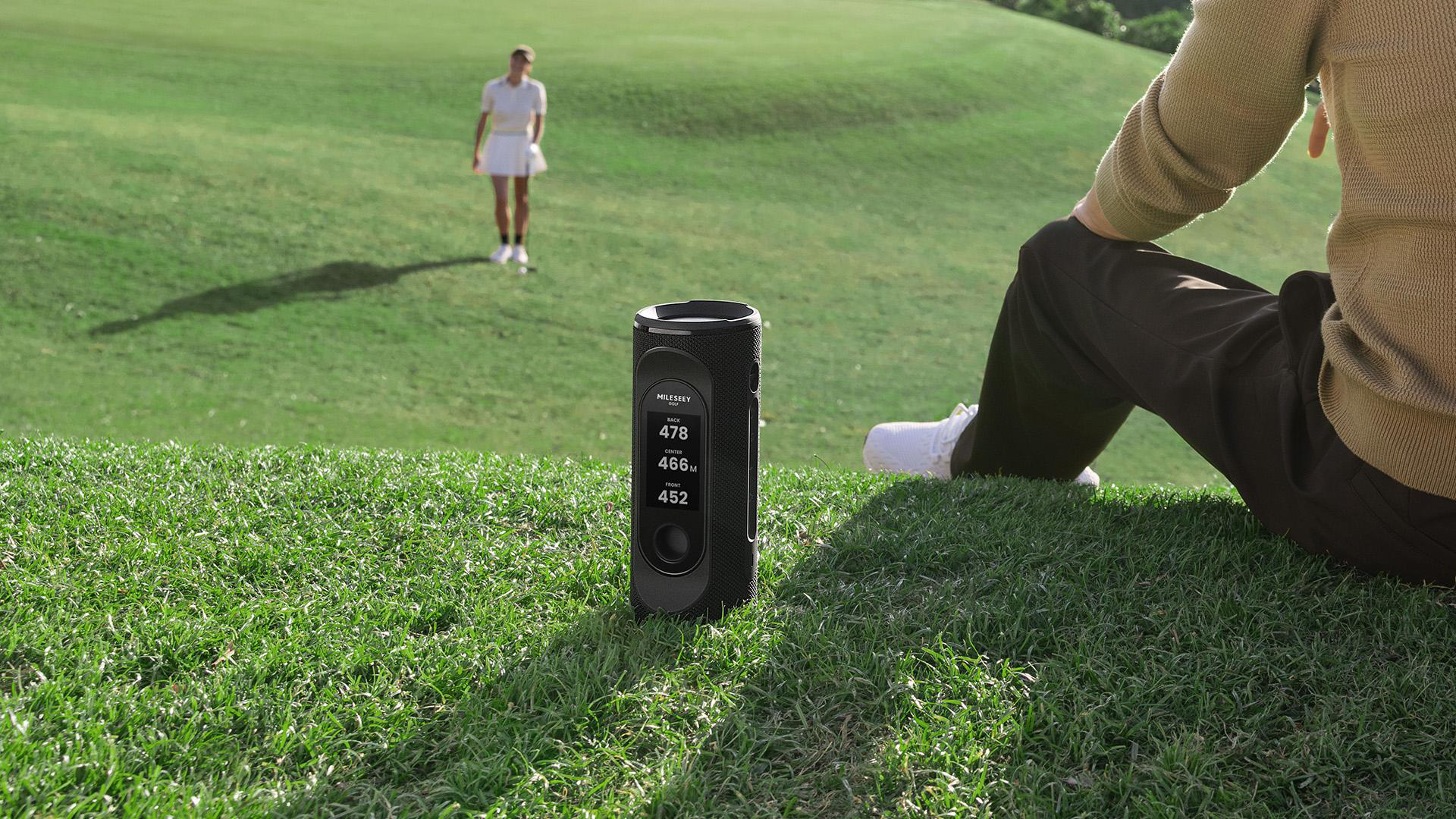
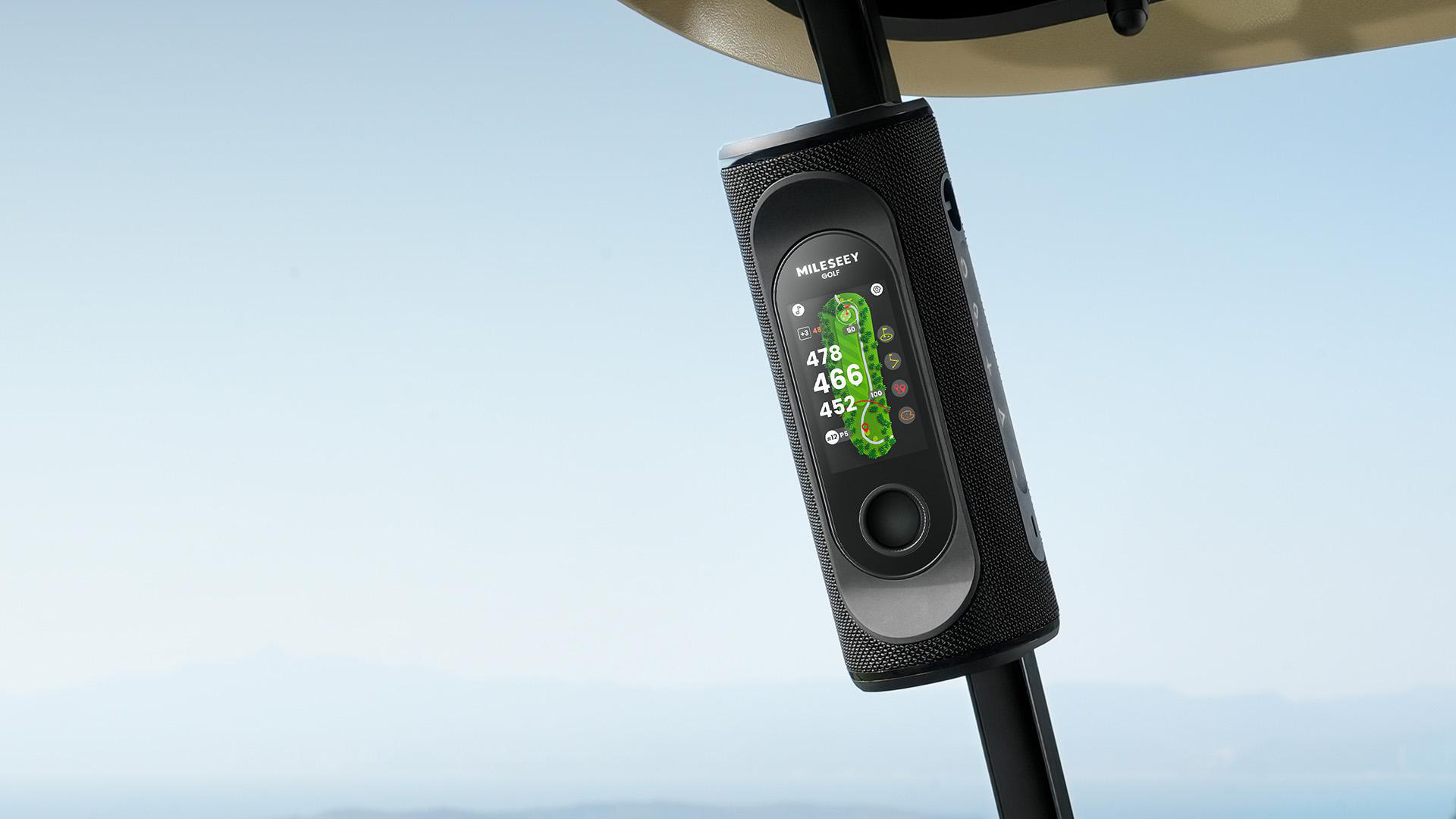
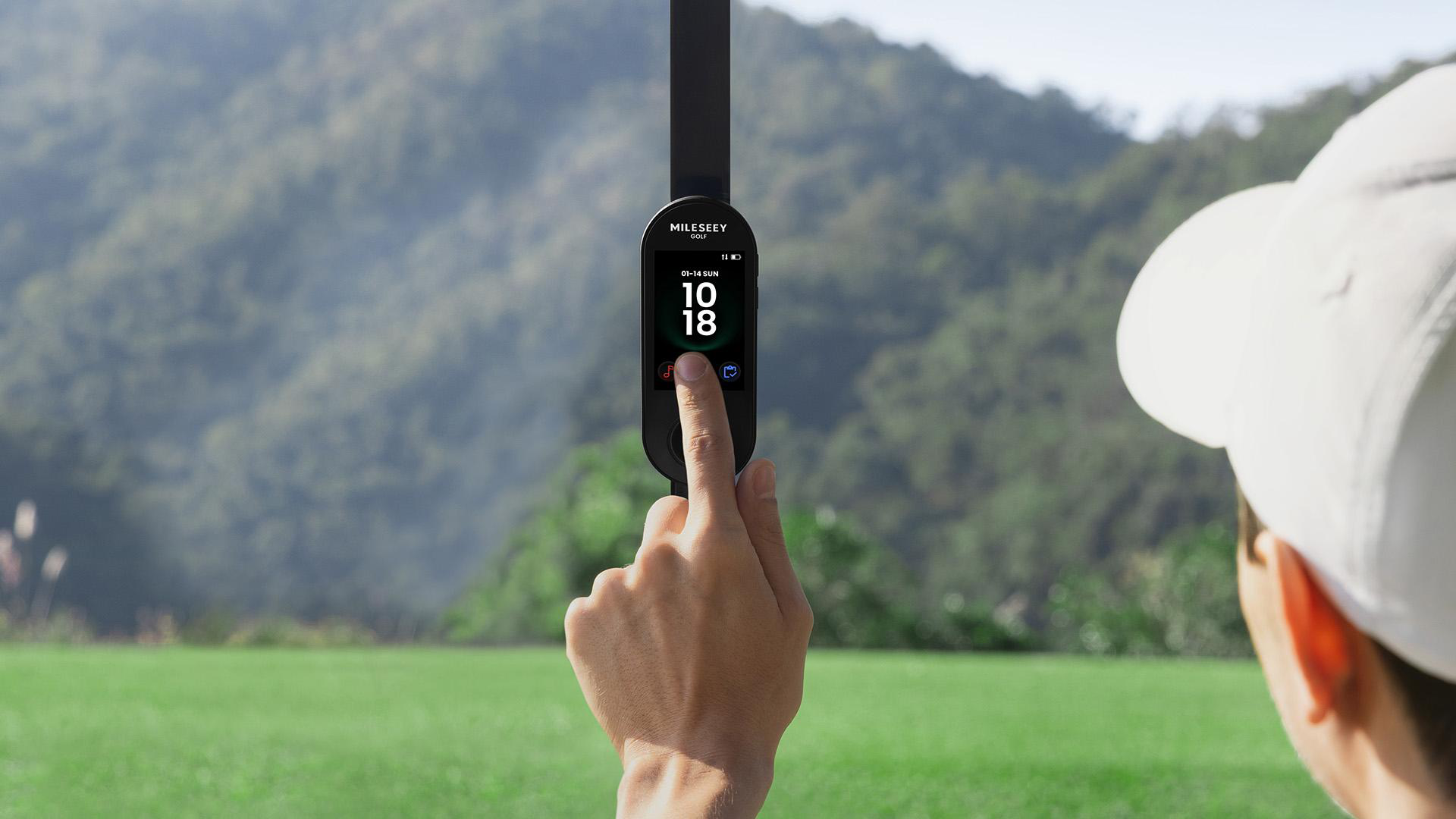
The GeneSonic Pro is not a slope-compensating device. What it does provide is built-in GPS, a 3-inch color touchscreen, 43,000-plus preloaded course views, visual layouts of hazards, greens, pin positions and fairways, plus front, center and back distances, layup tools and shot tracking.
That matters because even without slope-adjusted numbers, a strong visual display can still help golfers make better elevation decisions.
If you can see the shape of the hole, the depth of the green, the location of hazards and your front, center and back numbers all in one place, you are in a much better position to pair that information with what your eyes are telling you about the climb or drop of the shot. In other words, GeneSonic Pro does not do the elevation calculation for you, but it can absolutely help you make a smarter judgment call.
And honestly, that is how a lot of good golf is played anyway. You gather solid information, combine it with experience and commit to the shot.
The Bottom Line
Elevation changes cost golfers more shots than most of them realize.
Not because they cannot swing well enough. Not because they lack talent. But mostly because they trust their eyes when trying to configure elevation on the course. That is something that eyes, especially untrained ones, do not typically do very well.
The fix is not complicated. Get better information. Separate raw distance from playing distance. Think about how the ball will land, not just how far it has to fly. And if the ball is also sitting on a slope, treat that as its own challenge.
Do that, and a lot of those “I hit that flush” misses start to disappear.