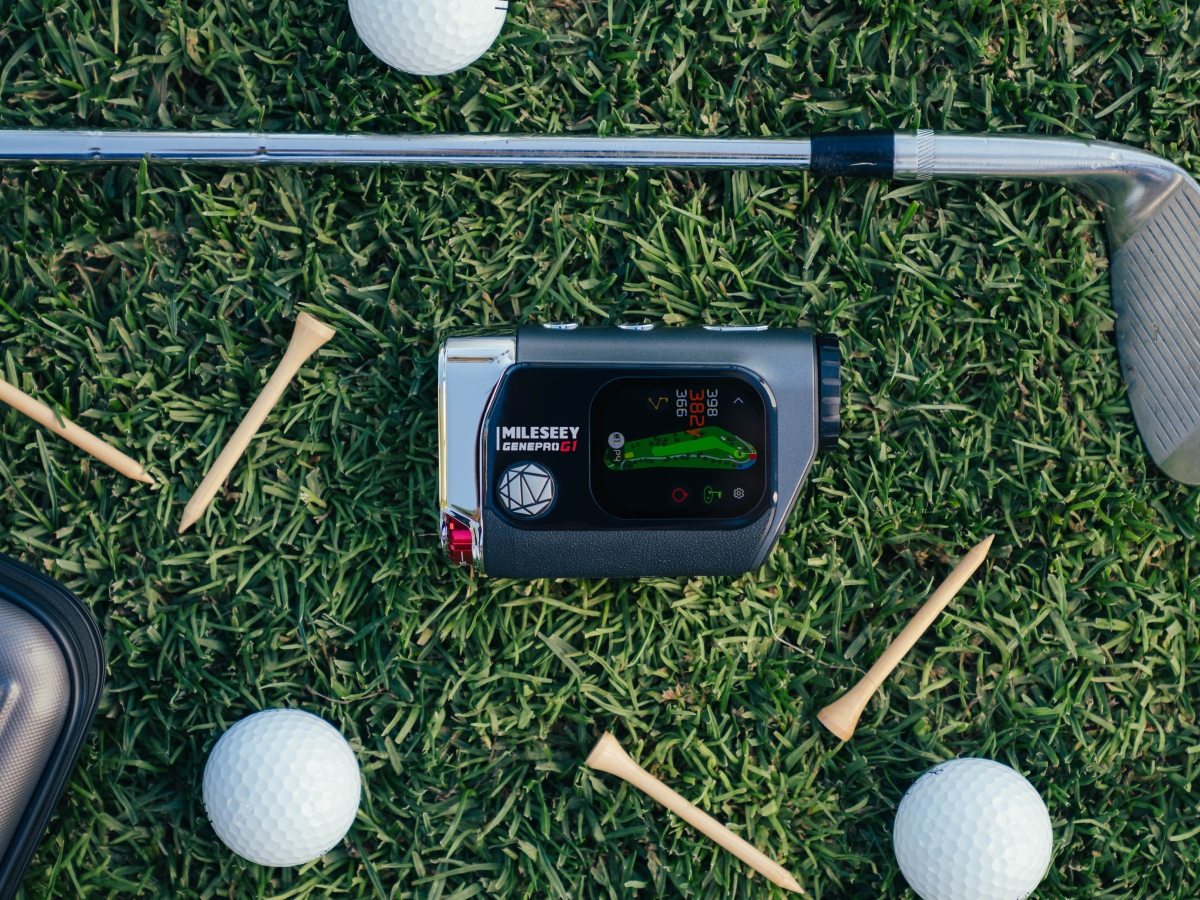
The evolution of golf rangefinders is, at its core, a progression driven by one key shift — from pure distance precision to integrated course understanding with GPS technology playing a central role.
What began with visual estimation gradually advanced into laser distance measurement, bringing accuracy and confidence to point-to-point targeting. However, as golfers demanded more complete on-course information, GPS functionality began to reshape how distance tools were used, adding layers of course awareness that laser-only devices could not provide.
As a result, modern golf rangefinders have evolved beyond standalone measuring tools. They now combine laser precision with GPS-based course data to support faster, more informed decision-making on the course.
Table of Content:
Early Golf Distance Measurement
How Laser Golf Rangefinders Changed Distance Measurement
How Golf GPS Technology Transformed Course Strategy
Why Golf Laser Rangefinders With GPS Offer a Smarter Experience
What Comes Next for Smart Golf Technology
Early Golf Distance Measurement: Estimation-Based Approach
Before laser golf rangefinders became common, distance control in golf most relied on estimation and experience.Yardage was often interpreted through perception rather than measurement, with golfers making judgment calls based on how a hole appeared from the fairway. Even among skilled players and caddies, accuracy was far from consistent. Variables such as unfamiliar course layouts, shifting wind conditions, and elevation changes frequently led to misjudged distances, which in turn affected golf club selection and shot execution under pressure.
As equipment advances in the 1980s and 1990s increased driving distance and overall ball speed consistency, the margin for error in distance judgment became significantly smaller. Golfers increasingly required more reliable yardage inputs not only for approach shots, but also for navigating hazards and managing positional strategy across the hole.
This shift exposed the limitations of estimation-based decision-making and set the stage for the development of laser-based distance measurement systems that could deliver objective and repeatable yardage data.
How Laser Golf Rangefinders Changed Distance Measurement
The rise of laser golf rangefinders marked a major shift in golf distance measurement.
By the early 2000s, laser golf rangefinders had become increasingly common among competitive and recreational golfers alike.
Unlike visual estimation, a golf laser rangefinder measures distance by sending a laser beam toward a target and calculating the time required for the signal to return. This allowed golfers to receive highly accurate real-time yardage within seconds.
As rangefinder technology evolved, several key features further improved usability:
- PinSeeker technology helped golfers lock onto flags more quickly.
- Vibration feedback confirmed successful target acquisition.
- Slope compensation adjusted distances based on elevation changes.
For example, a shot measured at 150 yards may effectively play closer to 160 yards on a steep uphill approach. Golfers could make more confident golf club selection decisions based on measurable data.
However, traditional laser rangefinders still had important limitations.
While laser devices excelled at precise flag targeting, they could not provide broader course information such as hidden hazards, doglegs, layup zones, or blind-shot positioning. As golfers began expecting both precision and course awareness, GPS golf technology became increasingly important.
How Golf GPS Technology Transformed Course Strategy
While laser rangefinders improved point-to-point precision, golf GPS technology changed how players structure decisions across an entire hole.
Instead of isolating a single target distance, GPS-based information introduces full-hole context, including hazard positioning, layup zones, dogleg shape, and green depth. This shifts decision-making from reactive distance reading to pre-planned shot sequencing, where players define intent across multiple shots rather than one execution point.
In practice, this is most evident in tee-shot planning on modern par 4s and par 5s. With golf GPS handheld devices and golf GPS watches, players can quickly evaluate carry limits and landing zones before committing to a line of play. On blind shots, GPS data replaces estimation with mapped structure, reducing reliance on memory or visual assumptions.
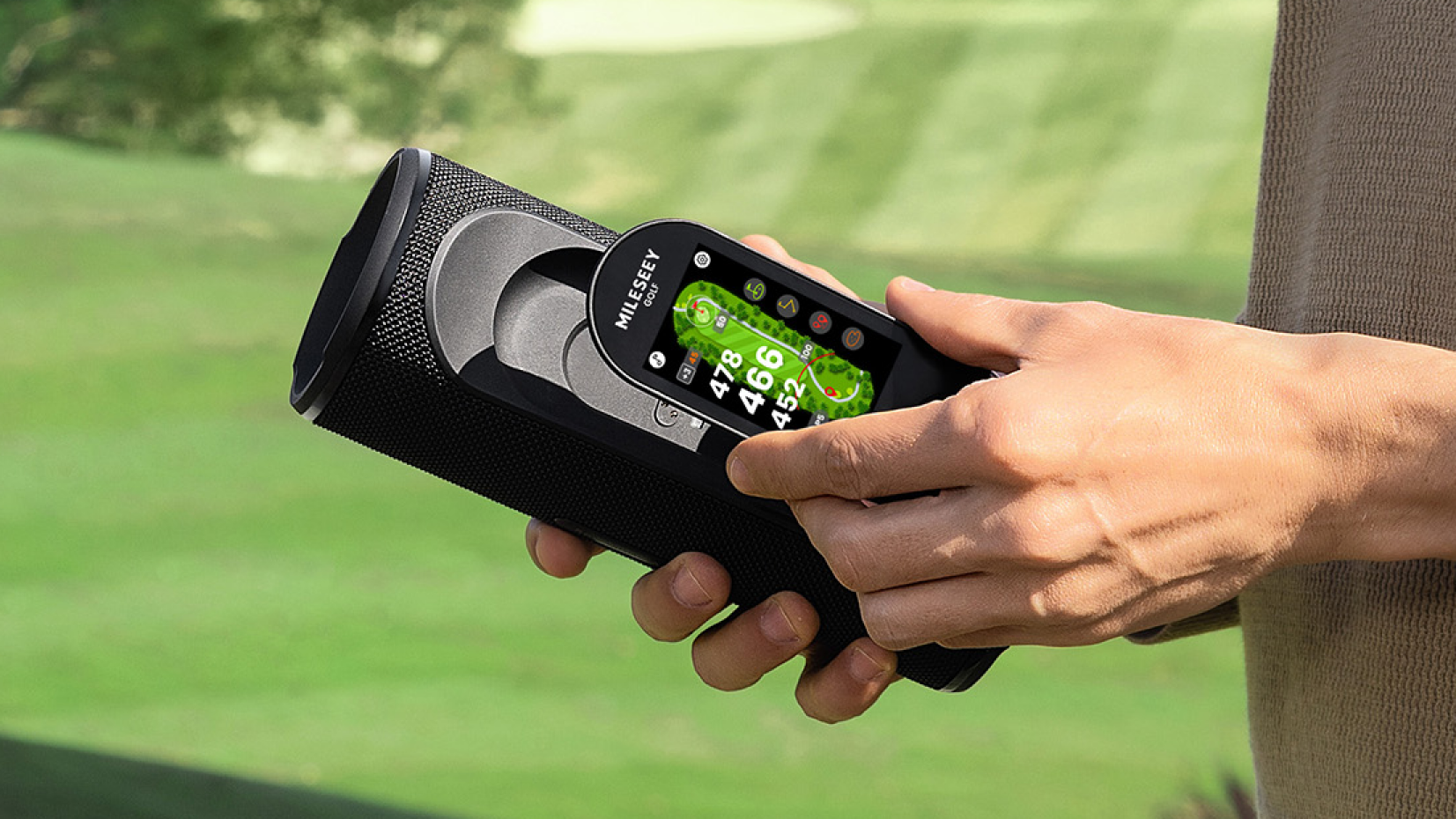
Products such as the GeneSonic Pro further reflect this direction by integrating GPS-based course awareness into a more consolidated on-course experience, featuring a detachable handheld GPS module that allows greater flexibility during play without interrupting rhythm.
As a result, GPS technology functions less as a distance tool and more as a strategic framework that shapes how golfers approach risk, positioning, and club selection throughout the round.
However, while GPS improves overall course understanding, it still lacks the terminal precision required for exact flag targeting. This maintains the relevance of laser measurement and sets the stage for integrated systems that combine both layers of information.
Why Golf Laser Rangefinders With GPS Offer a Smarter Experience
The modern golf laser rangefinder with GPS emerged from a practical limitation in on-course decision-making. Golfers increasingly needed both precise terminal distance and broader spatial context, but traditional devices could only satisfy one layer at a time.
Hybrid systems address this by combining laser-based measurement with GPS-derived course intelligence within a single decision environment. Instead of alternating between tools, golfers operate within one continuous information flow that supports both targeting and strategic positioning.
What Each Technology Does Best
| Golf Laser Rangefinder | Golf GPS Device |
| Precise flag targeting | Full-course awareness |
| Exact pin distance | Hazard and layup information |
| Real-time laser distance measurement | Front/middle/back green distances |
| Best for direct line-of-sight shots | Useful for blind shots and strategy plannin |
Together, this dual-layer structure changes how decisions are formed. GPS information defines the strategic window of play, while laser measurement validates the final execution point. Together, they reduce uncertainty in both planning and commitment phases of a shot.
In practical play, a golfer may first identify safe landing corridors and hazard boundaries through GPS layout awareness, then confirm exact flag distance using laser targeting before committing to a club selection. This sequence reduces reliance on estimation and improves decision consistency across unfamiliar or complex holes.
-1.png?w=3840&h=1720)
Modern systems such as the GenePro G1 extend this integration further by consolidating laser precision, GPS mapping, and on-device visualization into a unified interface, minimizing cognitive switching between different information sources during play.
What Comes Next for Smart Golf Technology
As golf technology continues to evolve, future rangefinder systems will likely become faster, more connected, and more intelligent.
-
AI-Powered Assistance
Emerging AI-powered rangefinder systems may analyze elevation, environmental conditions, and player tendencies to provide smarter distance recommendations and personalized on-course strategy.
-
More Immersive Wearable Technology
Wearable devices and connected displays could allow golfers to access real-time yardage and course data more naturally without constantly looking down at a phone or separate device.
-
More Integrated Golf Systems
Future golf technology may increasingly combine GPS mapping, laser ranging, performance tracking, and mobile connectivity into a more seamless digital caddie experience.
Conclusion
The evolution of golf rangefinders reflects a structured progression in distance measurement technology. Each stage of development has addressed a specific limitation in the previous approach: estimation relied on subjective judgment, laser technology introduced objective distance accuracy, and GPS integration extended information coverage beyond line-of-sight targeting. Together, these advances have culminated in modern golf laser rangefinders with GPS, which combine precise distance measurement with broader course intelligence for more complete on-course decision support.
As a result, modern golf rangefinder systems are no longer limited to measuring distance alone, but function as part of a broader information framework that supports more consistent and data-informed golf performance.

-12.png?w=1098&h=560)