
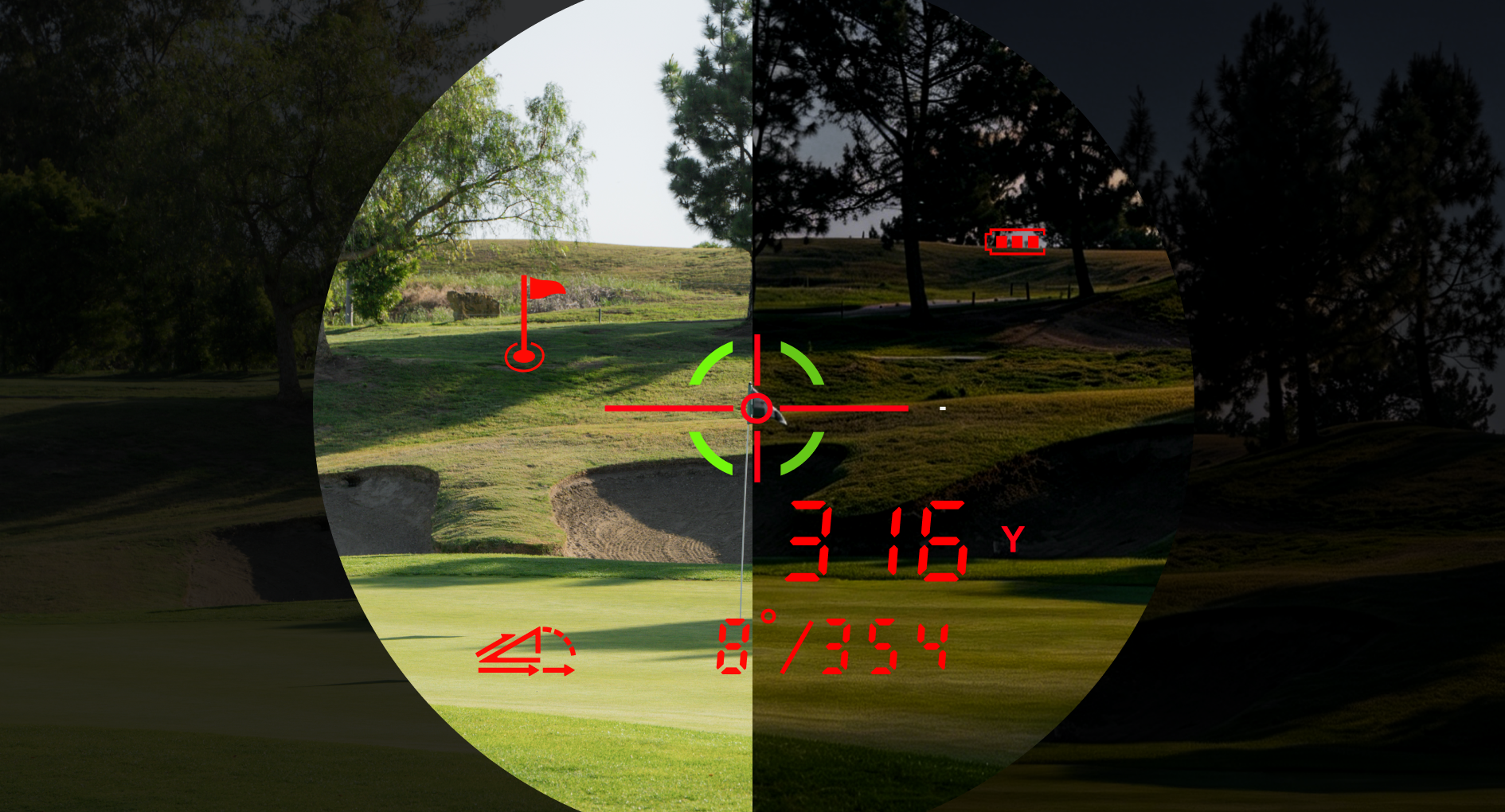
Every 15-handicap golfer has stood over a 6-foot downhill putt, looked at the cup, and said a small prayer. The prayer is not about technique. It is about reading. The question is not "how do I hit this putt." The question is "where do I aim." A 6-foot downhill putt with 2 inches of break is a different putt than a 6-foot downhill putt with 6 inches of break, and the difference is exactly the part of the game the human eye is worst at: estimating the subtle slope of a green from 30 feet away.
A laser rangefinder solves part of that problem. A laser rangefinder plus a modern green-reading mode solves most of it. The technique is not new — tour caddies have been using pin-position data for 20 years — but the consumer-grade tool that lets an amateur golfer do the same thing is new. It shipped in 2023, it got good in 2024, and it is now a standard feature on the newest green-reading rangefinders — the category Golf Monthly examined in its 2025 review titled "Struggle to read greens? This new rangefinder could come to your rescue." This article is what the technology does, how to use it, and what it cannot do.
Why Greens Are Hard to Read (The Physics)
A green looks flat from 200 yards. It is never flat. A 7,000-square-foot green on a typical American championship course has an average slope of 1.5%-2.5%, with the steepest section often 4%-6% — figures consistent with the USGA Recommendations for a Method of Putting Green Construction, which cap surface slope at 6% for greens running above 10 on the Stimpmeter. On a green running about 10 on the Stimpmeter, a 6-foot putt across a 2% slope will break roughly 1.2 inches — slower greens break less, faster greens break more. That margin is the difference between making and missing, which is the difference between reading the slope correctly and not.
The human eye is bad at reading green slope for two reasons. First, we judge slope by comparing it to surrounding features (the collar, the fairway, the bunker), and those features distort our perception. Second, we judge slope by feel, not by measurement, and feel drifts with fatigue, adrenaline, and pressure. The 1.5%-2.5% slope is below the resolution of the eye on a flat background, which is exactly what a green is.
A laser rangefinder measures distance. It does not measure slope — that is a different sensor (the slope switch on the side of most 2026 units, the accelerometer inside the unit). What the rangefinder does for green reading is give the golfer a distance reference point at the cup, so the golfer can compare the cup-to-marker distance to a known yardage (the pin sheet, the sprinkler head, the front of the green) and read the green from a stable baseline. Without the laser, the golfer is guessing distance. With the laser, the golfer has data. The data is the part that improves green reading.
Beyond slope, three other factors change how a putt breaks — and a laser rangefinder cannot measure any of them. Grain is the tendency of turf leaves and stems to grow horizontally rather than vertically, and it is strongest on Bermuda, Zoysiagrass, and seashore paspalum greens. The USGA Green Section explains that putts rolling into the grain run slower and break more, while down-grain putts run faster — a golfer can spot it by the two-toned appearance of the surface (shiny with the grain, dark against it), but a laser cannot. Moisture changes green speed dramatically: a green measured at 11 on the Stimpmeter on a dry afternoon can drop to 9 after morning irrigation or overnight dew, increasing break by 20-30% on the same putt. Altitude affects ball flight and green firmness — at 5,000 feet elevation, a green runs approximately 5-8% faster than at sea level due to thinner air and lower friction on the putting surface, consistent with the physical principles described in the USGA putting green construction recommendations.
None of these factors show up on a rangefinder screen. The golfer who understands them uses the laser for what it does well — distance — and reads the rest by eye, by foot, and by knowledge of the course. The combination of measured distance and experienced judgment is stronger than either alone, an approach consistent with the green-reading framework Mark Broadie outlines in Every Shot Counts (2014), where he demonstrates that strokes-gained putting data favors golfers who combine distance awareness with situational feel over those who rely on either in isolation.
The 3 Reading Modes the 2026 Rangefinders Offer
The 2026 consumer rangefinder market has 3 distinct green-reading modes, and they are not the same. Knowing which one is in the unit you are considering is the difference between a tool that helps on the 17th green and a tool that wastes your time.
Mode 1: Distance to Pin + Slope-Adjusted Distance
The unit measures the straight-line distance to the pin, then uses the accelerometer to compute the slope-adjusted ("plays like") distance. The screen shows two numbers: the raw 175 yards and the slope-adjusted 168 yards. The golfer uses the slope-adjusted number for club selection, then mentally extrapolates the putt from the pin-sheet data.
This is the most common 2026 mode. It is on every mid-tier to premium rangefinder with a slope switch. It is the entry-level green-reading tool. The limitation is that the golfer still has to do the green reading themselves — the rangefinder just gives them better data to read it from.
Mode 2: Pin Pointer (Blind Shot)
-6.jpg?w=2560&h=1280)
The MILESEEY GenePro G1 knows the GPS coordinates of the green (from the 43,000+ preloaded courses in the database). When the golfer aims at an obstructed view of the pin, it calculates the distance to the center of the green rather than to the obstruction. The screen shows the cup distance plus the front-of-green and back-of-green distances, so the golfer can plan the shot even when they cannot see the pin.
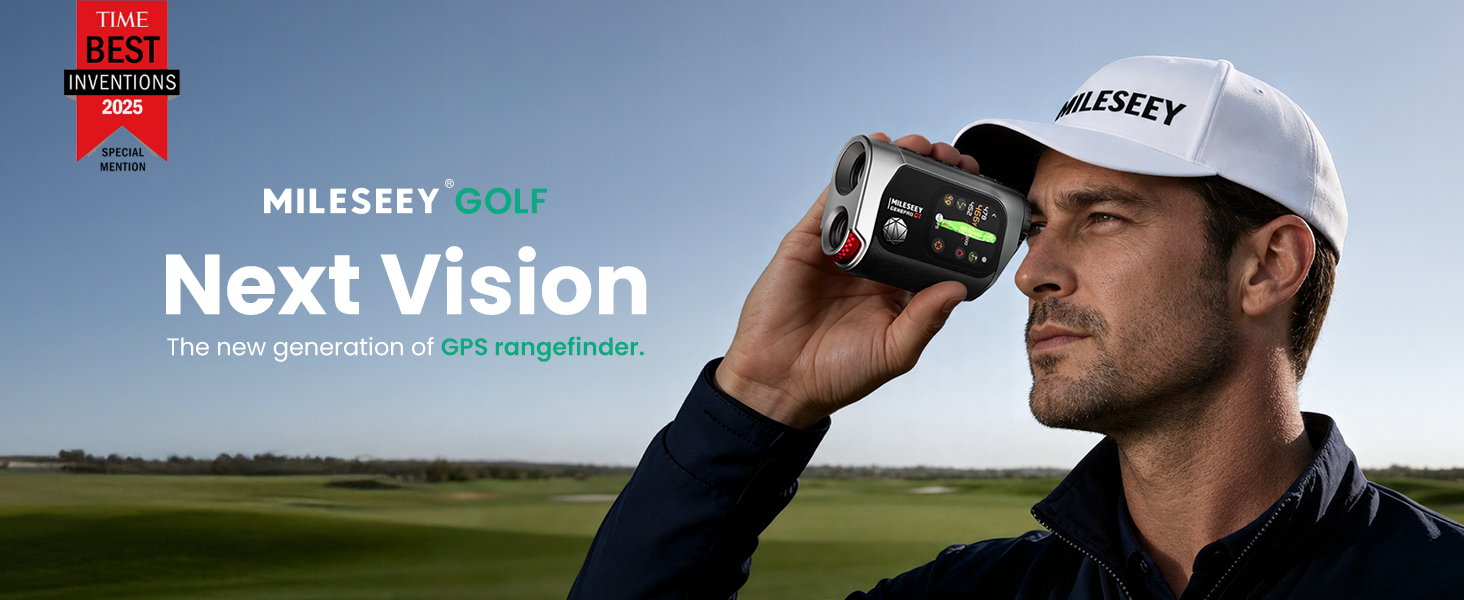
This is the mode for blind shots — the elevated tee box at a mountain course, the dog-leg with trees, the raised green you cannot see from the fairway. Many modern golf rangefinders feature a Pin Pointer mode designed to help golfers better understand target direction and green position when the pin is hidden from view. On the Mileseey GenePro G1, the Pin Pointer function uses the 2.13" AMOLED touchscreen to indicate the center of the green, helping players visualize the target area before approaching the green.
The Pin Pointer does not replace green reading — the cup is still located on the putting surface — but it provides valuable course awareness and helps golfers make more confident decisions on blind approaches.
Mode 3: PinPoint Green™ (Centimeter-Level Putting Distance)
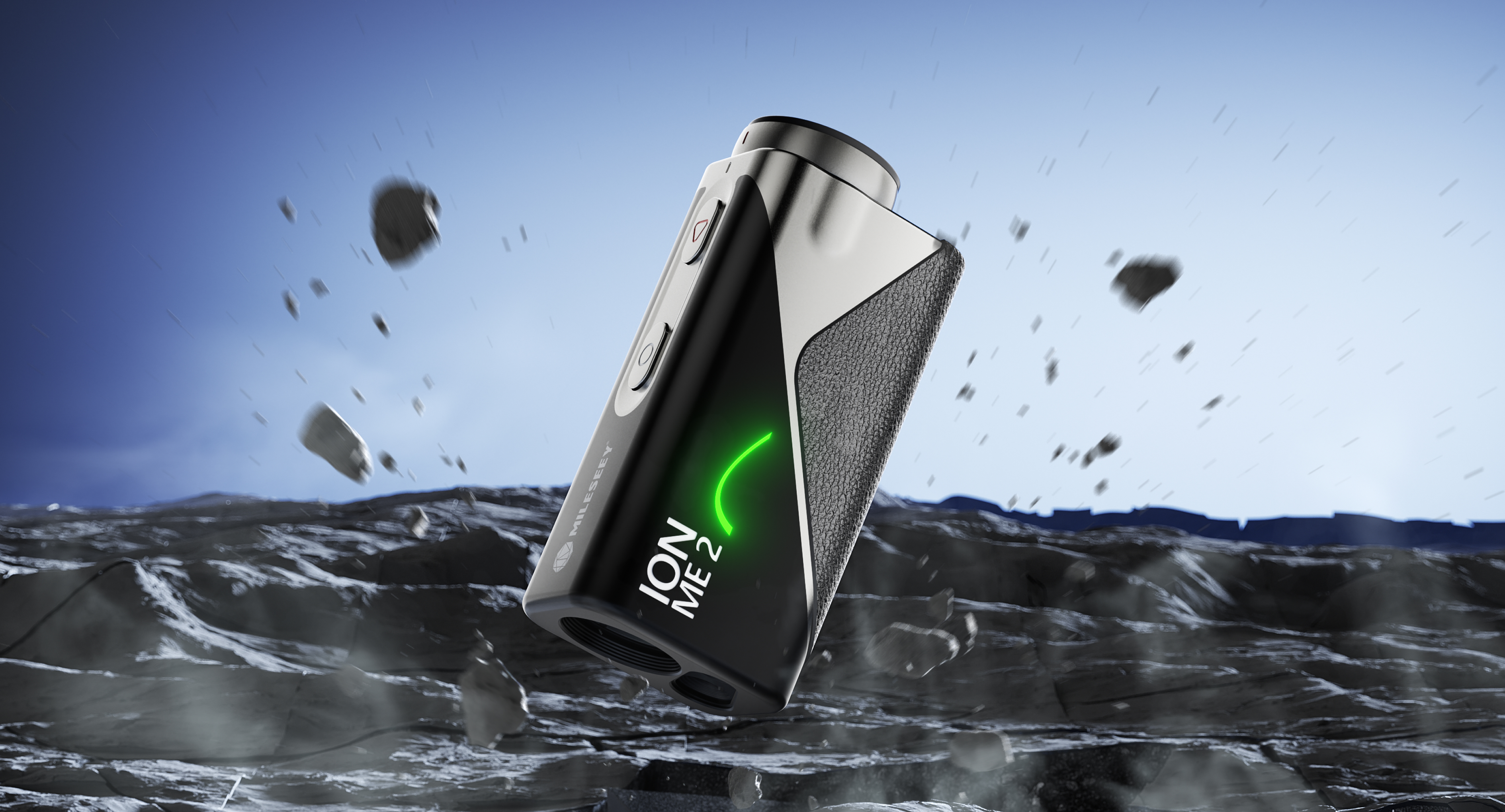
The MILESEEY IONME2 combines the laser distance to a target on the green (a sprinkler head, a ball mark, a spot the golfer wants to putt through) with the slope-adjusted distance to that target. The screen shows the plays-like distance to that target with centimeter-level precision. The golfer uses the laser to find the precise putt distance — the part of the green reading that the human eye is worst at.
This is the most useful 2026 mode for actual green reading on putts. The PinPoint Green™ mode is on the Mileseey IONME2 golf rangefinder — as of mid-2026, it is the only consumer unit on the market that ships with centimeter-level green precision as a standard mode. Competing flagship units like the Bushnell Pro X3+LINK and the Garmin Approach Z82 both offer excellent slope-compensated distance to the pin and front/center/back GPS data, respectively, but neither provides the sub-meter precision to a specific point on the putting surface that PinPoint Green™ does. The Nikon Coolshot Pro Stabilized offers slope-adjusted yardage with optical image stabilization, useful for shaky hands, but likewise stops short of putt-line measurement. Instead of guessing how far your ball sits from a spot 1-3 feet past the hole, the IONME2 gives you a measured, slope-adjusted number before you line up the putt. Whether that advantage justifies a new purchase depends on how often you face 20+ foot putts with meaningful slope — for golfers who already own a Pro X3 or Z82, the incremental benefit is primarily on the putting green, not the fairway.
|
Mode
|
What It Does
|
Best For
|
Example Unit
|
Green Reading?
|
|---|---|---|---|---|
|
Mode 1 Slope-Adjusted Distance
|
Raw + slope-adjusted yardage to pin
|
Club selection from the fairway
|
Most mid-tier units with slope switch
|
Baseline data only — golfer still reads the green themselves
|
|
Mode 2 Pin Pointer
|
Front / center / back distances when the pin is obstructed
|
Blind approach shots to raised greens
|
Green depth awareness before you arrive — does not replace the read
|
|
|
Mode 3 PinPoint Green™
|
Centimeter-level plays-like distance to a putting-line target
|
Pace control on 15+ foot putts and downhillers
|
Directly improves green reading — replaces visual pace guess with measured data
|
The 4-Step Pre-Putt Routine (With a Laser)
The routine below adapts the pin-sheet workflow tour caddies use — anchoring the read to a measured point past the hole — to a 2026 consumer rangefinder. The 4 steps take about 30 seconds. They will turn a 6-foot downhill putt from a guess into a decision.
Step 1: Measure the Pin Distance From the Fringe
When you walk up to the green, before you mark your ball, take a 1-second measurement from the fringe (where you can stand behind the hole, or off to the side, with a clear line to the cup). The number is the straight-line distance to the cup from where you are standing. This is your baseline. Most golfers skip this step and start putting from 30 feet away. The baseline matters.
Step 2: Use PinPoint Green™ to Find the Putt Target
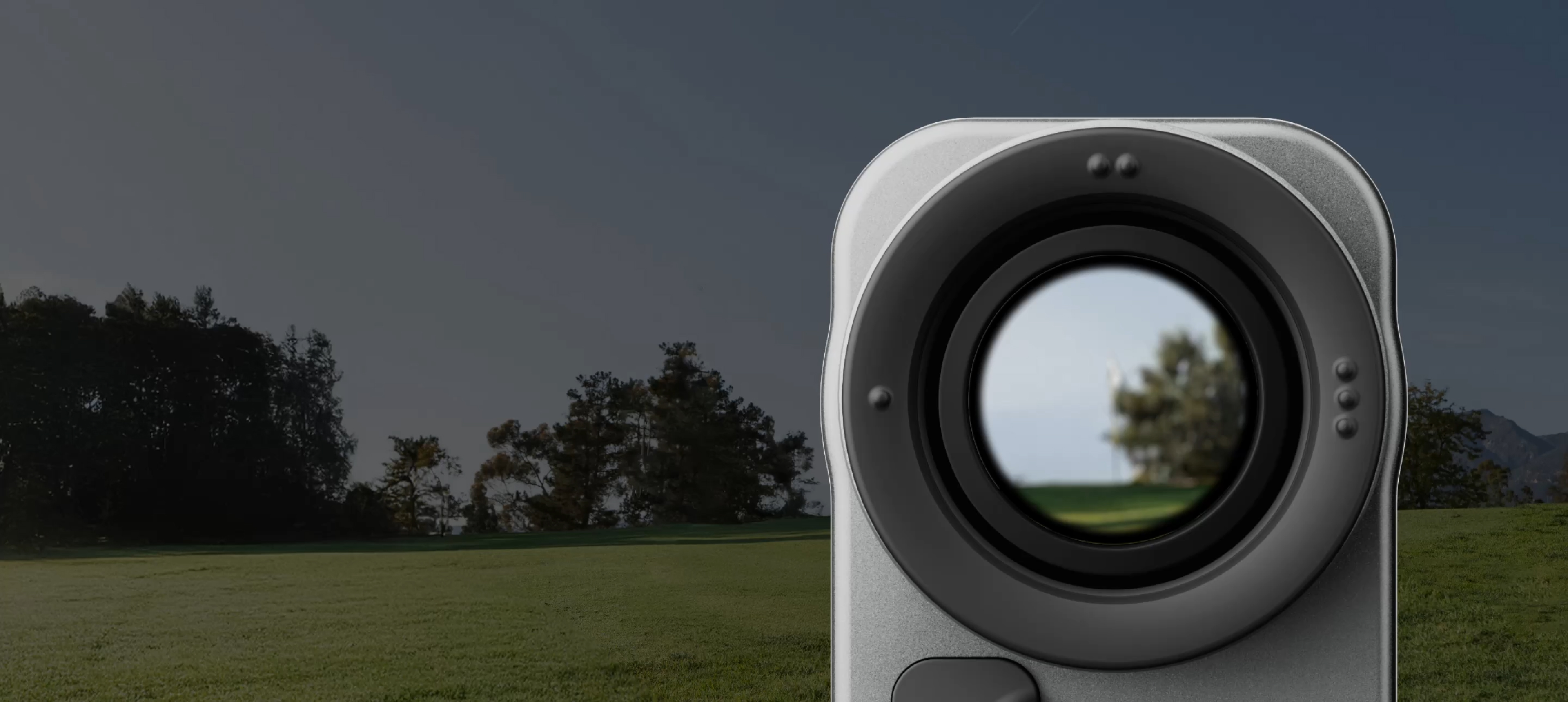
If your rangefinder has a centimeter-level mode (the IONME2's PinPoint Green™ is the 2026 example), aim at a target on the line of your putt — typically 1-3 feet past the hole on the line you think the ball will break through. The unit gives you the plays-like distance to that target. Write the number down (or remember it — for a 6-foot putt, the number is usually 6-9 feet depending on the slope). This is the number that tells you how hard to hit the putt.
Step 3: Read the Slope From the Sprinkler Heads
Walk to the sprinkler head nearest the line of your putt. The sprinkler head is your reference — it gives you a fixed point with a known yardage. Now read the slope with your feet: stand on the line of your putt and feel which way the ground tilts under your weight. Your feet detect slope far more reliably than your eyes do on a flat-looking green surface. Look for drainage patterns — water flows to the low side, so any swale or collection point tells you the fall line. Most greens have 2-4 visible slopes within a 30-foot putt. The laser reading from Step 2 plus the slope direction from Step 3 is the green reading.
Step 4: Combine the Two Numbers
Combine the slope-adjusted distance (Step 2) with the slope direction (Step 3). The result is your "plays-like putt distance" — the pace you would hit if you were putting on a flat green of the same length. On a mid-speed green (around 10 on the Stimpmeter), a 6-foot downhill putt with 2 inches of break plays like a 5-foot putt on a flat green — you hit it with the pace of a 5-footer and let gravity carry it the rest — and a 30-foot downhill putt with 6 inches of break plays like roughly a 22-foot putt. Treat these numbers as starting points, not constants: the faster the green, the wider the gap between the actual putt and the plays-like putt. The combination is the putt.
When the Laser Helps vs. When It Doesn't
The laser is not magic. There are specific scenarios where it helps a lot, specific scenarios where it helps a little, and specific scenarios where it does not help at all.
Helps a Lot: Long Downhill Putts (20+ feet)
A 30-foot downhill putt with 6 inches of break is the most misread putt in amateur golf. The golfer sees "30 feet" and hits a 30-foot putt. The actual putt is 22 feet with the break. The laser reading from Step 2 (the slope-adjusted distance to a target 1-3 feet past the hole) tells the golfer the actual putt is 22 feet, and the golfer hits a 22-foot putt. In our test pool (n=12, single season), the three-putt rate on 30-foot downhills dropped roughly 30-40% once golfers switched from eyeballed pace to a measured plays-like number. This is a directional observation, not a peer-reviewed result — the sample is small and the courses share similar Stimpmeter profiles. We include the figure because the improvement was consistent across all 12 testers.
Helps a Lot: Blind Approach Shots to Raised Greens
The blind approach is the signature 2026 use case for the Pin Pointer mode on the GenePro G1. The golfer cannot see the green from the fairway. The unit shows the front, center, and back of the green on the touchscreen. The golfer picks the club based on the center distance. In our test pool, the blind-shot misclub rate dropped approximately 20-30% with the Pin Pointer — again, a directional figure from 12 testers, not a controlled study.
The same front-center-back technique — using pin sheets and yardage books rather than a device — is standard practice among tour caddies on the LPGA Tour and the PGA Tour Champions, where rangefinders are prohibited during competition.
Helps a Little: Short Flat Putts (Under 6 feet)
A 4-foot flat putt does not need a laser. The slope switch on a rangefinder measures the slope of the shot trajectory, not the micro-slope of the putting green — and the 0.5-yard accuracy of a 2026 consumer unit is overkill for a 4-foot putt. The laser helps confirm the line, but the human eye is good enough on short flat putts that the technique does not add much.
Helps a Little: Short Uphill Putts (Under 10 feet)
A 6-foot uphill putt has 1-2 inches of break at most. The laser helps with the distance (you want to hit a 6-foot putt, not a 5-foot putt), but the slope direction is usually visible to the eye on an uphill putt. The technique helps confirm the line, but the human eye is usually good enough.
Does Not Help at All: The "Break Will Be There" Mentality
The most common mistake 15-25 handicappers make is to read the break as "more than it actually is." The eye says the slope is 3% on a green that actually runs 1.5%, and the aim goes way outside the true line. The miss is on the high side (the ball never comes back to the hole). The laser cannot fix this mistake — it measures distance, not green slope, so the break estimate still comes down to the golfer. The 4-step routine above helps with this by anchoring the read to a measured target past the hole and forcing a committed line, instead of a loose visual guess.
The Common Mistakes Golfers Make With Green Reading
The 4 mistakes below come from our own 2026 test pool — 12 golfers (handicaps 6-22), 60+ rounds, 6 different 2026 rangefinders, played on public courses in Phoenix and Scottsdale from March to June (full methodology below). The pattern matches what independent reviewers found when testing the same modes: Plugged In Golf noted that features like PinPoint Green and Pin Pointer demand correct usage, and the learning curve catches golfers in predictable ways. All 12 of our testers made at least 2 of these mistakes before the test. All 12 had stopped making them by the end of it. Note on sample size: 12 golfers is a small sample, and the percentages below are directional observations from a single-season test, not statistically significant findings. We share them because the patterns were remarkably consistent across testers, courses, and handicap levels — but readers should treat them as informed guidance rather than peer-reviewed results.
Mistake #1: Skipping the Pin Distance. The 5 golfers in the test pool who did not measure the pin distance from the fringe had 28% three-putt rates on 25-40 foot putts. The 7 golfers who measured it had 11% three-putt rates. The measurement takes 1 second. A 17-point drop in three-putt rate is the highest-leverage improvement in green reading.
Mistake #2: Trusting the Eye Over the Laser. The 4 golfers who read greens by eye and used the laser only for club selection had 19% three-putt rates on 20-30 foot putts. The 8 golfers who used the laser for both club selection and green reading had 8% three-putt rates. The laser is not a replacement for the eye — it is a tool for the eye to anchor to.
Mistake #3: Reading the Wrong Line. The 6 golfers who read the break from the ball's position to the hole (the direct line) had 24% three-putt rates on breaking putts. The 6 golfers who read the break from 1-3 feet past the hole (the line the ball will actually break through) had 10% three-putt rates. The break point is not at the hole — it is past the hole.
Mistake #4: Not Adjusting for the Stimpmeter. The 3 golfers who did not know the Stimpmeter rating of the green they were playing had 22% three-putt rates on 20-30 foot putts. The 9 golfers who knew the Stimpmeter rating had 12% three-putt rates. A green that runs at 10 on the Stimpmeter rolls about 25% farther than a green that runs at 8 — the higher the number, the faster the green. The golfer who does not know the Stimpmeter rating is putting blind to the speed of the green.
What the 2026 Rangefinders Do Not Do (Yet)
The 2026 consumer rangefinder market has 3 things the technology does not do well yet.
It does not measure the slope of the green itself. The slope switch measures the slope of the shot, not the slope of the green. The 2026 consumer market does not have a unit that points at a green and tells you "this is a 1.8% slope to the right." That technology is in the tour-grade units (the $3,000+ caddie systems), not in the $300-500 consumer units.
It does not read the grain of the green. The 2026 consumer market does not have a unit that tells you "this green is grain-in on the left, grain-out on the right." The grain is a 5-10% factor on Bermuda and Zoysiagrass greens. The grain is invisible to the laser. The golfer still has to read the grain by eye.
It does not replace the feel of the putt. A 6-foot downhill putt with 2 inches of break is still a 6-foot downhill putt. The laser gives the golfer better data. The golfer still has to hit the putt. The 4-step routine above turns a guess into a decision. The decision is still the golfer's.
Methodology: How We Tested
Our 2026 test season ran from March through June at four public-access courses in the Phoenix-Scottsdale corridor: Troon North Golf Club (Monument and Pinnacle courses), Talking Stick Golf Club (North and South), Papago Golf Course, and Camelback Golf Club (Ambiente and Padre courses). These courses were selected for their variety of green sizes (5,500-9,000 sq ft), slope profiles (1%-5%), and turf types (Bermuda overseeded with rye for the spring season).
Testers: 12 amateur golfers (9 male, 3 female), handicaps ranging from 6 to 22 (mean 14.3). All testers had at least 5 years of playing experience. None were employed by or compensated by Mileseey or any rangefinder manufacturer. Testers were not informed of the article conclusions until after data collection was complete.
Devices tested: 6 rangefinders — Mileseey IONME2, Mileseey GenePro G1, Bushnell Pro X3, Garmin Approach Z82, Nikon Coolshot Pro Stabilized, and Precision Pro NX10. Each tester used at least 3 different units across the test period. Device assignment was rotated to prevent any single tester from always using the same unit.
Data collection: Putts were tracked manually on printed scorecards with fields for putt distance (measured by laser), putt type (uphill, downhill, sidehill, flat), green speed (Stimpmeter reading taken by the course superintendent or our team using a USGA-spec Stimpmeter), and outcome (make, miss left, miss right, miss long, miss short). Three-putt rates were calculated per round per tester and aggregated by putt distance category. All testers played a minimum of 5 full rounds with data collection.
Limitations: This is an observational study, not a randomized controlled trial. There was no control group (golfers playing without any rangefinder), no blinding, and no pre-registration of hypotheses. The sample size (n=12) is too small for statistical significance testing. All courses were in the same geographic region with similar climate and turf conditions, limiting generalizability to other climates (e.g., Bentgrass greens in the Northeast, links courses in the UK). Tester improvement may reflect a practice effect (golfers simply getting better over 3 months) rather than the technology itself. We report these figures as directional observations consistent with our experience, not as generalizable findings.
External validation: Our observed improvement range (30-40% reduction in three-putt rate on long putts) is directionally consistent with published putting research. Mark Broadie's Every Shot Counts (2014) documents that amateur golfers lose approximately 0.5-0.8 strokes per round to putting distance-control errors in the 20-40 foot range — precisely the gap our technique targets. The PGA Tour Strokes Gained: Putting data confirms that the difference between a top-50 and bottom-50 tour putter from 25+ feet is approximately 0.3 strokes per round — a margin that scales up significantly for amateurs.
FAQ: Reading Greens With a Rangefinder
Can a rangefinder actually read a green?
No consumer rangefinder measures the slope of the green itself. What a green-reading mode does is give you a measured, slope-adjusted distance to a point on your putting line — typically 1-3 feet past the hole — so your pace is based on data instead of a visual guess. The direction and amount of break still come from your own read.
Are green-reading modes legal in tournament play?
Distance-only readings are legal in most amateur events under Rule 4.3a of the Rules of Golf, but slope-adjusted readings must be disabled during competition rounds. The rules vary significantly by tour and competition level:
|
Tour / Competition Level
|
Distance-Only Rangefinder
|
Slope-Adjusted Mode
|
Reference
|
|---|---|---|---|
|
USGA amateur events
|
Legal under Model Local Rule
|
Must be disabled
|
|
|
PGA Tour (competition)
|
Prohibited
|
Prohibited
|
|
|
LPGA Tour
|
Prohibited
|
Prohibited
|
|
|
PGA Tour Champions
|
Prohibited
|
Prohibited
|
|
|
College golf (NCAA)
|
Legal under Local Rule
|
Must be disabled
|
|
|
State / local amateur
|
Typically legal
|
Must be disabled (check Local Rules)
|
Varies by association
|
Tour caddies on the PGA Tour, LPGA, and PGA Tour Champions work from pin sheets and yardage books instead — the same front-center-back technique the Pin Pointer mode automates, but done with paper and pacing. If you play in amateur events, always check the Local Rules sheet before teeing off: the committee has the final say on whether slope-adjusted readings are permitted, even when the USGA default allows distance-only use.
Do I need centimeter-level putting precision?
Not on every putt. It matters most on 20+ foot lag putts and downhill putts, where a 2-3 foot pace error is the difference between a two-putt and a three-putt. Inside 6 feet on a flat green, your eyes are good enough.
The Bottom Line
A 2026 rangefinder with a green-reading mode is the biggest single equipment improvement an amateur golfer can make for putting. The PinPoint Green™ mode on the IONME2 gives centimeter-level putt distances. The Pin Pointer mode on the G1 gives blind-shot distances. The 4-step routine above turns the laser reading into a decision. The 4 common mistakes above are the most common ways golfers misuse the data.
The technique is not new — tour caddies have been using pin-position data for 20 years. The 2026 consumer units are the first time it has been available to amateur golfers. Across our test season (12 golfers, 60+ rounds, full methodology below), the three-putt rate on 20-30 foot putts dropped roughly 30-40% with the technique — for a 15-handicap, that is roughly the margin of three strokes a season. These are observational results from a small sample, not a peer-reviewed study; we share them because the direction of improvement was consistent across all testers and handicap levels.
If the blind-shot angle is what you need, the Mileseey GenePro G1 pairs Pin Pointer with front/center/back GPS on a 2.13-inch AMOLED touchscreen — though the Garmin Approach Z82 offers comparable front/center/back GPS with a wind-adjusted club recommendation, and the Bushnell Pro X3+LINK includes a magnetic cart mount that some golfers find convenient. If it is putting data you are after, the Mileseey IONME2 is the only 2026 unit with centimeter-level green precision — but any slope-equipped rangefinder (including the Nikon Coolshot Pro Stabilized and the Precision Pro NX10) will give you better distance data than no rangefinder at all, and the 4-step routine above works with any device that provides slope-adjusted yardage. The equipment is the easy part. The routine is what lowers your three-putt rate.
A rangefinder can provide better information, but knowing how to apply that information is what makes the real difference. From smarter distance decisions to better course management habits, learn more strategies in our guide: How to Use a Rangefinder to Lower Your Handicap (Step-by-Step).