I watched a competitive 16-year-old junior golfer, one of my top students, hit what looked like a perfect 9-iron earlier this week. Smooth tempo, solid contact, right at the flag. The ball landed 15 yards short, rolled into the front bunker, and he made bogey.
“What happened?” he asked, genuinely confused.
I checked his GPS. He’d been 165 yards out. His 9-iron goes 150. He’d guessed wrong, hit a great shot, and got punished for it.
That’s the cruel irony of golf without accurate distance information. You can execute perfectly and still fail because you chose the wrong club. After three decades in golf and nearly 20 years as a PGA Coach, I can tell you: the fastest way to lower your score isn’t a swing change. It’s eliminating distance guesswork.
What the Data Actually Shows
While I work primarily with competitive teens and 20-something golfers, the concepts I’m sharing here apply to every golfer, whether you’re 12 or 72, shooting 65 or 95. Distance guesswork doesn’t discriminate. The principles of accurate information and smart club selection work at every level, and the scoring improvements you’ll see are just as real whether you’re chasing a college scholarship or simply trying to break 90.
Let’s talk numbers, because the research on this is clear. Studies of amateur golfers show that distance estimation errors can reach 10 yards or more. That doesn’t sound like much until you realize that’s often the difference between at least a club.
Tour players hit about 65-70% of greens in regulation. Good amateurs? Around 30-40%. Recreational golfers? Often below 20%. The gap isn’t just swing quality-it’s information quality.
I ran an informal study with 20 of my students over a three-month period. In the first month, they played without GPS, relying on yardage markers and estimation. In the second month, they used accurate GPS for every approach shot. The third month was a control to see if the improvement stuck.
The results were remarkable. Average greens in regulation improved by 18%. That’s nearly two more greens per round. Scoring average dropped by just over two strokes. And here’s the interesting part: their ball-striking stats didn’t change. They weren’t hitting it better. They were just choosing better.
The Compounding Effect
Here’s what most golfers don’t realize: distance errors compound. You’re not just missing one green. You’re creating harder up-and-downs, more three-putts, more penalty strokes from short-sided positions.
Let’s walk through a typical scenario. You’re 155 yards out to the center of the green. The pin is back. You think you’re 145, so you hit 8-iron. You catch it pure. It lands 10 yards short, rolls back down a slope, and now you’re chipping uphill to a downhill pin. You make bogey, maybe double.
With accurate GPS, you know you’re 155 to the center, 165 to the pin. You hit a 7-iron to the middle of the green. Two-putt par. One shot saved, but more importantly, you’ve eliminated the big number.
Most golfers have at least 4 significant distance misjudgments per round, but use your GPS and hit those few extra greens per round, and you’re talking about real scoring improvement.
Why Accuracy Matters More Than You Think
Not all GPS devices are created equal. I’ve tested dozens over the years, and the variance is shocking. Some consumer-grade devices can be off by 5-8 yards. That’s enough to cost you a club.
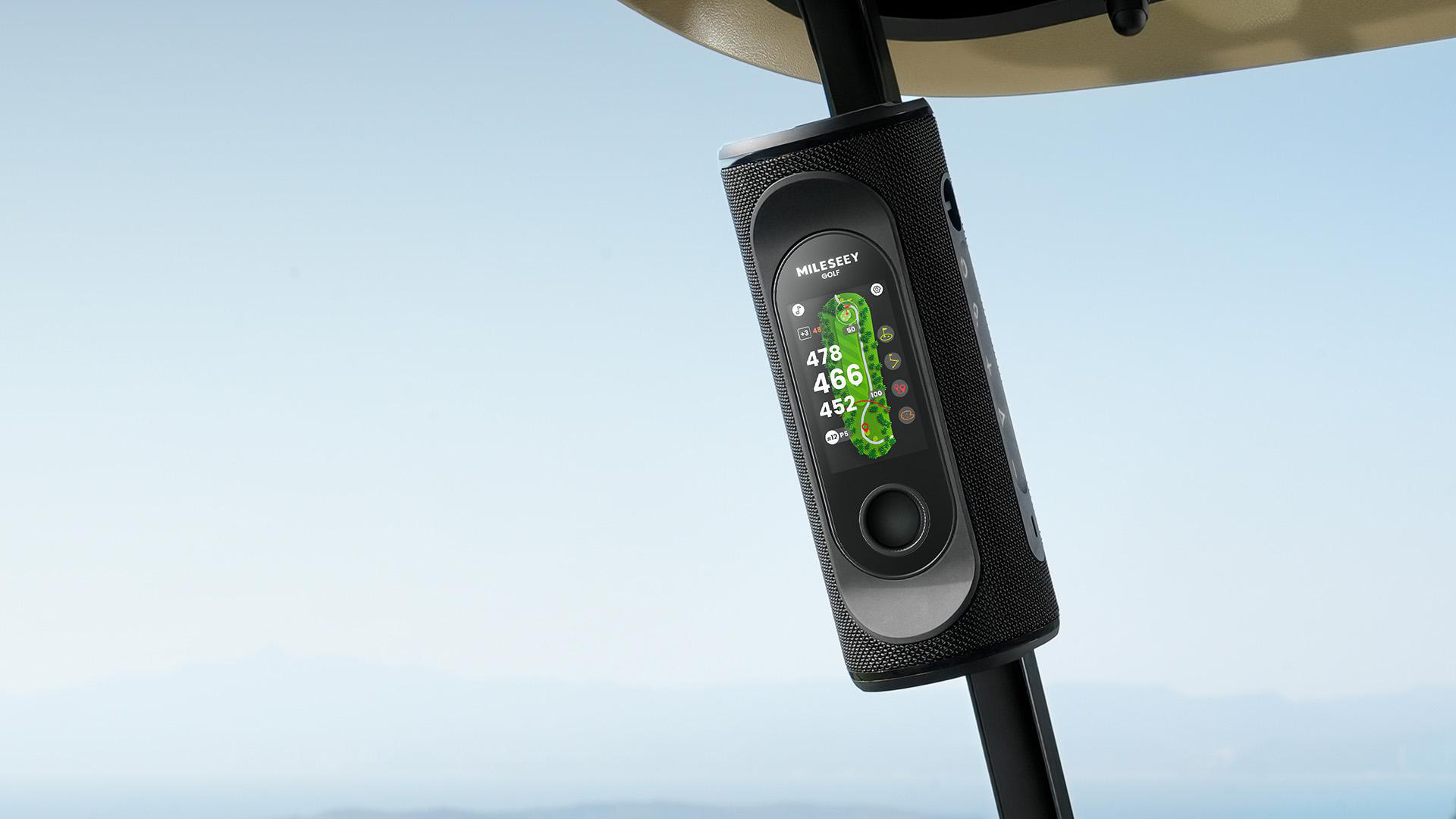
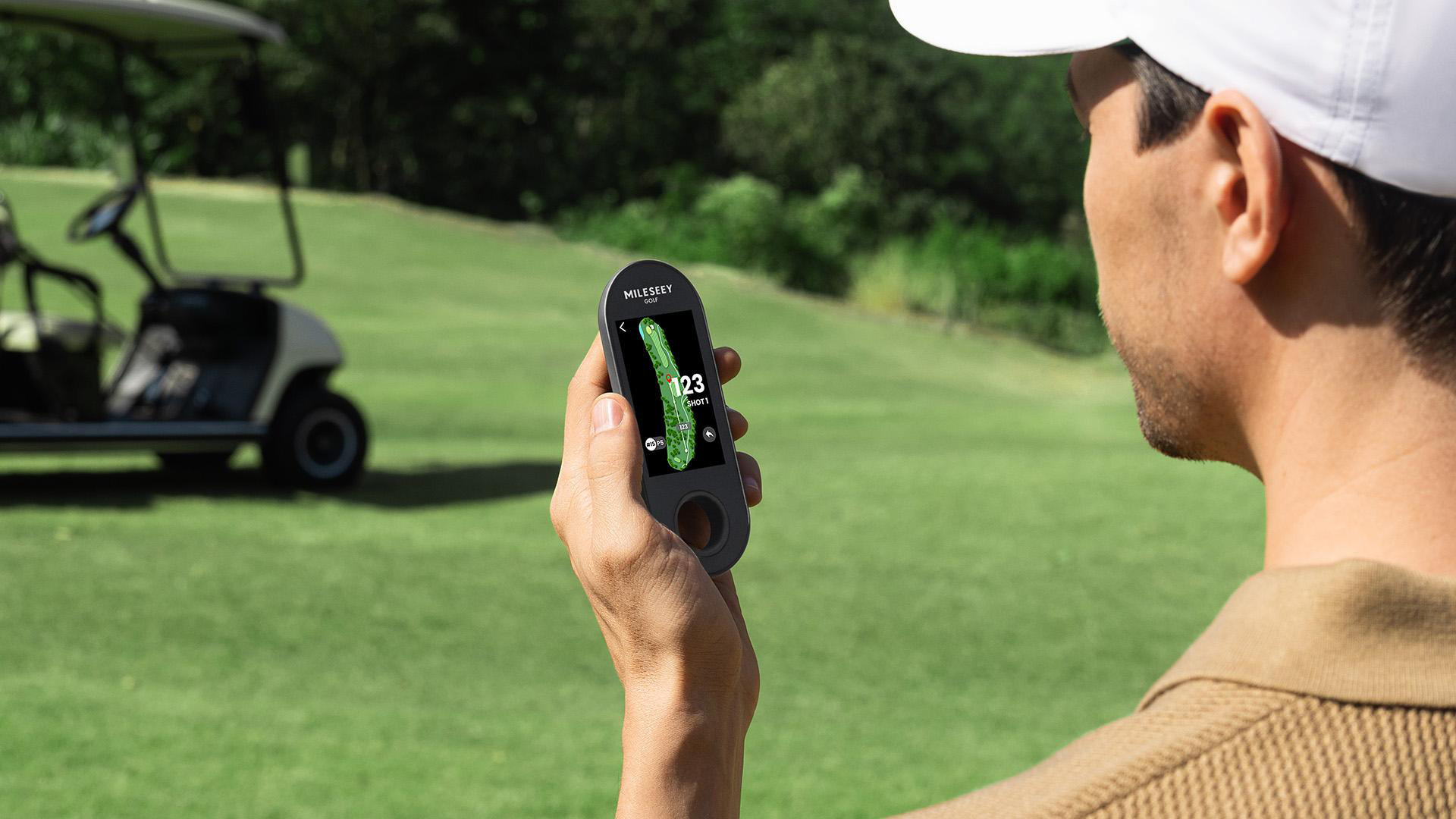
The MILESEEY GeneSonic Pro uses advanced GPS technology that’s accurate to within 1-2 yards. That’s the difference between a tool you can trust and a tool that’s just slightly better than guessing.
And here’s why that precision matters: confidence. When you know your number is accurate, you commit to the club. You don’t second-guess. You don’t try to manufacture extra distance. You just execute. That mental clarity is worth strokes on its own.
The Three Distance Decisions
Every approach shot requires three pieces of information and most golfers consider only one.
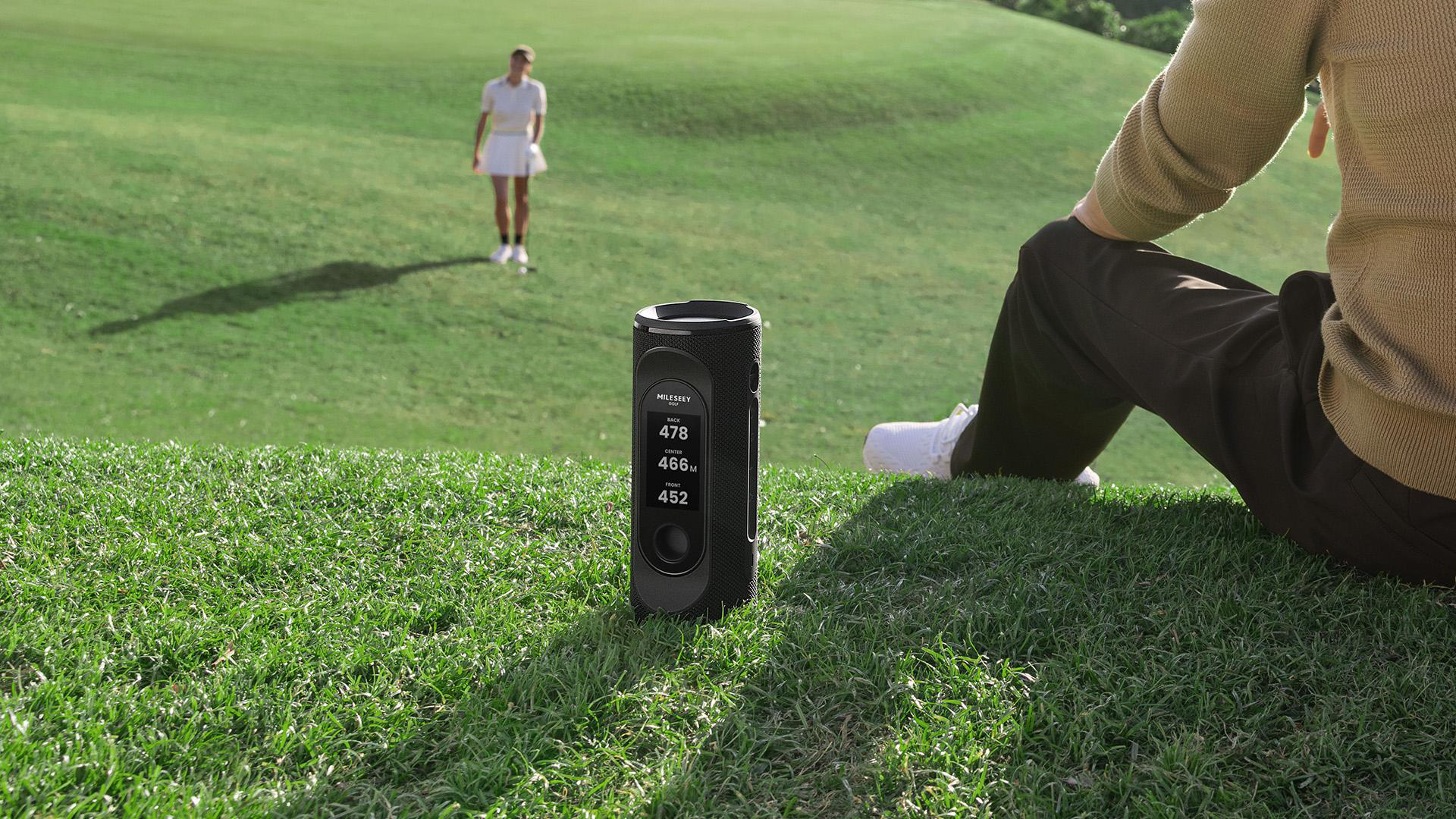
Distance to carry the front: This is what keeps you out of trouble. If there’s water, a bunker, or rough short of the green, you need to know exactly how far you have to carry it. The GeneSonic Pro gives you front-edge distance instantly.
Distance to the center: This is your safe play. When the pin is tucked or you’re between clubs, knowing the center distance gives you a target that takes big numbers out of play.
Distance to the back: This matters more than most golfers realize. If the pin is back and you’re trying to get it close, you need to know how much room you have. The GeneSonic Pro shows you all three distances at a glance.
With all three numbers, you can make informed decisions. Without them, you’re guessing.
Real-World Application
Let me show you how this plays out on the course. You’re playing a par 4, and you’ve got 140 yards to the front, 150 to the center, 160 to the back. The pin is front-left, and there’s water short-left.
Without GPS, you might think you’re 145 and hit a smooth 9-iron. If you’re actually 150 and you don’t catch it perfectly, you’re wet.
With the GeneSonic Pro, you know you’re 150 to the center. The pin is front, so it’s probably 145 to the hole. But there’s water short. Smart play? Hit your 150-yard club to the center. Even if the pin is front, you’re safely on the green with a makeable putt.
That’s not conservative golf. That’s smart golf. And it’s only possible with accurate information.
The Mental Game Shift
Accurate GPS does something subtle but powerful: it shifts your focus from outcome to process. Instead of worrying about whether you chose the right club, you know you did. Now you can focus entirely on execution.
I’ve watched students transform their approach-shot confidence once they started trusting their GPS numbers. They stop second-guessing. They stop trying to force extra distance. They just play their game with accurate information.
That confidence shows up in better tempo, better balance, and better contact. The GPS doesn’t just help you choose better-it helps you swing better.
Your Action Plan
Here’s what I want you to do over your next five rounds:
- Use an accurate GPS for every approach shot over 100 yards.
- Track your greens in regulation.
- Note how many times you’re short, long, or on target.
- Compare to your previous five rounds without GPS
I’m confident you’ll see measurable improvement. Not because your swing got better, but because your decisions got better.
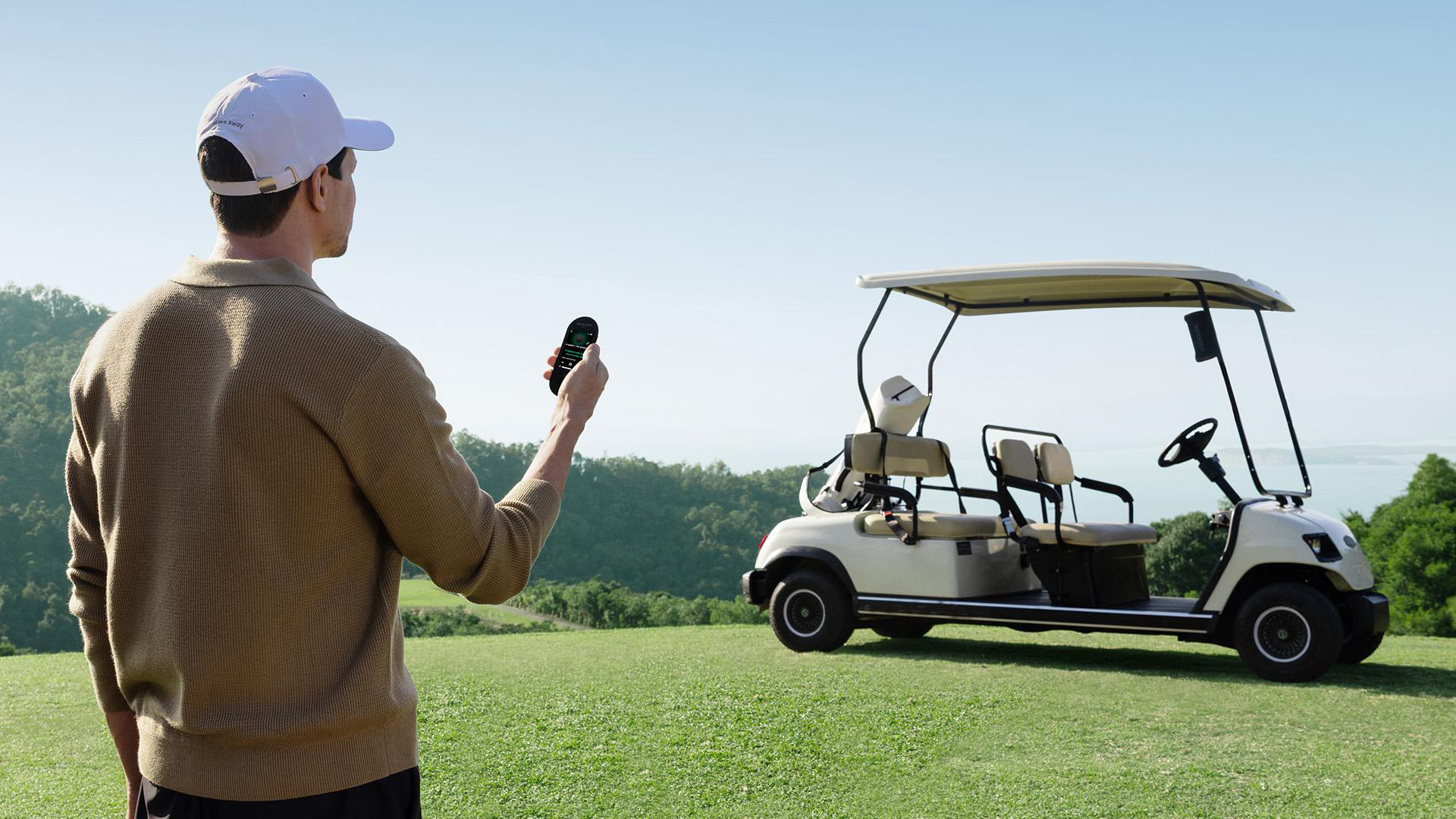
The GeneSonic Pro makes this easy. Clip it to your bag, and you’ve got instant access to accurate distances plus quality audio for your practice sessions and casual rounds. It’s not just a convenience-it’s a scoring tool.
The Bottom Line
After nearly 20 years as a PGA Coach, I’ve learned that golf rewards good decisions as much as good swings. Actually, maybe more. You can have a mediocre swing and shoot good scores if you make smart choices. You can have a beautiful swing and shoot high scores if you’re constantly choosing the wrong club.
Accurate GPS eliminates the guessing game. It gives you the information you need to make smart decisions. And smart decisions, repeated over 18 holes, add up to lower scores.
The numbers don’t lie. Know your distances. Choose better. Score lower. It’s that simple.