Father's Day may have passed in June, but the golfer in your life does not stop needing a new rangefinder just because the calendar moved on. Birthdays, graduations, promotions, and the unspoken "thanks for being you" all need a present, and a rangefinder is the rare golf gift that gets used every single round for the next five years.
The hard part is not whether to buy one. It is which one. The 2026 market is deeper than ever — Golf Monthly's editor panel slimmed its annual Editor's Choice list to 120 products that earned a spot after a year of testing, and rangefinder prices alone run from $169.99 to nearly $800 — while feature lists read like a graduate-level optics seminar. This guide sorts the noise into seven gift tiers, each matched to a different kind of golfer on your list — and one that, frankly, you should skip no matter how good the sale looks.
If you are new to the category, our full-length Golf Rangefinder Buyer's Guide 2026: 100-300 vs 350-500 is the right starting point. It covers the full market and the three user profiles that decide which device belongs in the bag. This piece is the shortlist — the seven gifts worth wrapping.
The Quick Map: 7 Gifts, 7 Golfer Types
|
#
|
Gift Tier
|
Price
|
Best For
|
Why It Wins
|
|---|---|---|---|---|
|
1
|
Flagship Touchscreen
|
$499.99
|
The tech-forward dad who already has the basics
|
AMOLED screen + GPS + laser in one device
|
|
2
|
Budget All-Rounder
|
$249.99
|
The casual weekend player
|
OLED, flag-lock, slope, and a magnetic mount
|
|
3
|
Pin-Seeking Specialist
|
$399.99
|
The competitive amateur
|
PinPoint Green flag confirmation
|
|
4
|
Long-Haul Tournament Player
|
$169.99
|
The 36-hole-a-day walker
|
USB-C + CR2 dual power, never runs dead
|
|
5
|
Practice Range Addict
|
$249.99
|
The one who always has time for the range
|
Same budget pick, different use case
|
|
6
|
First-Time Rangefinder Owner
|
$169.99
|
The player who still uses a yardage book
|
Entry-level with a real laser, not a toy
|
|
7
|
"Do Not Buy" — GPS-First & App-Locked Flagships
|
$250-600
|
Anyone
|
Wrong tool for the job, see below
|
The rest of the guide walks each tier with the gift-reason, the player it fits, and the one or two specs that actually matter. Skip to the tier that matches the person on your list.
1. The Flagship Touchscreen Gift ($499.99)
Best for: The dad who already owns a Bushnell, watches every Golf Monthly review, and complains that his current rangefinder "still works fine but the screen is too small."
The pick: The Mileseey GenePro G1 — a 2.13-inch AMOLED touchscreen rangefinder with dual-mode laser + GPS.
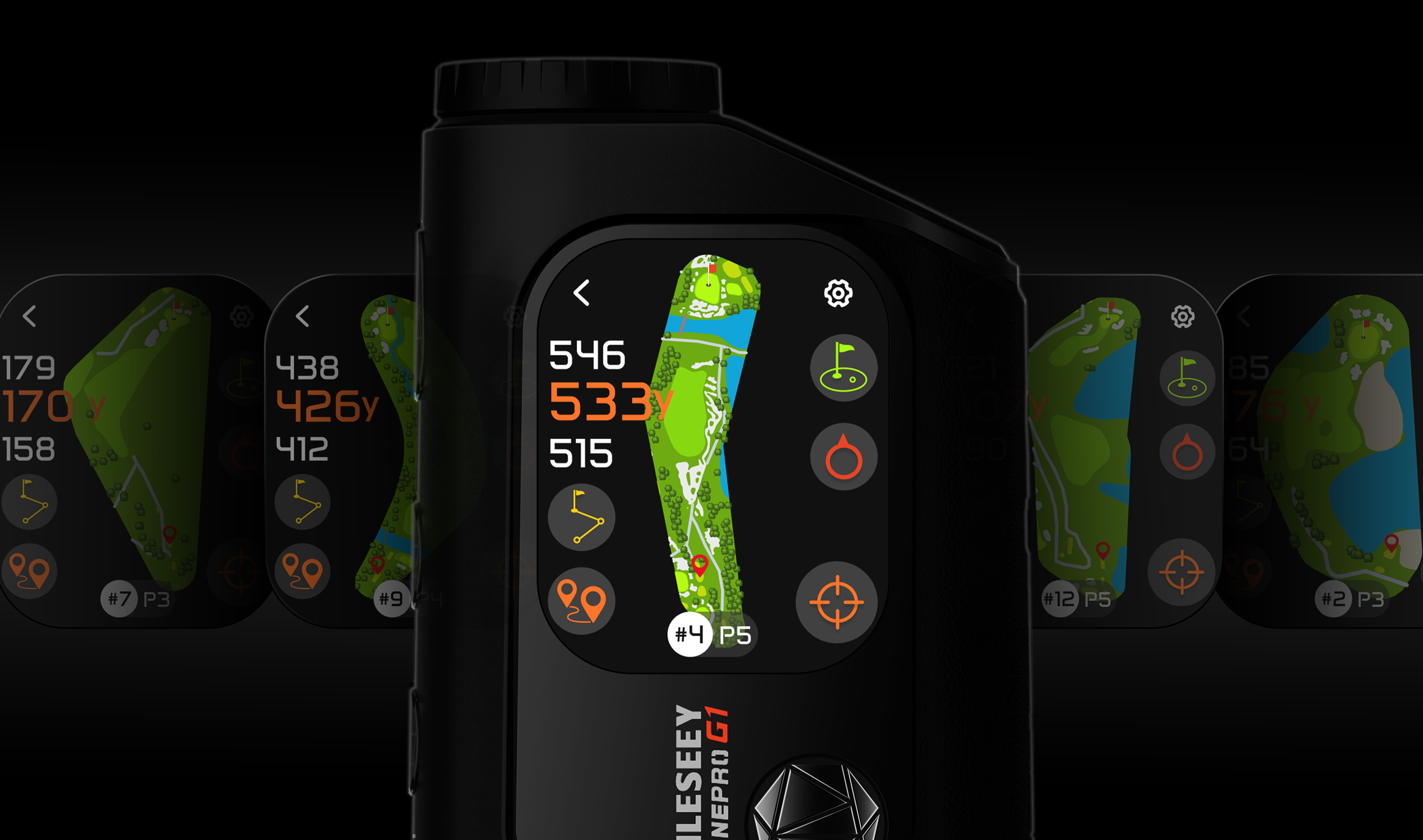
What separates the 2026 flagship tier from last year's models is the screen. AMOLED panels — the same tech in the latest flagship phones — have arrived in rangefinder viewfinders, and they make the traditional single-color LCD look like a calculator. A 2.13-inch AMOLED display is among the largest in the 2026 rangefinder market, and the capacitive touch interface means the golfer can adjust settings without taking a hand off the club.
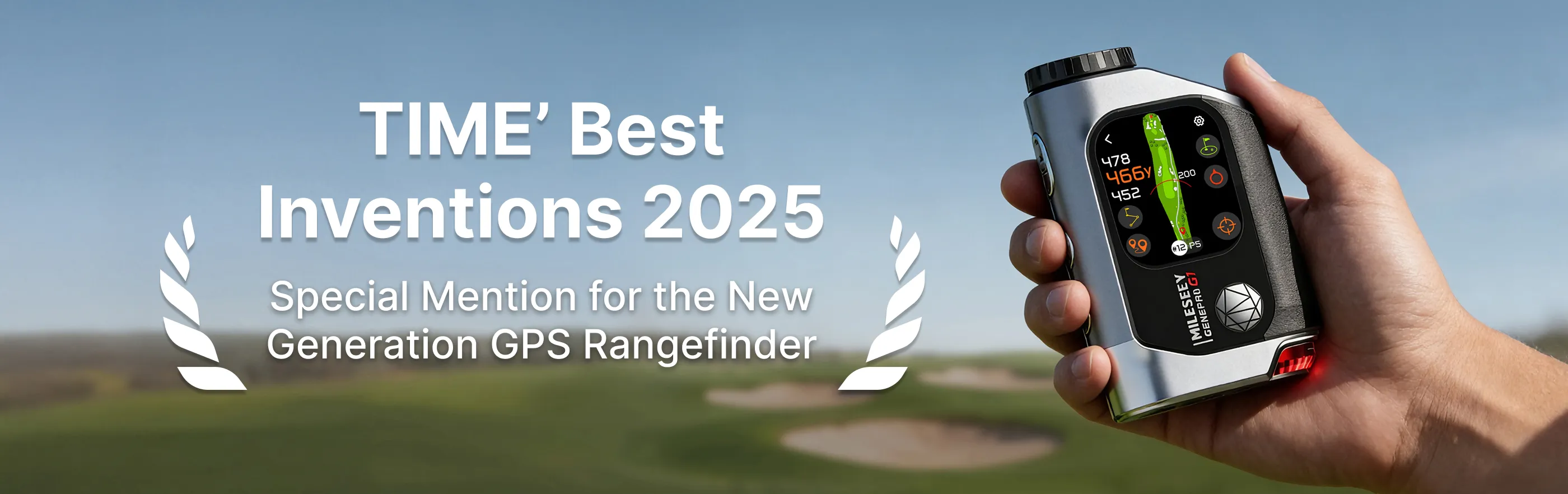
The G1 earned a Special Mention in TIME's Best Inventions of 2025, and Golf Monthly's Editor's Choice 2026 guide hails it as a true "best of both worlds" laser-and-GPS experience. At $499.99 it undercuts the Garmin Approach Z82 ($599.99) by about 17%, and it out-specs the cheaper Bushnell Tour V7 Shift ($399.99) on screen size and mode count.
What independent testers say: Golf Monthly's tester found the AMOLED screen "bright and clear," GolfLink (83/100) confirmed near-instant flag locks, and GolferHive — after 15 rounds of testing — called the display "visible in harsh sunlight" and clocked a roughly 0.1-second flag lock. Three independent testers, three consistent findings: the G1's display and lock-on speed are its standout strengths.
Gift-giving note: If your golfer already has a 2-3 year old rangefinder that "still works," the screen upgrade alone justifies the gift. The LCD-to-AMOLED jump is the kind of difference you see the first time and cannot unsee.
2. The Budget All-Rounder ($249.99)
Best for: The casual dad who plays 10-15 rounds a year and wants a real rangefinder, not a toy.
The pick: The Mileseey PF1 Pro — an OLED-display laser rangefinder with 450-yard flag-lock, a slope switch that turns off for tournament play, and a Bite magnetic cart mount.
The $250 price point used to mean compromises. In 2026 it does not. The PF1 Pro — at $249.99 — includes:
-
1,100-yard ranging with 450-yard flag-lock
-
A slope switch that turns off for tournament play
-
A magnetic cart mount that snaps to the frame of any golf cart
-
USB-C charging (no more CR2 batteries)
-
0.1-second read time — quick enough for any round
It is our pick for the best-value sub-$250 laser this year — the only 450-yard flag-lock in the table below at under $250.
|
Model
|
Screen
|
Flag Lock
|
Slope
|
Magnetic Mount
|
Price
|
|---|---|---|---|---|---|
|
PF1 Pro — sub-$250 pick
|
OLED
|
450 y
|
Yes (switch)
|
Bite
|
$249.99
|
|
Precision Pro NX10
|
LCD
|
400 y
|
Yes (switch)
|
Yes
|
$279.99
|
|
Blue Tees Series 3 Max+
|
Auto-Ambient LCD (red/black)
|
300 y
|
Yes (switch)
|
Yes
|
$199.98
|
What independent testers say: National Club Golfer called the PF1 Pro pocket-sized and feather-light, praised the red/green LED display for staying clear in the viewfinder, and found the flag-lock vibration reassuring — while noting that locking onto flags was noticeably easier than locking onto hazards. Their testing raised no accuracy complaints at the price.
Gift-giving note: At $249.99, this is the safest "I don't know what you have but I know you play golf" gift. It is also the right choice for a teenage golfer or a spouse who is just getting into the game.
3. The Pin-Seeking Specialist ($399.99)
Best for: The competitive amateur who misses greens and blames the wind, the pin position, or the heat.
The pick: The Mileseey IONME2 — a rangefinder with a green-light flag confirmation (PinPoint Green) and a high-contrast OLED display.
-15.jpg?w=3780&h=2040)
The "PinPoint Green" feature is a category of its own. When the rangefinder locks onto the flag, the viewfinder pulses a green light to confirm — eliminating the "is that the flag or the tree behind it?" doubt that every amateur golfer knows all too well. The Mileseey IONME2 at $399.99 combines that green confirmation with a tournament-legal slope toggle, and a magnetic body that snaps to the cart frame.
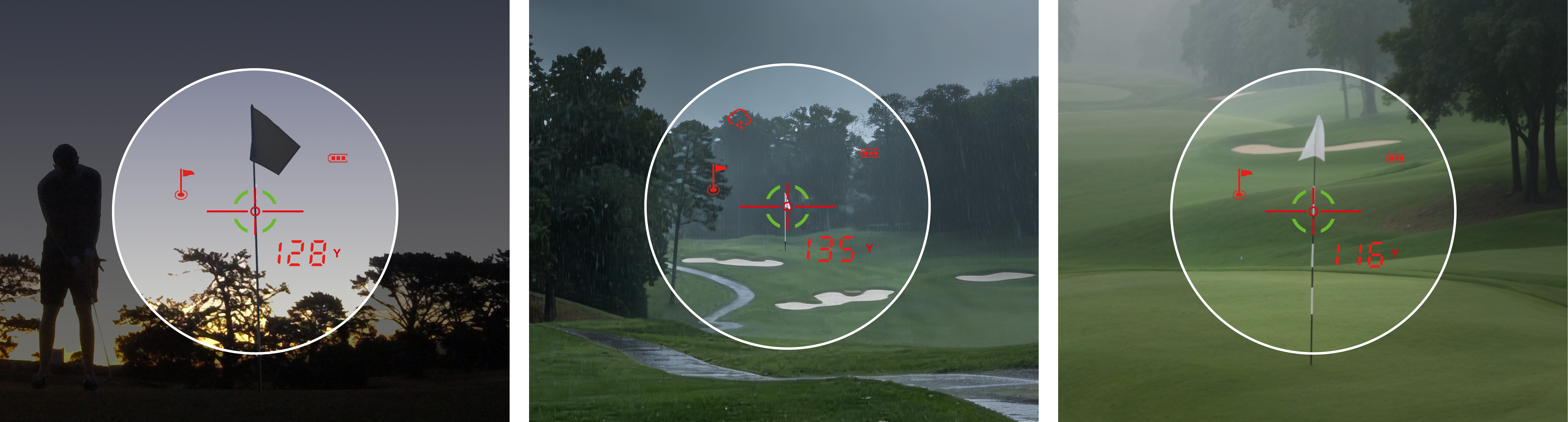
What independent testers say: National Club Golfer described the IONME2 as roughly "half the height of most other rangefinders" and almost weightless in hand, found PinPoint Green accurate "to a matter of inches," and called the flag-lock vibration "exceptional." Golf Monthly's tester called it "an excellent product with some unique features."
|
Spec
|
Mileseey IONME2 ($399.99)
|
Bushnell Tour V7 Shift ($399.99)
|
|---|---|---|
|
Flag lock
|
500 y
|
500 y
|
|
Lock confirmation
|
PinPoint Green — green light pulse
|
Visual JOLT — red ring + vibration
|
|
Slope
|
Yes (switch)
|
Yes (switch)
|
|
Magnetic mount
|
Yes (built-in)
|
Yes (BITE)
|
|
Screen
|
OLED red/green
|
OLED red/green
|
Gift-giving note: The PinPoint Green is the kind of feature that gets a real "thank you" call. It is the gift that says "I noticed you play, and I know what would help."
4. The Long-Haul Tournament Player ($169.99)
Best for: The dad who walks 36 holes a day, plays in club tournaments, and has a horror story about hole 17 battery death.
The pick: The Mileseey PF260 Tour — a rangefinder with dual power: USB-C rechargeable plus a CR2 backup battery.
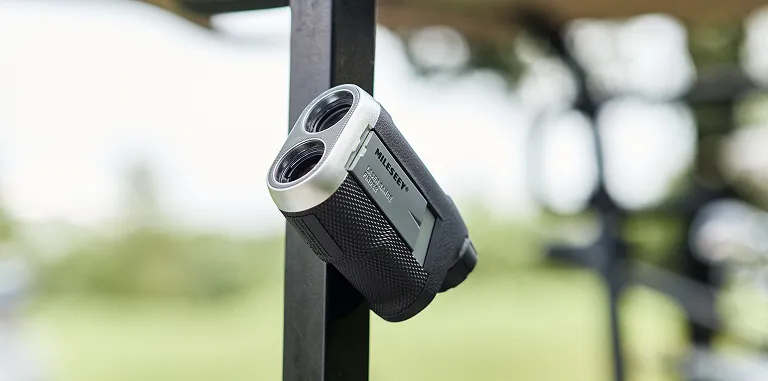
The failure most golfers actually hit is not the laser, the screen, or the slope switch — it is the battery. A USB-C-only rangefinder will, at some point, run out of charge mid-round. The USB-C + CR2 dual-power rangefinder in this guide is the only one with a true backup battery — the CR2 is the same battery used in cameras and is rated for 5,000+ shots as a fallback.
What independent testers say: Today's Golfer tested the PF260 Tour head-to-head against its own Bushnell Tour Hybrid and found "no discernible difference in accuracy," with the Bushnell acquiring targets only slightly faster.National Club Golfer called it a "fantastic entry-level rangefinder" that makes the expensive brands hard to justify — and at $169.99, less than half the Tour Hybrid's list price, the value case is not a close call.
Gift-giving note: Pair this with a sleeve of CR2 batteries and a small cable pouch. At $169.99, the whole package stays well under $200 and is the "I thought about this" gift.
5. The Practice Range Addict ($249.99)
Best for: The dad who is always at the range but never plays a full round.
The pick: The same Mileseey PF1 Pro as Tier 2, but for a different job. At the range, the target is not a pin — it is your own carry numbers. Set a flag at 100, 120, 140 and 160 yards and log what each club actually flies; after a few sessions you have a stock yardage library no GPS app can give you, because it is built from your swing, not a course database. The PF1 Pro's 0.1-second read time keeps up with rapid-fire range work, its slope switch stays off on flat ground, and the Bite magnetic mount parks it on the bay frame instead of the ground.
6. The First-Time Owner ($169.99)
Best for: The spouse, parent, or friend who has hinted they want to play more golf but does not own a rangefinder
-7033125858698077671.webp?w=1500&h=927)
The pick: The Mileseey PF260 Tour — a sub-$200 laser with flag-lock, slope, dual power, and a magnetic mount. Few rangefinders at this price combine all four: flag-lock for day-to-day yardage, slope that turns off for tournament play, a magnetic cart mount, and dual power — a CR2 backup that gets them through the round even when the charge runs out. It is durable enough to survive the learning curve, and cheap enough that a forgotten cart or a rained-on bag is a nuisance, not a tragedy.
7. The "Do Not Buy" Tier — Why These Models Miss the Cut
As a rangefinder gift, GPS-first devices are still a no: they are slower to the pin and some lean on subscriptions. The models below are not listed to dismiss a brand — they are listed because, at gift prices, each one either makes you pay for features that only unlock with extra apps or hardware, or trades pure optics for a screen-driven viewfinder.
Bushnell's flagship Pro X3+ LINK ($599.99) pushes wind speed and club advice, but those features only work inside the Bushnell Golf app and with LINK launch-monitor data — without that ecosystem, most of the premium goes unused. The Tour V7 Shift ($399.99) avoids the app dependency, yet at that price it delivers pure laser basics with none of the 2026-tier screen or lock-confirmation features. Garmin's Z82 ($599.99) is a laser + GPS hybrid, but its viewfinder is a digital overlay rather than pure optics — for pure pin-distance work a dedicated laser is faster and cleaner.
Blue Tees' Captain Pro pairs an OLED display and 1,200-yard range with AI club suggestions and shot tracking — but those headline features activate only when paired with the Blue Tees app. Half its features live in the app, so it only suits a golfer who is already committed to one.
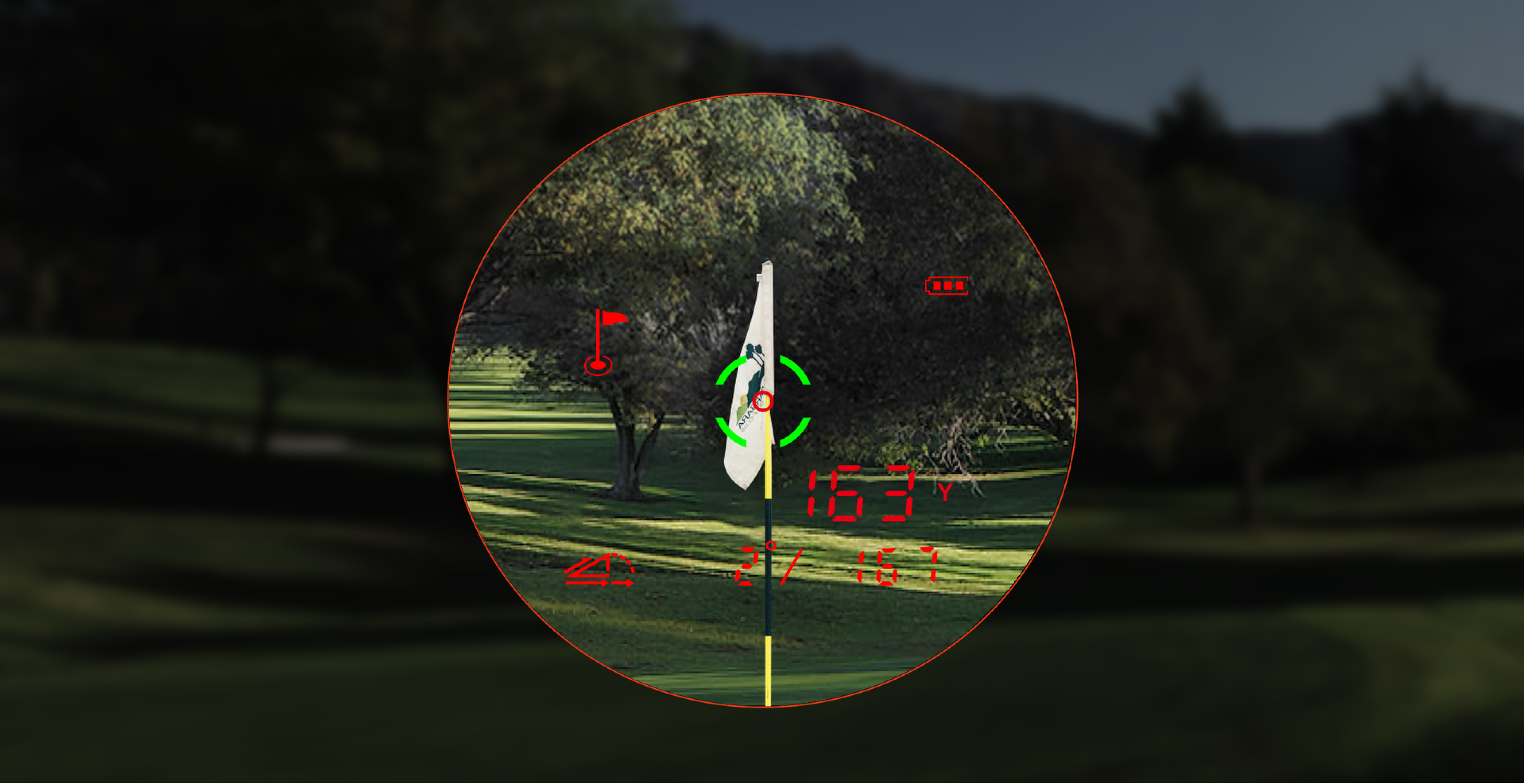
Mileseey sits outside that trade-off: at each tier it delivers the mainstream feature set (flag-lock, slope, fast reads, waterproofing) without requiring an app ecosystem or a launch monitor to unlock it — the G1 even covers laser + GPS with 43,000+ courses and no subscription.
Why These Calls: The Test Evidence
Each Do Not Buy call maps to a published test. Garmin's Z82 won the hybrid category in MyGolfSpy's 2025 test, yet its viewfinder is a digital overlay that testers say "can feel a bit like looking at a video screen" — wrong for a golfer who wants pure optical sighting. Bushnell: the Tier 3 table benchmarks the IONME2 against the Tour V7 Shift at the same price — a head-to-head, not an endorsement; at $399.99 the V7 Shift offers none of the 2026-tier screen or lock-confirmation features. Blue Tees: the Captain Pro's headline AI features depend on its app, so it only fits golfers who are happy living in one. And the GenePro S1 — excluded from the gift list on price alone — is among the heaviest rangefinders MyGolfSpy tested. Every call above traces to a named test — none of it is marketing copy.
Editor's Pick
For the golfer on your list who has everything except a rangefinder that does not feel like a 2015 calculator, the 2.13-inch AMOLED touchscreen rangefinder with dual laser + GPS modes is the most future-proof gift in this guide. The screen alone is the conversation piece. The mode count and the slope switch are the reason it stays in the bag for the next five years. Pair it with the matching carry case and a handwritten yardage book and the gift lands.
If the budget is tighter, the PF1 Pro — the magnetic-mount pick from Tier 2 — is the right call. At $249.99 it has everything the casual golfer needs, and the Bite magnetic mount makes it almost impossible to lose. It is a proven pick, not a guess.
Tools for Choosing the Right Gift
The seven tiers above narrow to four core models; the top-of-the-line GenePro S1 ($799.99) is not one of the gift picks because it sits in a different price class.
Spec Snapshot: The Official Numbers, Side by Side
These figures come from each model's official spec sheet on mileseeygolf.com — they are manufacturer values, not lab-measured results from this guide. Where a manufacturer publishes no number, we mark it — rather than guess. The two features reviewers care about most — lock-on speed and magnet strength — are mostly manufacturer numbers (the G1’s lock-on is a tested figure), and no brand publishes a magnet-strength measurement — worth knowing before you compare.
|
Model
|
Magnification
|
Range / flag lock
|
Waterproof
|
Weight
|
Battery
|
Lock-on speed
|
Magnet mount
|
|---|---|---|---|---|---|---|---|
|
GenePro G1
|
6x
|
1,300 y / 600 y
|
IP65
|
258 g
|
USB-C (1,000 mAh)
|
~0.1 s (tested)
|
No (tested)
|
|
GenePro S1
|
7.5x
|
2,000 y / 690 y
|
IP65
|
368 g
|
CR2
|
0.3 s
|
BITE
|
|
IONME2
|
6x
|
1,100 y / 500 y
|
IP65
|
109 g
|
USB-C (500 mAh)
|
0.5 s
|
Yes (built-in)
|
|
PF1 Pro
|
6x
|
1,100 y / 450 y
|
IP65
|
156 g
|
USB-C (800 mAh)
|
0.5 s
|
Bite
|
|
PF260 Tour
|
6x
|
1,100 y / 350 y
|
IP54
|
192 g
|
USB-C + CR2
|
0.8 s
|
Yes
|
What Independent Testers Actually Measured
Spec Snapshot above is manufacturer data. This table is the non-official stuff: what independent testers actually measured on the course. Sources are named so every claim can be checked — where no tester has published a number, no number appears here.
|
Model
|
What independent testers measured
|
Source
|
|---|---|---|
|
No built-in cart magnet (GolfLink magnet score 1/10); ~0.1 s flag lock; AMOLED readable in direct sun; auto hole-change sometimes fails
|
GolfLink · Golf Monthly · GolferHive
|
|
|
9.6/10 Staff Pick in the 2025 test; wide haze-free optics; among the heaviest rangefinders tested
|
MyGolfSpy
|
|
|
Roughly half the height of typical lasers; green-lock accurate to inches; exceptional flag-lock vibration
|
National Club Golfer
|
|
|
PF1 Pro
|
Pocket-size and light; clear red/green display; flag lock easier than hazard lock
|
National Club Golfer
|
|
Accuracy on par with a Bushnell Tour Hybrid; slightly slower lock; occasional missed vibration (2 rounds); struggles in heavy fog
|
Today's Golfer · GolfGuyReviews
|
How to Choose: Four Questions, One Pick
Run the gift decision as a four-question funnel. Q1 budget — under $180: PF260 Tour (Tiers 4 and 6); $180–300: PF1 Pro (Tiers 2 and 5); over $300: keep going. Q2 tournament play — if the golfer competes, every pick here has a slope switch that turns off (USGA Rule 4.3a(1)); skip GPS-only watches for a serious player. Q3 screen — wants GPS hole maps: GenePro G1; wants a green-light flag confirmation: IONME2; wants a simple OLED readout: PF1 Pro or PF260 Tour. Q4 first device or upgrade — first rangefinder: PF260 Tour; upgrade from a 2–3 year old laser: G1 or IONME2. If two answers converge on the same model, that is the gift.
Caring for a Rangefinder
-
Clean the lenses with the microfibre cloth that ships with the device — paper towels and alcohol can scratch or strip coatings.
-
Store at room temperature out of direct sun; a summer car glovebox can get hot enough to damage the display.
-
Charge USB-C models every month or two off-season, and remove the CR2 battery if the unit will sit unused for months.
-
After a wet round, dry the body and air the case — IP ratings cover rain, not immersion.
How This Guide Was Built
This is a brand-published shortlist, not an independent lab test. Every pick was cross-checked against Mileseey’s official spec sheets and at least one independent source — Golf Monthly’s Editor’s Choice 2026, MyGolfSpy’s 2026 rangefinder tests, National Club Golfer, Today’s Golfer, GolfLink, GolferHive, GolfGuyReviews and TIME’s Best Inventions of 2025 coverage — at the time of writing. Third-party claims are described as such; we did not invent test data. Prices are US list prices and change frequently; confirm before buying. For tested, on-course opinions, read the independent reviews we cite alongside this guide.
FAQ
What actually changed in 2026 rangefinders?
Three shifts matter. AMOLED touchscreens reached the viewfinder (the G1’s 2.13-inch panel versus 2025-era LCDs); wind-speed correction went mainstream (Bushnell’s Pro X3+ LINK, which needs the Bushnell Golf app); and “smart” features moved toward personalized advice — Bushnell’s MyBag club picks and Blue Tees’ Captain Pro AI both require their companion apps. Honest caveat: most new features depend on an app or extra hardware; the rangefinder alone does not do the thinking.
Is wind-speed correction worth the premium?
Only if you will actually use it. The Pro X3+ LINK is $599.99 and needs the Bushnell Golf app plus a per-round calibration — fine for golfers who live in the app and play exposed, windy courses, overkill for everyone else (the Mileseey IONME2 delivers the same fast flag-lock, no app required). Pay for wind only if you have seen yourself check a weather app mid-round.
Are "AI" rangefinders a gimmick?
Depends on what you mean by AI. The GenePro S1 ($799.99) markets itself as the world’s first AI rangefinder — assisted target recognition and green-reading — and won MyGolfSpy’s Most Wanted award. But the Captain Pro’s AI club picks need the Blue Tees app, and Bushnell’s ball-flight advice needs a separate launch monitor. Single-unit AI is assistance today; check which parts require a phone or extra gadget.
Are slope rangefinders allowed in tournaments?
Yes, with slope switched off — USGA Rule 4.3a(1) permits distance-measuring devices when slope compensation is disabled. Every pick here has a slope switch; locking switches make it harder to leave slope on by accident.
USB-C or CR2 — which battery is better?
USB-C is convenient, but a mid-round dead charge means no readings; CR2 lasts longer but is disposable. The PF260 Tour sidesteps the choice with both — USB-C primary, CR2 backup — a real advantage for golfers who walk 36 holes a day.
Laser or GPS watch as a gift?
For pin distance, a laser is faster and more precise; GPS watches excel at front/middle/back distances plus hazards. Want both in one device? The G1’s laser + GPS dual mode covers both with no subscription.