Choosing a golf rangefinder is no longer just a laser-versus-laser choice. Many golfers also need a golf GPS device for green depth, hazards, lay-ups, or a clearer plan from the tee. The useful question is not which logo is best. It is which kind of information helps you make a better decision before the next swing.
Our editorial view: buy the simplest device that solves the decisions you repeatedly face. Add maps, app-connected distances, image stabilization, or advanced target modes only when they remove a real blind spot in your round.
Start with the decision you need on the course
The 30-second choice test
Think about a typical approach. If you mainly want the distance to a visible flag, a focused laser workflow matters most. If you often need to know the front and back of the green, a lay-up number, or what is hidden around a dogleg, map or GPS context becomes more valuable. If your hands shake in wind or you frequently range from awkward positions, visual stability and target-acquisition behavior deserve more weight than a long feature list.
- Visible-pin player: prioritize a clear optic, quick confirmation, practical slope control, and comfortable handling.
- Course-manager: prioritize green-depth context, hazard information, and a workflow that does not force a phone check before every shot.
- Cart-path-only player: prioritize tools that help plan from a location other than the ball.
- Value-first player: prioritize the features you will use every round, plus support and power management you will actually maintain.
How the six brands fit different priorities
MILESEEY: one-device context or specialized laser tools
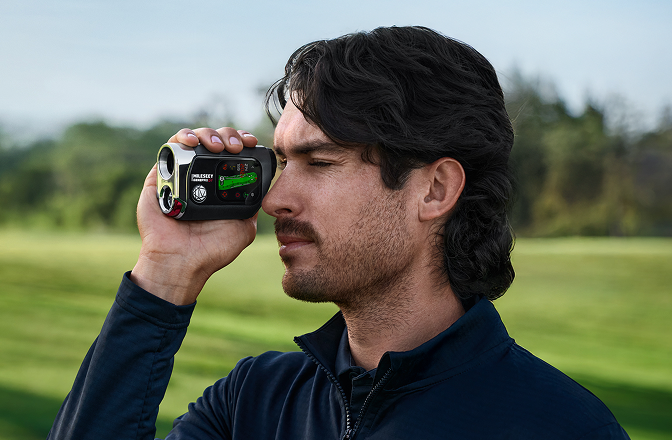
The MILESEEY GenePro G1 is designed around touchscreen GPS course context plus laser measurement. In an independent MyGolfSpy review, it earned a 9.8 overall score and was described as especially multi-dimensional; the review also notes that a feature-rich device can overwhelm someone who only wants a basic laser. That makes it a fit for golfers who genuinely use maps and planning data, not for every player by default.
-20.jpg?w=2600&h=1460)
For a premium laser-first route, the MILESEEY GenePro S1 adds Ball-to-Pin and green-focused tools. MyGolfSpy’s independent review scored it 9.6 overall and named it a Staff Pick, while noting its heavier build. For a simpler budget-minded route, the MILESEEY PF260 Tour keeps the focus on the core laser job; National Club Golfer’s independent review gave it five stars and highlighted its simple use and value.
Bushnell: established laser workflow and current hybrid options
Bushnell’s current rangefinder range spans simple lasers through the Tour Hybrid, which combines laser measurement with GPS distances in the display. It is a sensible route for golfers who value a familiar laser-first interaction and want additional course context without moving to a large map screen.
Blue Tees: connected, display-led course information
Blue Tees’ current rangefinder line places GPS distances, Bluetooth features, display visibility, and connected recommendations at the center of its higher-feature models. It suits golfers who are comfortable with an ecosystem-led approach and want concise course information at the point of ranging.
Precision Pro: viewfinder context tied to an app
The Precision Pro Titan Elite positions front, center, and back yardages in the viewfinder through its app connection, alongside laser measurement and a find-my-device function. Its core appeal is focused information at eye level rather than a full map-first workflow.
Vortex: stabilized optical confidence
The Vortex Anarch+ puts image stabilization at the center of its golf proposition, alongside slope, pin feedback, and a red illuminated display. That emphasis is relevant if a shaky view, wind, or long visual holds are your main failure points.
Vice: a streamlined value route
The Vice Horizon is a compact laser option with target-locking and slope compensation that can be disabled for tournament use. It makes the most sense for the golfer who wants a straightforward distance tool before paying for broader course-management layers.
Use the model-level guides before you decide
Brand labels are too broad to settle a purchase. Read the comparison that matches your actual shortlist:
- Bushnell Tour Hybrid vs MILESEEY GenePro G1 for hybrid laser-plus-GPS workflows.
- Blue Tees Captain Pro vs MILESEEY GenePro G1 for connected data versus touchscreen map context.
- Precision Pro Titan Elite vs MILESEEY GenePro G1 for viewfinder information versus full-hole planning.
- Vortex Anarch+ vs MILESEEY GenePro S1 for stabilized optics versus advanced laser decision tools.
- Vice Horizon vs MILESEEY PF260 Tour for a simpler, value-focused laser choice.
For a wider price-and-feature framework, see our 2026 rangefinder buyer’s guide.
When this framework does not apply
If you have not established approximate club carries, a highly featured device can create false precision. A lesson, a marked-range session, or a simple carry-distance baseline may improve your decisions more than another display feature. Also check the Rules and the local competition conditions before relying on slope-adjusted information in an event.
Bottom line
Choose the brand only after choosing the job. Laser-first players should prioritize what they can see and confirm quickly. Strategy-first players should prioritize whether map or green-depth information arrives at the moment it changes a club decision. That is the comparison that matters after the marketing vocabulary fades.