The Rhythm You’re Missing
Watch any great golfer and you’ll notice something beyond technique. There’s a rhythm to their swing. A tempo. It’s smooth, consistent, repeatable. They’re not rushing, not jerking, not fighting themselves. They’re flowing.
I’ve spent nearly 20 years as a PGA Coach trying to help students find that flow. I’ve used metronomes, counting methods, video analysis and every drill imaginable. But one of the most effective tools I’ve discovered is also the most enjoyable: music.
Your golf swing has a natural tempo, and music can help you find it, internalize it and repeat it under pressure. Let me show you how.
The Science of Swing Tempo
First, let’s talk about what tempo actually means in golf. Tempo is the ratio of your backswing time to your downswing time. Tour players typically have a 3:1 ratio; their backswing takes three times as long as their downswing.
But here’s what matters more for most golfers: total swing time. From takeaway to impact, most efficient golf swings take between 1.2 and 1.5 seconds. That’s it. Not two seconds. Not one second. Right in that sweet spot.
Now here’s where it gets interesting. Music tempo is measured in BPM beats per minute. And there’s a range of BPM that naturally matches efficient golf swing tempo: roughly 60 to 75 BPM.
At 60 BPM, you get one beat per second. That’s one beat for your backswing, one beat for your downswing, a 1:1 ratio that’s a bit slow but great for practice. At 75 BPM, you’re moving slightly faster, closer to that tour-level tempo.
Why This Actually Works
I was skeptical at first. Music during practice seemed like a distraction. But then I started paying attention to what was happening with my students.
When they practiced with music in the right tempo range, something clicked. Their swings became smoother. More consistent. They stopped rushing. The music gave their brain an external rhythm to lock onto, which freed up mental space that was previously consumed by trying to consciously control tempo.
Think about it: when you’re trying to remember to turn your shoulders, shift your weight, keep your head still and maintain tempo, that’s a lot of conscious thought. But when music is providing the tempo externally, your brain can focus on other elements while your body naturally syncs to the beat.
It’s the same reason soldiers march to cadence. The external rhythm organizes movement without requiring conscious effort.
Finding Your Tempo Range
Here’s a simple way to discover your natural tempo. Go to the range without music. Hit 10 comfortable shots with your 7-iron. Not your fastest swings, not your slowest. Just smooth, balanced swings.
Have someone time you (or video yourself) from the moment your club starts back until impact. Average those 10 swings. Most golfers will land somewhere between 1.2 and 1.6 seconds.
Now convert that to BPM. If your average swing takes 1.5 seconds, that’s 40 swings per minute, which translates to 80 BPM if you’re matching one full swing to two beats (one beat back, one beat down). If your swing takes 1.2 seconds, you’re closer to 100 BPM on that same two-beat pattern.
But here’s the key: you don’t want to match your current tempo exactly. You want to train toward an efficient tempo. For most golfers, that means practicing with music between 60 and 75 BPM.
Building Your Practice Playlist
This is where it gets fun. You need music that sits in that 60-75 BPM sweet spot. Here are some suggestions across different genres:
Classic Rock: “In the Air Tonight” by Phil Collins (63 BPM), “Wonderful Tonight” by Eric Clapton (63 BPM)
Country: “Tennessee Whiskey” by Chris Stapleton (68 BPM), “Cruise” by Florida Georgia Line (72 BPM)
R&B/Soul: “Let’s Stay Together” by Al Green (67 BPM), “Ain’t No Sunshine” by Bill Withers (75 BPM)
Jazz: Most classic jazz ballads fall in this range naturally
Classical: Many adagio movements sit right in this tempo
The key is finding music you actually enjoy. If you hate the song, you won’t want to practice. And consistent practice is what ingrains tempo.
How to Practice With Music
Don’t just turn on music and start hitting balls. Be intentional about it. Here’s my recommended approach:
Step 1: Start with just your practice swings. No ball. Put on your tempo playlist and make practice swings that sync with the beat. One beat for backswing, one beat for downswing. Do this for five minutes. Let your body feel the rhythm.
Step 2: Add the ball, but slow everything down. You’re not trying to hit perfect shots yet. You’re trying to maintain tempo while making contact. Hit 10 balls focusing only on matching the beat.
Step 3: Now add your normal pre-shot routine, but keep the music playing. This is where it gets real. Can you maintain tempo when you’re actually trying to hit a target?
Step 4: Practice with the music for 20-30 minutes, then turn it off and hit 10 more balls. Can you maintain that tempo without the external rhythm? If yes, the tempo is starting to internalize.
The GeneSonic Pro Advantage
This is where equipment matters. I’ve tried practicing with phone speakers, cheap Bluetooth speakers and earbuds. Each has limitations.
Phone speakers don’t have enough volume or quality to really feel the music outdoors on a range. Cheap Bluetooth speakers distort at higher volumes. Earbuds work but isolate you from your environment. You can’t hear your coach, other players, or even your own ball contact clearly.
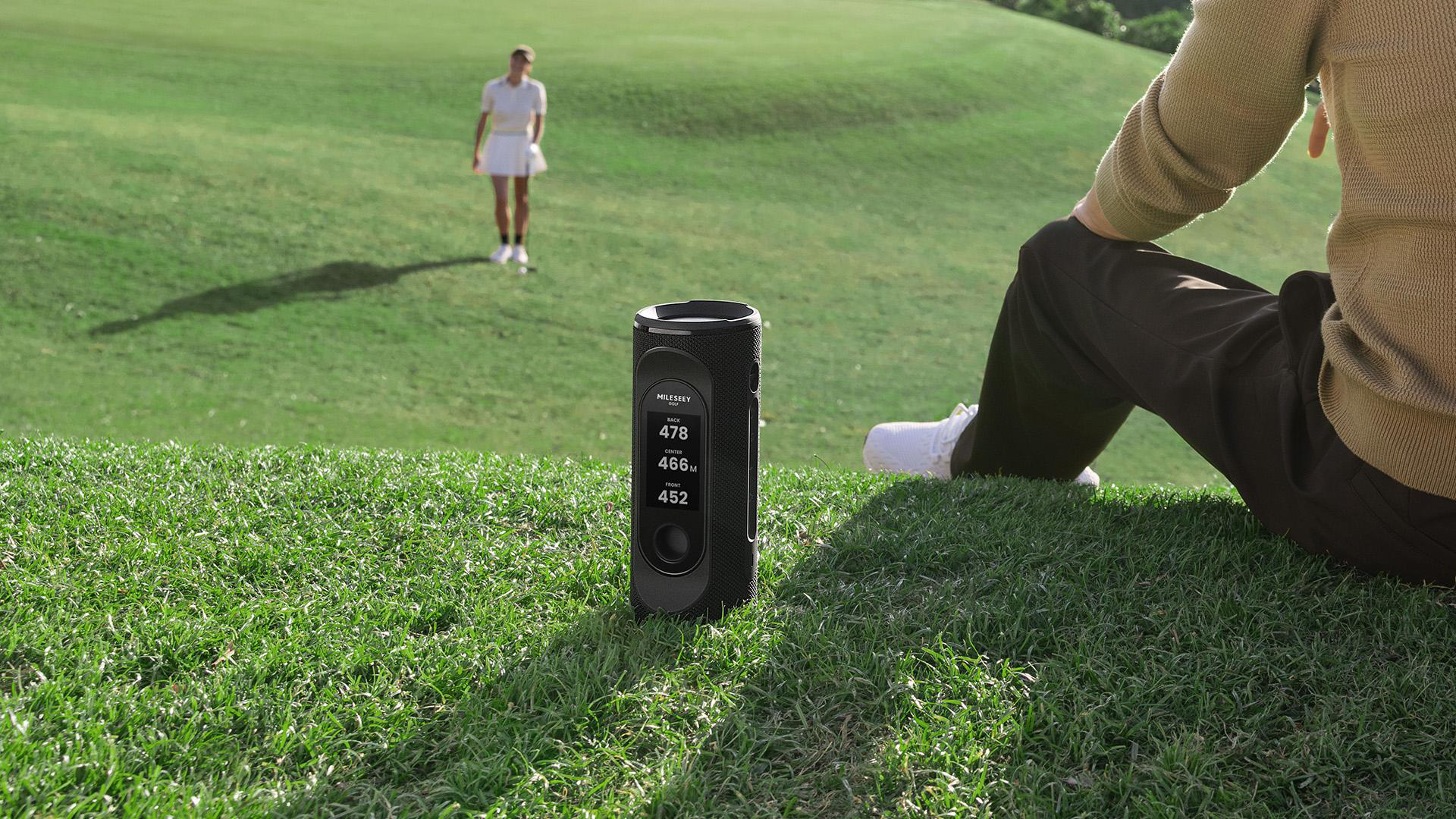
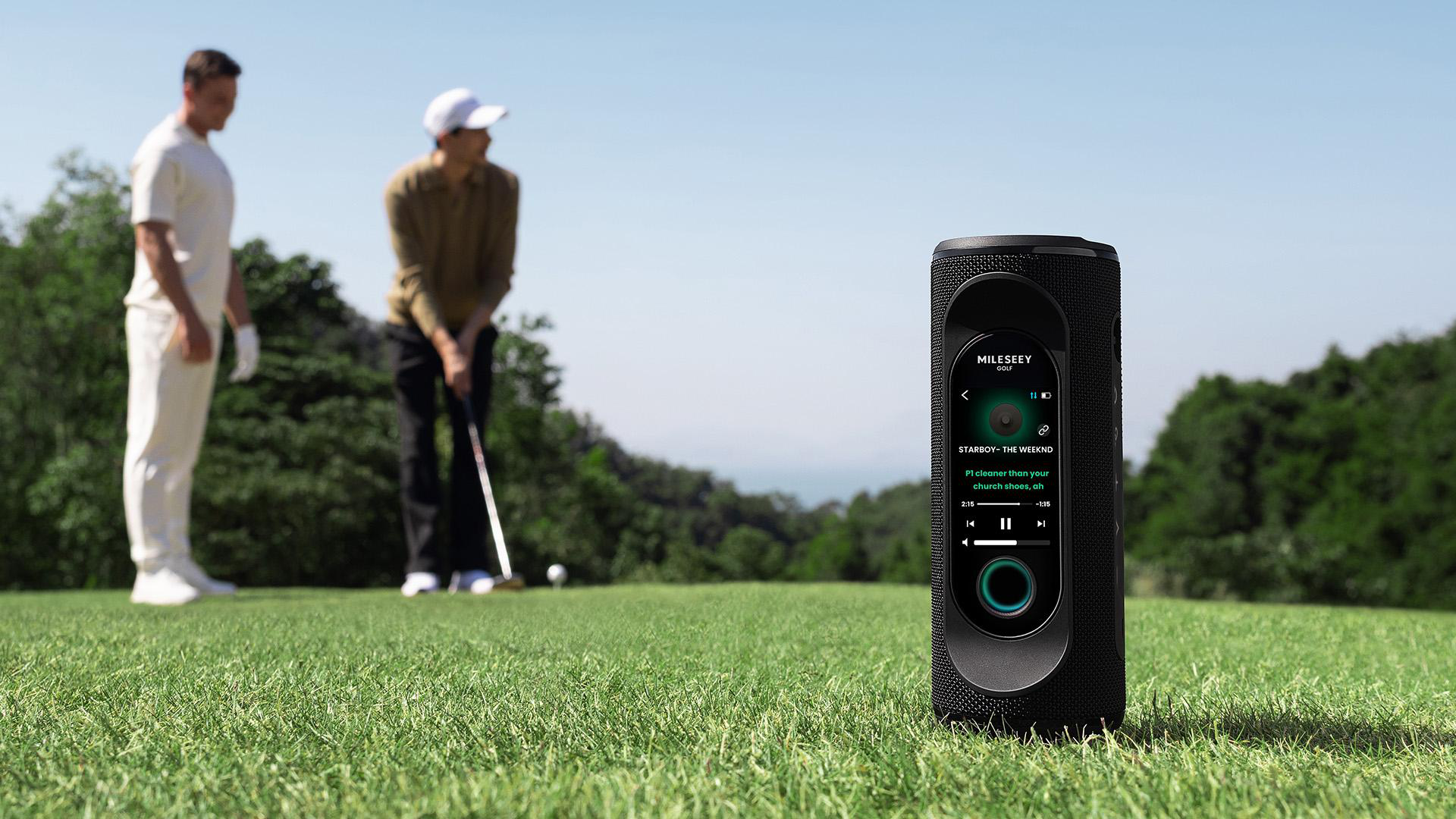
The MILESEEY GeneSonic Pro GPS Speaker solves all of this. The audio quality is clean and full, even at range-appropriate volumes. You can hear the music clearly without blasting it obnoxiously. The bass response is good enough that you can feel the beat, which matters for internalizing rhythm.
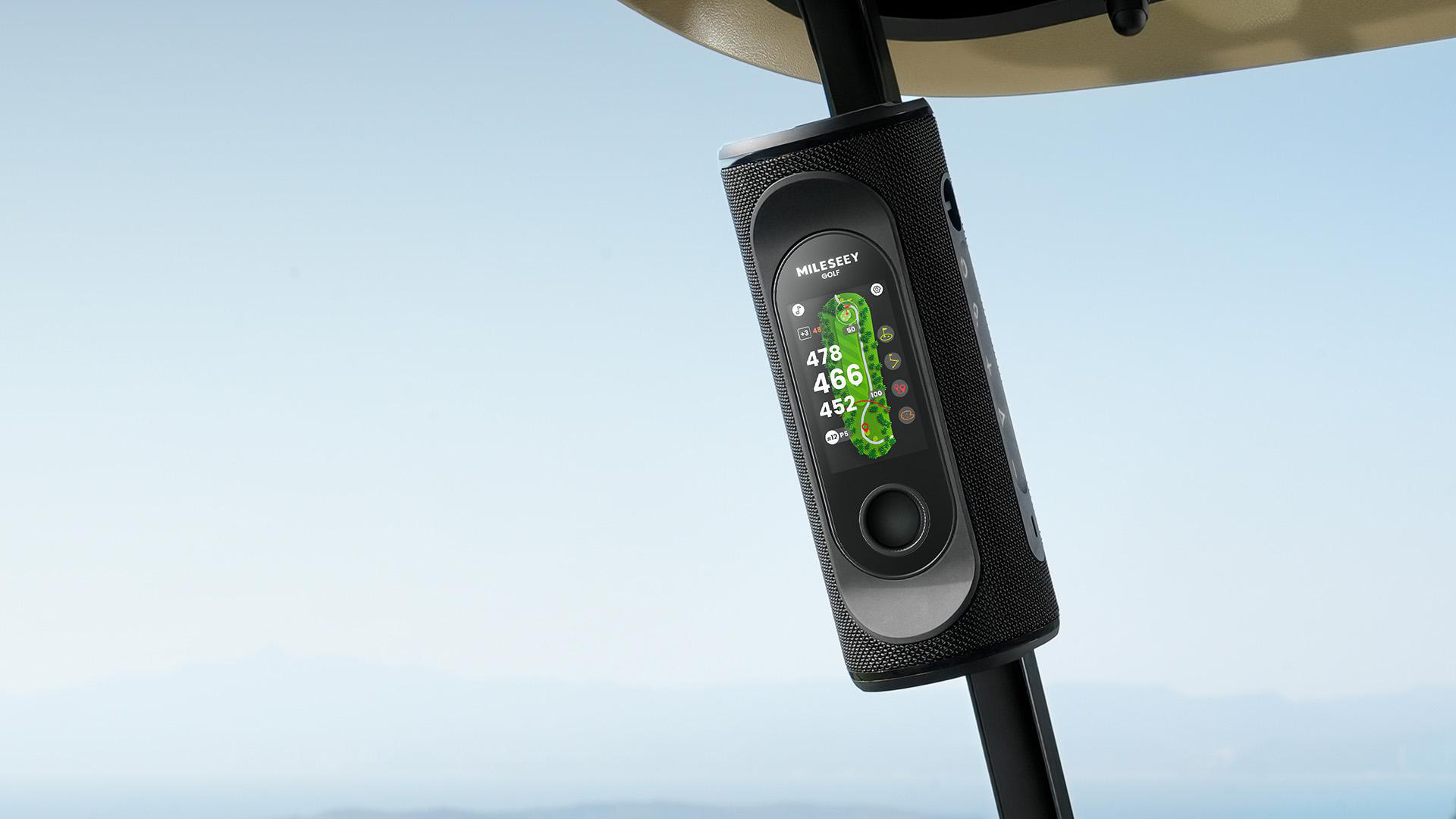
And here’s the brilliant part: it’s also giving you accurate GPS distances. So you’re training tempo while also training your distance awareness. You’re not choosing between performance tools and practice tools. You’re getting both.
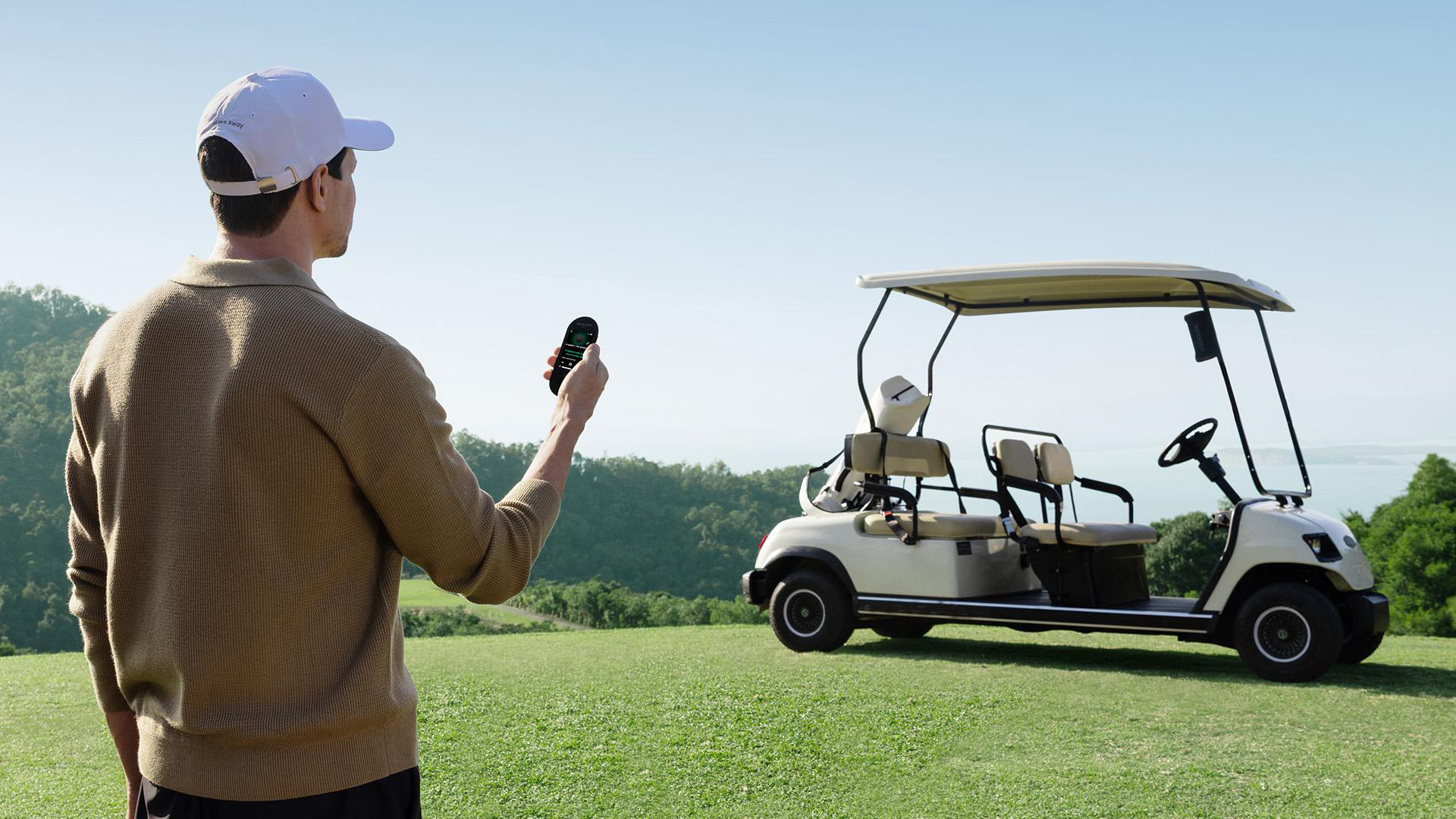
The detachable design means you can clip it to your bag during practice, then detach it for GPS-only during your round if you want. But honestly, I’ve found that keeping subtle music on during casual rounds helps maintain that tempo you’ve been practicing.
Common Mistakes to Avoid
Mistake 1: Choosing music you like, but that’s too fast. A 120 BPM song might be great for working out, but it’ll make you rush your swing. Check the BPM before adding songs to your practice playlist.
Mistake 2: Only practicing with music and never without it. You need to internalize the tempo so you can access it during tournament rounds when music isn’t allowed.
Mistake 3: Trying to match every single swing to the beat perfectly. The music is a guide, not a metronome. Let it influence your rhythm without becoming rigid about it.
Mistake 4: Giving up after one session. Tempo training takes time. Give it at least two weeks of consistent practice before evaluating results.
Taking It to the Course
Once you’ve spent a few weeks grooving your tempo on the range, you’ll notice something remarkable: your tempo stays more consistent on the course, even without music.
That’s because you’ve trained your internal rhythm. The music was the teacher, but your body learned the lesson.
On casual rounds, I actually recommend keeping music on at a low volume. Not loud enough to bother other groups, but loud enough that you can hear it between shots. It keeps you in that tempo mindset and prevents you from speeding up when you get nervous or slowing down when you get tentative.
The GeneSonic Pro makes this easy. Clip it to your bag, keep your tempo playlist on low, and you’ve got both your soundtrack and your GPS distances. When you get to your ball, you’re already in rhythm and you know exactly how far you have to the pin.
The Long-Term Benefits
After nearly two decades of coaching, I can tell you that tempo is one of the most overlooked fundamentals in golf. Players obsess over grip, stance and swing plane, but tempo ties everything together.
Good tempo makes every other element of your swing work better. It gives you time to complete your turn. It creates lag naturally. It promotes balance. It’s the difference between a swing that looks forced and one that looks effortless.
And the beautiful thing about using music to train tempo is that it’s enjoyable. Practice becomes something you look forward to instead of a chore. You’re not grinding through bucket after bucket. You’re grooving to your favorite songs while improving your game.
Your Action Plan
Here’s what I want you to do this week:
Time your current swing tempo (10 swings, average the results)
Build a playlist of 60-75 BPM songs you actually enjoy
Spend 30 minutes on the range practicing with that playlist
Focus on smooth, rhythmic swings that match the beat
End your session with 10 swings without music to test internalization
Do this three times this week. Then assess. I’m confident you’ll feel a difference in your swing consistency.
And if you’re serious about this approach, invest in quality audio for your practice sessions. The GeneSonic Pro isn’t just a speaker; it’s a training tool that happens to also give you GPS distances. It’s designed for exactly this kind of intentional practice.
Find your tempo. Groove your swing. Enjoy the process. That’s how you improve while actually having fun.