Dogleg holes mess with golfers for one simple reason: they invite emotion.
You stand on the tee, look at the corner and start picturing the hero shot. You imagine flying the trees, stealing 30 yards and setting up a flip wedge into the green. It feels bold. It feels smart. Sometimes it is.
A lot of the time, though, it is just hopeful.
That is why dogleg strategy needs a system. Not a vibe. Not a dare. A system.
The right decision on a dogleg comes down to geometry, carry distance, penalty severity and how honest you are about your own ball flight. If you can get clear on those four things, the hole stops being a guessing game and starts becoming a simple risk-reward calculation.
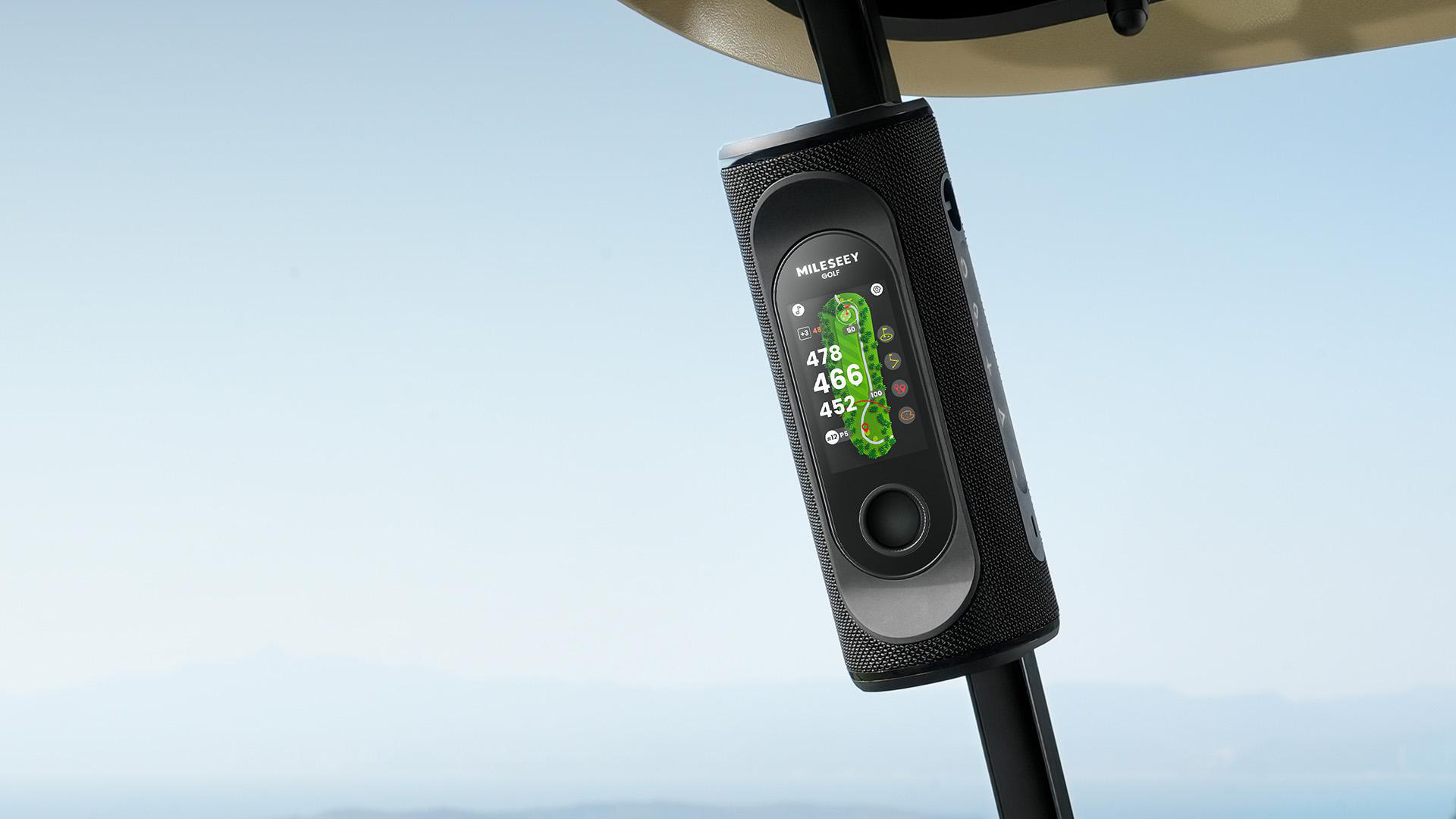
That is where GPS becomes such an advantage, and it is where the GeneSonic Pro can turn curiosity into actual strategy.
First, Understand What You Are Really Trying to Save
Most golfers overestimate the value of cutting a dogleg.
Yes, flying the corner can shorten the hole, but not always by as much as you think. Sometimes the aggressive line only saves 15 yards. Sometimes it saves 25. Sometimes it saves 40 and is absolutely worth considering. The problem is that golfers often gamble before they know which of those three situations they are facing.
Let’s use a simple example.
Say the safe line leaves you 155 yards in. The aggressive line over the corner leaves you 120. That is a 35-yard gain, which is meaningful.
Now let’s change it. The safe line leaves 150 and the aggressive line leaves 132. That is only 18 yards. For some players, that is barely the difference between one club and the next. Suddenly the reward may not justify flirting with trees, bunkers or water.
That is step one in the decision matrix: know the actual payoff.
If the aggressive line does not save enough distance to materially improve the next shot, the decision gets much easier.
Carry Distance Is Not the Same as Total Dista
This is where golfers fool themselves.
They know their driver can go 250, so they assume they can cut a corner that needs 235. But that 250 may be total distance on a firm fairway with rollout. The carry may be only 225. On a dogleg, rollout through a grove of trees does not help you much.
Dogleg decisions are carry decisions.
That means you need to know how far the ball flies in the air, not your best-case total. And you need to know it with the club you are actually planning to hit, not the one you wish you could hit that day.
If the corner requires 230 of carry and your normal carry with driver is 228, that is not a green light. That is a maybe pretending to be a yes.
I tell students to build in a buffer. If you need every ounce of your normal carry to just barely clear the trouble, you do not really have the shot. You have a dream and a search party.
Start With the Penalty, Not the Reward
Here is a great dogleg question: what happens if you miss?
If the answer is “I am still in play, just not ideal,” then the aggressive line becomes more reasonable. If the answer is “I am blocked out, re-teeing or dropping with a penalty,” then the bar for aggression should be much higher.
This is the part ego hates.
Golfers love asking, “Can I pull this off?” The smarter question is, “What does failure cost me?”
A line that saves 25 yards but brings double bogey squarely into play is not the same as a line that saves 25 yards and only leaves you a punch-out. Both are misses, but the price is very different.
That penalty math should drive the decision.
Know Your Shot Shape Before You Get Cute
Your pattern matters.
If the hole doglegs left and your stock shot is a fade, cutting the corner may ask you to hit a shot shape that is not natural under pressure. If the hole bends right and you already fight a slice, the aggressive line may bring the exact side of the course you need to avoid into play.
This is one of the biggest mistakes I see. Golfers make strategy decisions based on their ideal shot instead of their normal shot.
Your plan should respect your tendencies. If your stock shot works with the safe side, there is no shame in leaning into that. In fact, that is often the highest-level decision you can make.
The Four-Part Dogleg Decision Matrix
Here is the framework I teach.
1. How far is the carry to clear the corner?
This is the first gate. If the required carry is outside your reliable range, the decision is already made. Play safe.
2. How much distance do you actually save?
Do not guess. Find out. If the reward is marginal, the aggressive line needs an especially forgiving miss zone to make sense.
3. What is the cost of a miss?
Trees, water, fairway bunkers, blocked angles and penalties all matter. The more severe the punishment, the stronger the case for discipline.
4. Does the aggressive line fit your normal ball flight?
If it asks you to manufacture a shape you do not own, under pressure, with trouble lurking, the answer should usually be no.
If you can answer those four questions honestly, most doglegs become much easier to play.
Where the GeneSonic Pro Helps
This is exactly the kind of situation where a device like the GeneSonic Pro becomes a strategy tool instead of just a yardage tool.
Dogleg holes are about seeing the whole hole clearly. You need to understand where the fairway actually opens up, where the trouble begins and how the aggressive line changes the distance of the next shot. A broader GPS course view helps you do that. Front, center and back yardages then help you understand what kind of approach remains after the tee shot decision is made.
In other words, you are not just asking, “Can I cut this corner?” You are asking, “If I do, what does that leave me, and is it worth the risk?”
That is a much smarter question.
When to Cut the Corner
There are times when aggression is absolutely correct.
Cut the corner when the carry is comfortably within your capability, the reward meaningfully improves the next shot, the penalty for a slight miss is manageable and the line fits your normal shape.
That combination is real opportunity. When it shows up, take it.
When to Play Safe
Play safe when the carry is a stretch, the yardage savings are small, the miss is expensive or the aggressive line fights your natural pattern.
That is not playing scared. That is playing informed.
The Bottom Line
Dogleg holes are won by clarity, not courage.
If you know your carry numbers, understand the hole geometry and honestly assess the cost of a miss, the decision becomes much simpler. Sometimes the smart play is to take on the corner and shorten the hole. Sometimes the smart play is to hit the boring shot to the wide part of the fairway and go play from there.
Both are good decisions when the math supports them.
That is what the GeneSonic Pro can help you do. It gives you the information to turn dogleg strategy from guesswork into a calculated choice built around your actual game.
And that is how better players think.
Not “Can I pull this off?”
But “Does this decision really improve my odds?”
That is a very different question, and on dogleg holes, it is usually the one that leads to a better score.
By Brendon R. Elliott, PGA PGA Professional | Coach | Industry Consultant | Golf Writer
The best course managers do not avoid risk altogether. They just choose the right spots for it.