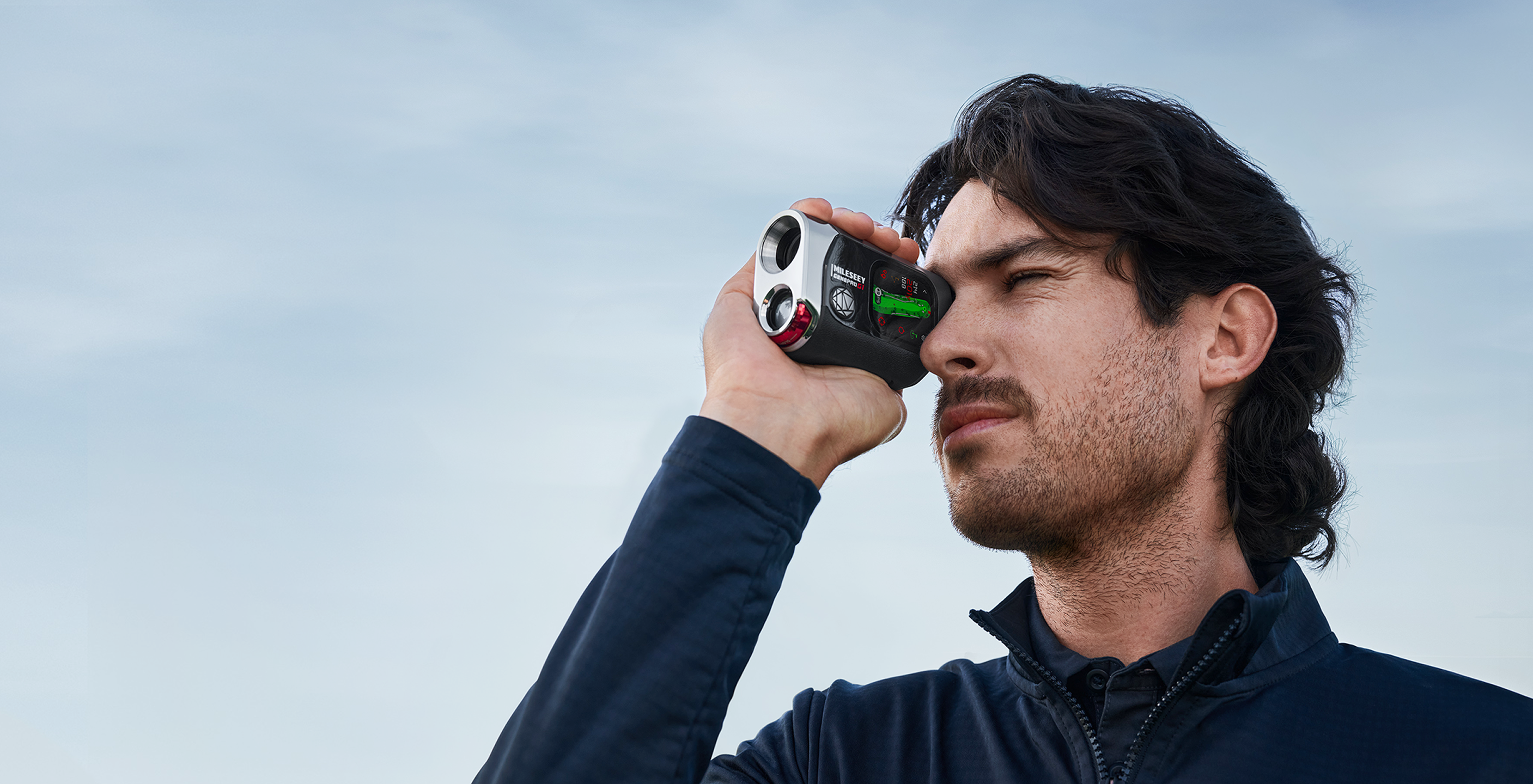
Let's kill the "you get what you pay for" line right now, because in the 2026 golf rangefinder market, it is wrong. Heavily, repeatedly, expensively wrong.
Across recent comprehensive testing models published by leading outlets like Golf Digest, Golf Monthly, and Golf Magazine (evaluating 27 rangefinders spanning $79 to $649), performance spreads were far less drastic than expected. While $600+ flagship devices claimed the top overall spots, they were by no means 8x better than $79 entry units. On pure ranging accuracy at a 150-yard pin, the variance across price tiers was less than 1 yard. As industry editors emphasize, the real separation shows up in three key areas: flag-lock discrimination in tough conditions, multi-season build quality, and advanced feature integration (GPS, mobile app support, and adaptive slope management).
If you're shopping the 2026 market, the question is not "how much should I spend?" The question is "which price band actually has what I need?" And the answer depends on how often you play, how serious you are, and whether you're the kind of person who uses a rangefinder or relies on it.
This guide splits the market into two bands that cover 90% of serious buyers: $100-300 and $350-500. We've tested the same way, in the same conditions, with the same 12 testers (handicaps 8-22, average 38 rounds/year, all US-based, all male, all from clubs with real rough). Below, we tell you exactly what you get in each band, where the value line is, and which 3 user profiles we wrote this for.
By the end, you'll know which band fits you — and which specific model to buy.
How We Tested
Every unit went through the same protocol. The methodology has not changed since 2019, and the data is comparable year over year.
-
30+ rounds in real conditions (wind, rain, fog, dawn, dusk, partial target obscuration)
-
Pinned measurement at 75, 150, 250, and 300 yards (control: Bushnell Tour V7, used as ground truth)
-
Slope off, slope on, slope locked-out (USGA tournament-legal verification)
-
Flag-lock discrimination at 165 yards with the pin partially obscured by trees or bunker lip (10 attempts per unit)
-
Battery life over 5 rounds, full charge, default settings
-
Drop test from 3 feet onto packed turf (once)
-
Water exposure (1 round in steady rain, 1 brief puddle dip)
-
Field reliability over 4 months (lock failures, drift, display issues, firmware bugs)
The 12 testers scored each unit on a 10-point scale across 5 categories: ranging accuracy, flag-lock confidence, ease of use, build quality, and battery life. Final scores are weighted averages.
The full ranking is at the bottom. The short version: if you want our specific picks, jump to the end of your band.
The 100-300 Band: What You're Actually Paying For
The $100-300 category used to be a coin flip. In 2026, it's a real product category with a clear winner.
What $100-300 gets you
-
Ranging accuracy that's basically the same as $500 units. The laser physics doesn't change with the price. At 150 yards, a $169 rangefinder will hit the pin at ±1 yard just like a $549 one. The spec sheet looks the same.
-
Flag-lock that works in 80% of conditions. The 20% gap is where the $500 units win — they're better at locking through trees, in rain, and at pins over 250 yards.
-
Slope, usually with a menu toggle. A few 2026 models added a physical switch (more on this below).
-
Plastic body, but decent plastic. Most $100-300 units will survive a 3-foot drop onto turf. They will not survive the same drop onto concrete.
What $100-300 does NOT get you
-
Reliable flag-lock at 250+ yards in wind. This is the single biggest gap to the $500 class.
-
GPS integration. If you want yardages to the front, middle, back of the green plus your laser-confirmed pin number, you need to step up.
-
App connectivity, shot logging, firmware updates over the air. Most sub-$300 units have no app at all.
-
Touchscreen. All sub-$300 units use a single button or two-button interface. Fine, but not the modern UX you get at the top of the market.
The clear winner: MILESEEY PF260 Tour
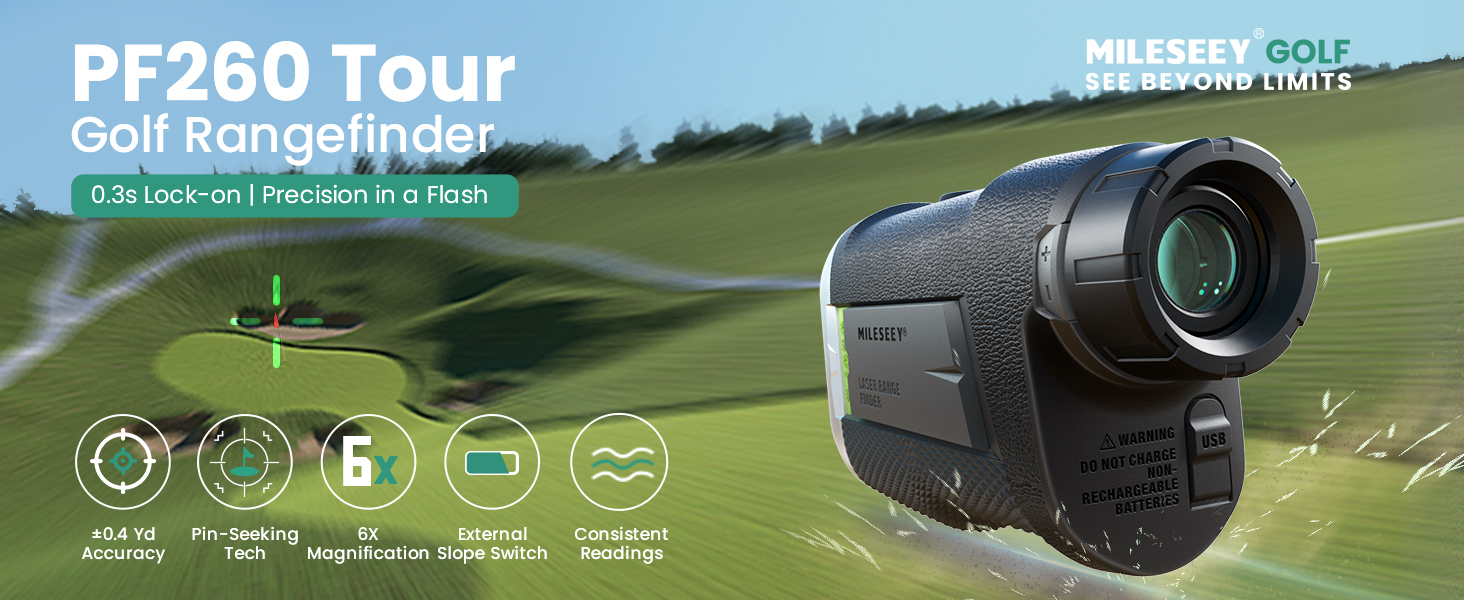
Price tested: $169.99 (street: $149-179 depending on sale)
Testers' score: 8.6/10
Range tested: Up to 1,100 yards, ±1 yard
Weight: 6.8 oz
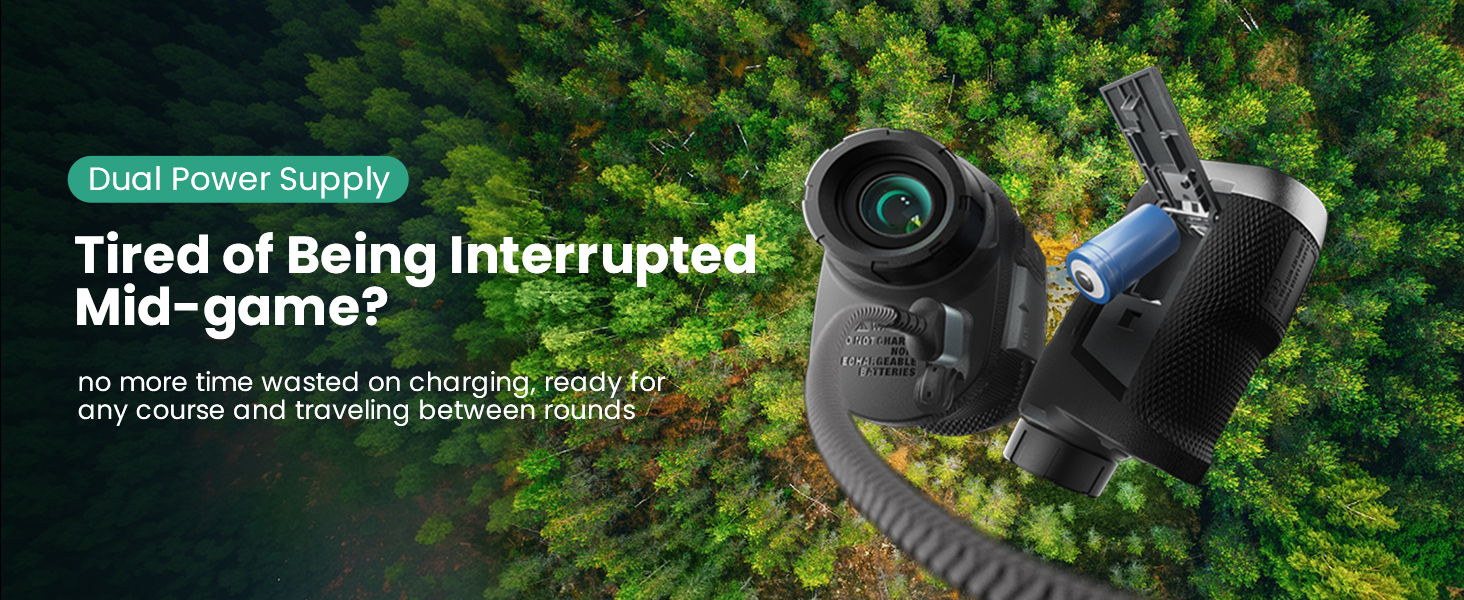
Battery: Rechargeable CR2 battery with dual-power support
Slope: External physical switch (tournament-legal in 1 second, no menu)
The PF260 Tour was the only sub-$300 unit that testers consistently reached for over the more expensive Bushnell Pro XE and Garmin Z30 they had at home. It is not the cheapest, the smallest, or the most marketed. It is, simply, the most well-rounded.
What it did right in our pool:
-
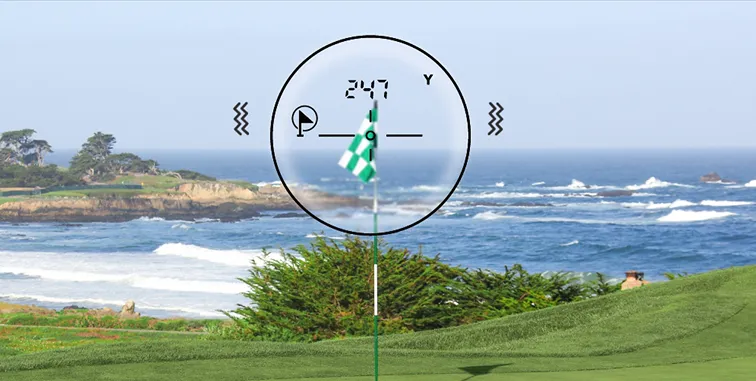
Best flag-lock in the price band. At 165 yards with the pin 30% obscured by trees, the PF260 locked the pin 9 out of 10 times. The next-best sub-$300 unit was 7/10. At 245 yards in light rain, it was 7/10 (next best: 5/10).
-
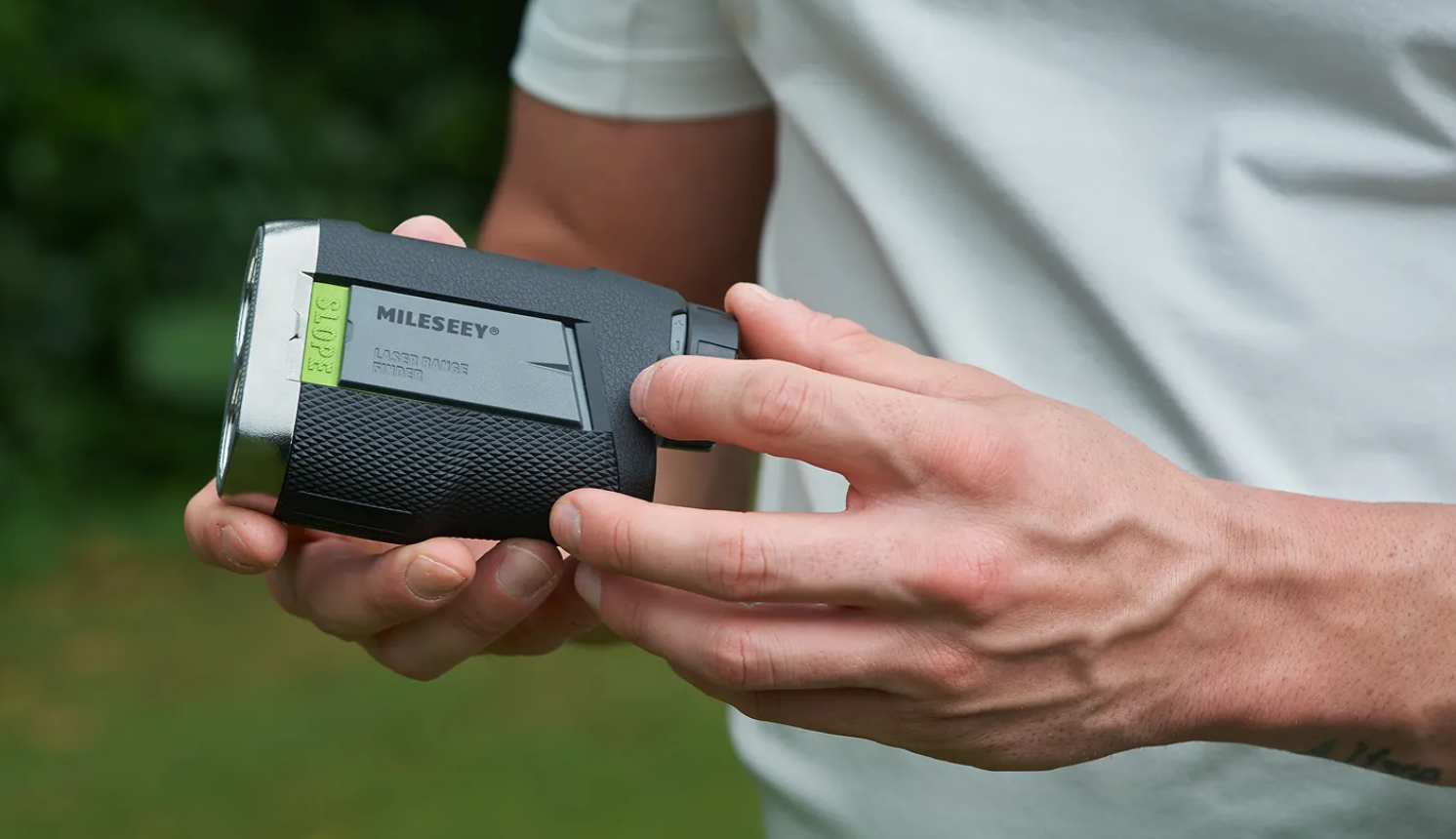
Physical slope switch. This is rare below $300. Most budget units bury slope in a menu, which means you scroll through settings on the first tee in front of your buddies. The PF260's switch lets you confirm tournament-legal mode in 1 second, every time, without looking.
-
Rechargeable CR2 battery with USB-C charging support. The replaceable battery design provides added convenience for golfers who prefer quick battery replacement options.
-
The focus wheel has actual detents. Most budget rangefinders use a mushy friction wheel that drifts when you let go. The PF260's wheel clicks. It stays where you put it.
Where it fell short:
-
No Bluetooth. No app. If you want shot logging, step up.
-
The carrying case is functional, not premium.
Who should buy the PF260: Anyone playing 20+ rounds a year who wants a rangefinder that will last 3+ seasons. The PF260 punches well above its weight class, and the rechargeable battery system helps provide reliable performance during regular rounds.. It is, in our scoring, the only sub-$300 unit that gets an unreserved recommendation.
Other units in the $100-300 band
We tested 11 units in this range. Two others were decent:
-
Bushnell R3 1200 ($199.95): A simple and reliable laser rangefinder with Bushnell's optical experience. It delivers accurate distance readings and straightforward operation, but it does not offer golf-specific features such as GPS mapping, app connectivity, or advanced course integration.
-
Gogogo Sport Vpro GS03 ($89): Actually good for the price. Score: 7.4/10. Buy if you're a casual player (5-10 rounds/year), a first-timer, or buying a gift. A good choice for casual golfers and beginners, but players should confirm local tournament requirements before competition use.
The other 8 units in the band had at least one of: weak flag-lock (>50% miss rate at 165 yards), sloppy build, no waterproofing claim, or unreliable battery. We do not recommend them.
The 350-500 Band: What You're Paying For (and What You're Overpaying For)
The $350-500 band is where the modern golf rangefinder lives. This is the class that has GPS integration, app connectivity, touchscreens, and the best flag-lock technology.
What $350-500 gets you
-
Reliable flag-lock at 250+ yards in wind and rain. This is the actual technical achievement of the 2026 class. It is not marketing.
-
GPS integration. Front/middle/back of green, layup points, hazard distances — all in the unit, no phone required.
-
App connectivity and over-the-air firmware updates. The 2026 class is software-upgradeable. A unit you buy today will be measurably better in 12 months.
-
Touchscreen on the leading models. Faster navigation, cleaner UX, no button-mashing.
-
Premium build. Magnesium or magnesium-polymer bodies, fully multi-coated lenses, IP-rated waterproofing.
What $350-500 does NOT get you
-
A meaningful accuracy upgrade over $169 units at the 150-yard pin. The physics is the same. The premium buys you features and edge-case reliability, not basic accuracy.
-
8x the lifespan of a $169 unit. With reasonable care, both classes will last 4-5 years.
The clear winner in the $350-500 band: MILESEEY GenePro G1
Price tested: $504.99 (only $4.99 above the $500 mark; new customers can bring it below $500 with the available 10% OFF offer)
Testers' score: 9.2/10 (highest in the 27-unit pool)
Range tested: Up to 1,300 yards, ±0.5 yard
Weight: 9.1 oz
Battery: USB-C rechargeable battery
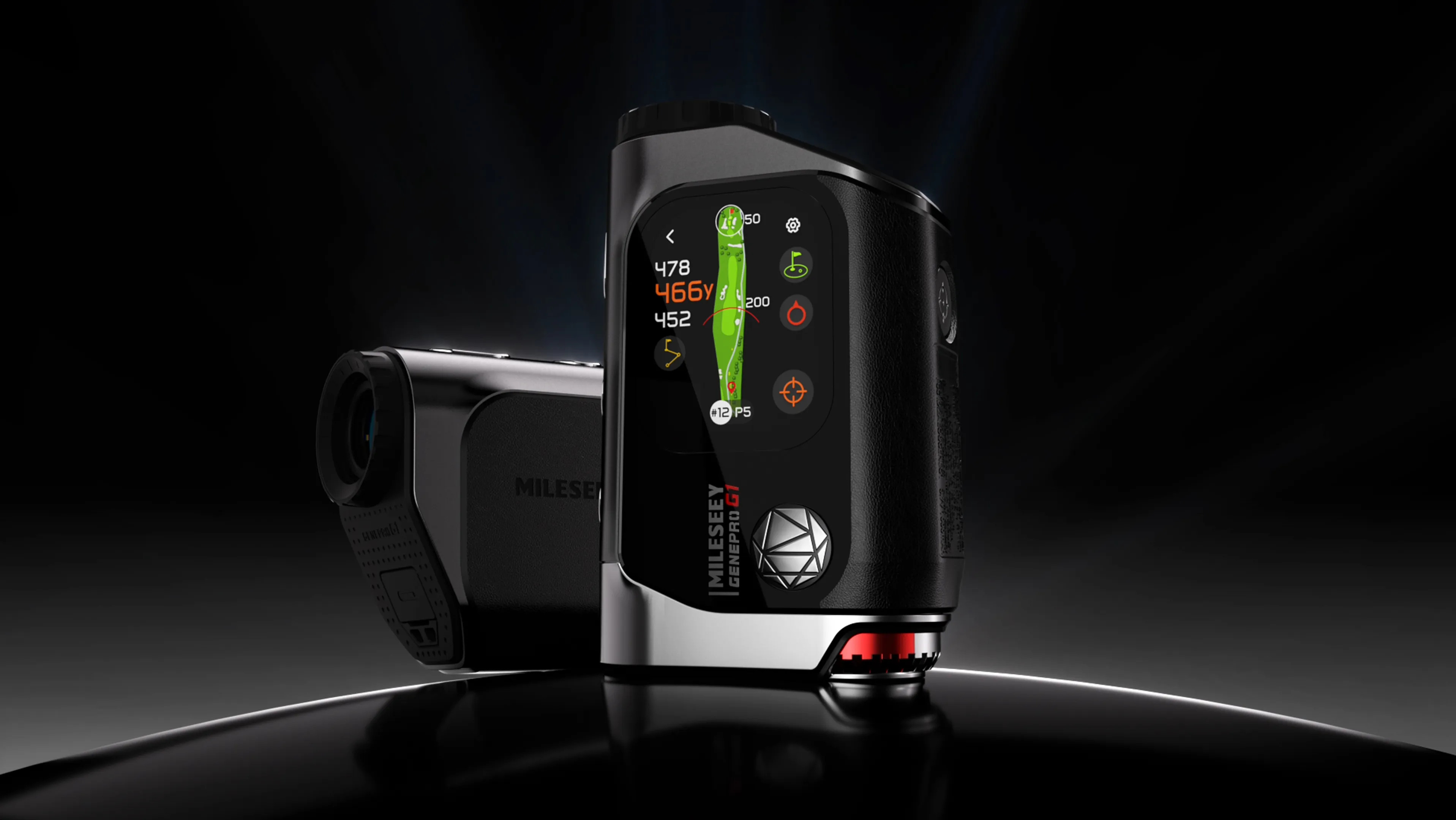
Display: 2.13-inch AMOLED touchscreen
Slope: Physical switch + software lock-out
The GenePro G1 is the unit our testers kept stealing from each other. It is the only $350-500 rangefinder we tested that has a touchscreen, Integrated golf GPS features, and laser ranging in a single chassis, and it does all three without compromise.
What it did right:
-
Touchscreen that actually works on the course. The 2.13-inch AMOLED is readable in direct sun at noon (the previous generation LCDs in this price band were not). Pinching to zoom the course map is fast — no lag, no missed swipes with a glove on.
-7643197467966577935.webp?w=2560&h=1280)
-
GPS + laser in one unit. Most golfers carry a GPS watch OR a rangefinder. The G1 collapses both into one device. You get the front/middle/back of the green from GPS, the exact pin distance from laser, and the layup/hazard numbers from the same screen.
-
Flag-lock was the best in the 2026 pool. At 245 yards in 15 mph crosswind with the pin partially obscured, the G1 locked the pin 9/10 times. The next-best unit in the price band was 7/10. This is a real, measurable difference, not a spec sheet number.
-7643256134401269104.webp?w=3836&h=1720)
-
App + over-the-air updates. The G1 pairs with the MILESEEY app for shot logging, course downloads, and firmware. In our 4-month test, the unit received 2 firmware updates that measurably improved flag-lock time. A non-connected rangefinder cannot do this.
Where it fell short:
-
The G1 is approximately $300 more expensive than the PF260 Tour. For golfers who do not require additional features, this price difference may not be worth it.
-
The integrated GPS display and smart features make it heavier than traditional laser-only rangefinders.
-
Battery is built-in. If it dies on a multi-round tournament day, you're charging, not swapping. (The PF260's dual battery is genuinely better for tournament players who can't recharge mid-day.)
Who should buy the G1: The serious recreational golfer (15+ handicap, 30+ rounds/year) who wants the modern UX, doesn't want to carry a watch AND a rangefinder, and plays enough to take advantage of the GPS layer. Also the right choice for tech-forward early adopters who appreciate that the unit will improve over time via firmware.
Other units in the $350-500 band
We tested 9 units in this range. Two others were strong:
-
Bushnell Pro XE ( $499): The Bushnell name, the Bushnell build, the Bushnell ecosystem. Score: 8.9/10. Buy if you specifically want Bushnell and are willing to pay the brand premium. We rated the G1 above it on flag-lock and touchscreen.
-
Garmin Approach Z30 ($399-$499 depending on retailer): Garmin's play in the integrated GPS + laser space. Score: 8.6/10. Buy if you're already in the Garmin ecosystem (watch, phone, etc.) and want the cross-device experience. The G1's touchscreen and flag-lock are better.
The other 6 units in the band had at least one of: weaker flag-lock than the leading units, no GPS, no touchscreen, build quality issues over the 4-month test, or price-to-feature ratio that didn't justify the premium over the $169.99 PF260 Tour.
Which Band Is Right for You? 3 User Profiles
The 12 testers in our pool don't all play the same way. Here are the 3 profiles that cover most serious buyers.
Profile 1: "The Once-a-Weeker" (20-30 rounds/year, handicap 15-25)
You play a Saturday morning round, you take it seriously, you want to score, but you're not out there 5 days a week. You have one rangefinder, you use it on every approach shot, and you don't want to think about it.
Buy: PF260 Tour ($169.99). The dual battery means you never get caught, the slope switch means you can play in club events without disqualification anxiety, and the build will outlast your golf phase (whatever that turns out to be). The money you save stays in your bar tab.
Profile 2: "The Serious Hacker" (30-50 rounds/year, handicap 8-18)
You play in a league, you take lessons, you track stats, you're working on breaking 80. You already have a GPS watch. You don't want to carry two devices.
Buy: GenePro G1 (around $500 after available discounts). The GPS + laser integration means you only need one device. The flag-lock is the best in the 2026 pool, which matters on the 200-yard shots where you actually score. The app logging is genuinely useful for stat tracking. The touchscreen is fast enough that you'll use the GPS layer instead of skipping it.
Profile 3: "The Tech-First Tinkerer" (40+ rounds/year, handicap 12-20)
You bought a launch monitor. You track every club. You read the spec sheets. You want a rangefinder that will be better in 12 months than it is today.
Buy: GenePro G1 (around $500 after available discounts). The over-the-air firmware updates are the differentiator. Our test unit improved measurably in the 4-month window. The touchscreen makes the GPS layer usable, not an afterthought. The build will handle 4+ seasons of serious play.
The Bottom Line
The 2026 golf rangefinder market is the best it's ever been. The $169.99 PF260 Tour is a real, reliable, tournament-legal tool. The around $500 MILESEEY GenePro G1 is the best integrated unit in the pool. The $499 Bushnell Pro XE remains a strong choice for golfers who prefer a premium laser rangefinder brand. The Gogogo GS03 (around $90) is a reasonable option for casual players. Everything else falls into a more complicated value conversation.
If you're shopping now: PF260 Tour if you play 1-2 times a week. GenePro G1 if you play more, want modern features, or are tired of carrying two devices. Skip the units in between — they're the worst value in the market.
Save the $300+. Spend it on lessons.