-9.png?w=2520&h=1260)
A golf GPS does not need the longest battery life in its category. It needs enough runtime for your longest realistic day, plus a margin for delays, cold weather, high brightness and a less-than-perfect starting charge.
Battery is one part of choosing a golf GPS device. Our main golf GPS guide covers the other format decisions.
Use a battery budget, not a round count
Estimate required runtime with this simple planning equation:
> Required runtime = expected play time + warm-up and travel use + delay margin + aging margin.
For a five-hour round, add time for course search and practice, then at least 20–30% margin if failure would leave you without a backup. A 36-hole day needs a larger margin or a verified charging plan.
Why advertised runtime varies
- Screen brightness and timeout behavior
- Map interaction and GPS sampling
- Bluetooth connections and score synchronization
- Audio volume on GPS speakers
- Temperature and battery age
- Repeated searching when course data is not ready
Use published runtime as a comparison input, not a guaranteed result for every setting.
18 holes versus 36 holes
| Use pattern | Planning priority |
|---|---|
| One local 18-hole round | Comfortable single-round margin |
| Slow event or resort round | Delay and pre-round margin |
| 36-hole day | All-day runtime or a tested mid-day charge |
| Weekend without reliable charging | Power bank compatibility and cable discipline |
Build a repeatable pre-round check
- Charge the night before.
- Install course and firmware updates at home.
- Check battery before leaving, not on the first tee.
- Carry the correct cable or power bank if your margin is thin.
- Reduce brightness or unused radios only if readability and core functions remain adequate.
Official MILESEEY runtime examples
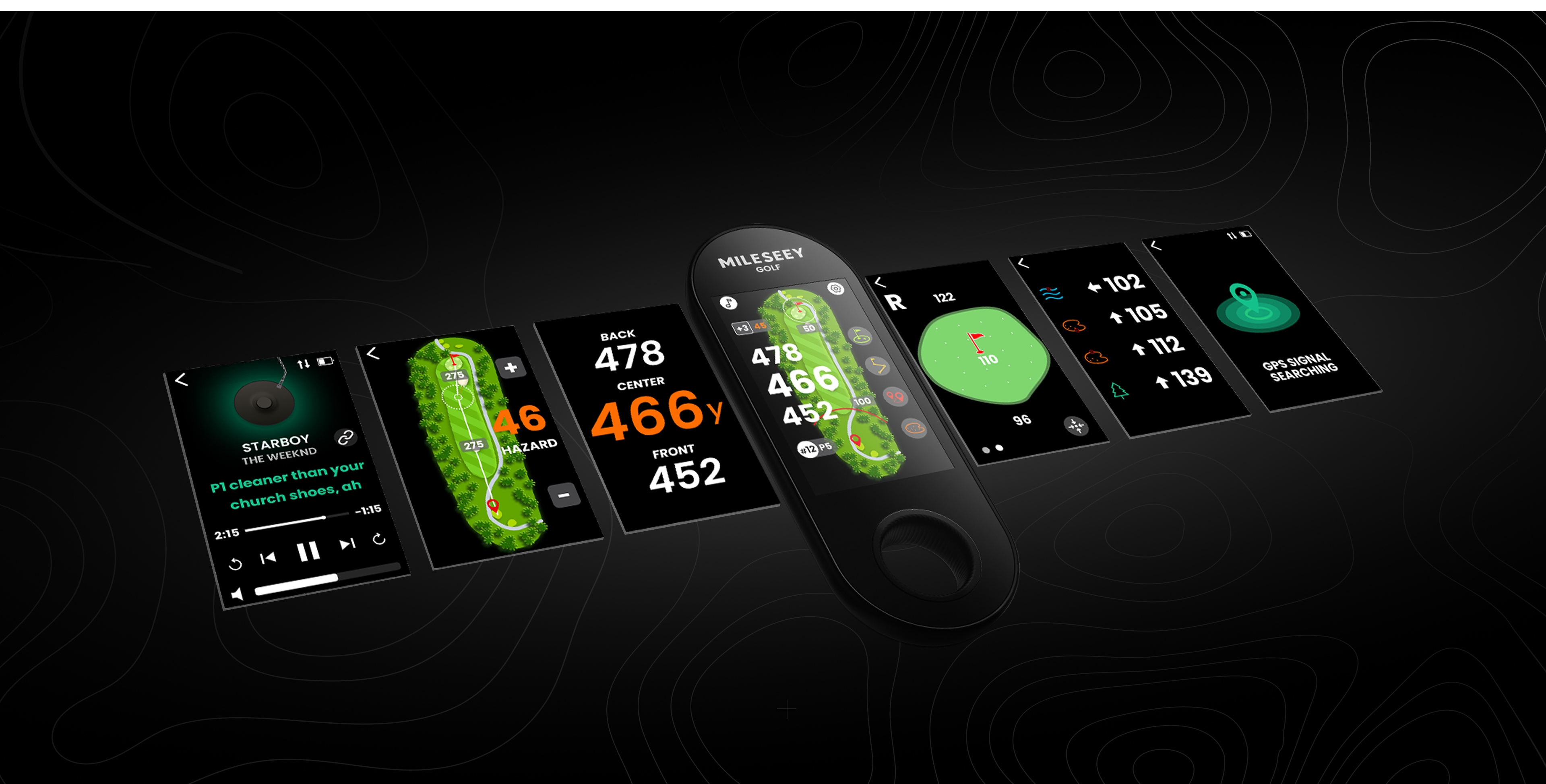
The MILESEEY GeneSonic Go Golf GPS Handheld has an official specification of about 15 hours of operation, with about three hours to recharge its 1000 mAh battery. The MILESEEY GeneSonic Pro Detachable Golf GPS Speaker lists about 15 hours in Golf mode at 50% volume and about six hours at 100% volume; the product database notes that a separate standalone runtime for its handheld module is not published in the support specification.
The MILESEEY GenePro G1 Touchscreen & GPS Rangefinder lists up to 24 hours depending on use. All three values are official specifications, not a promise that every setting and temperature will produce the same result.
Editorial simulation
Scenario: A golfer plans two five-hour rounds with a 90-minute lunch. A device rated around 15 hours may appear sufficient, but the safer plan includes pre-round map use, delays and battery aging. If the device also powers audio, a tested lunch charge or reduced volume is more reliable than assuming the headline runtime.
When maximum battery should not decide
If every round ends near a charger and your device has a wide single-round margin, a larger battery may add cost or weight without practical value. Readability, carry comfort and interface speed may matter more. Conversely, remote travel and 36-hole events make battery a primary requirement.
Battery checklist
- Estimate hours, not holes.
- Add at least one realistic delay margin.
- Check runtime at the brightness and audio settings you use.
- Verify charging input and cable.
- Test a full long day during the return period.
- Keep a non-electronic yardage fallback when practical.