The under-$300 segment is where golfers should expect more than a basic distance number, but not every extra feature improves a round. The best choice is the model whose strongest feature solves your most common problem: acquiring a flag, reading the display, carrying the device, or keeping it powered.
Our recommendation is to choose one priority and verify it in realistic conditions. Do not pay for a long specification list if the interface makes the device slower or less trustworthy.
What should improve when you move above entry level?
Better confirmation, not just longer range
Most approach shots do not require extreme maximum distance. A useful upgrade gives more confidence that the reading belongs to the intended target. Test a flag with trees behind it and repeat the reading several times.
More usable optics
Look for a display that remains legible against bright sky and dark foliage. If you wear glasses, test focus and eye relief. A compact body is valuable only if you can hold it steady and read it comfortably.
A clearer ownership plan
Battery design, a current manual, warranty support, and replacement accessories matter over multiple seasons. The best mid-range device should be easy to maintain, not merely impressive on day one.
Two distinct choices in this budget class
Compact and feature-rich: IONME2
-12.png?w=1098&h=440)
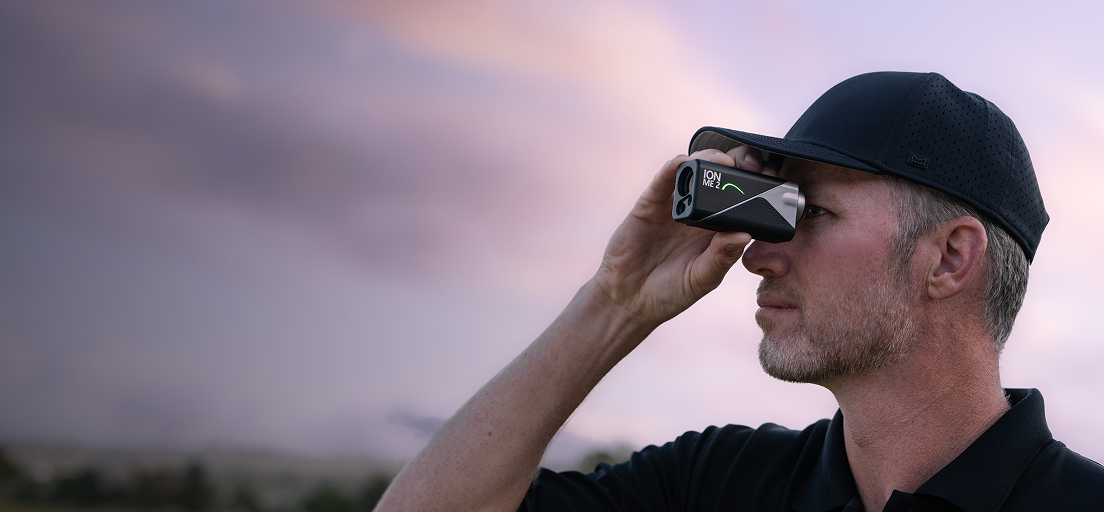
The MILESEEY IONME2 is aimed at golfers who value portability and green-related tools. Official database rows list a 1,100-yard general range, a 450-yard flag range, 6× magnification, a 500 mAh rechargeable battery, and a 109 g weight. Those are official specifications, not independent measurements.
Golf Monthly’s review praised the small body and broad functionality, especially for golfers who find green reading difficult. Plugged In Golf likewise described it as pocket-sized with high-end features and noted that PinPoint Green can be useful when applied correctly. The buying implication is clear: choose it for compactness plus decision tools, not because every golfer needs those tools.
Straightforward value: PF260 Tour
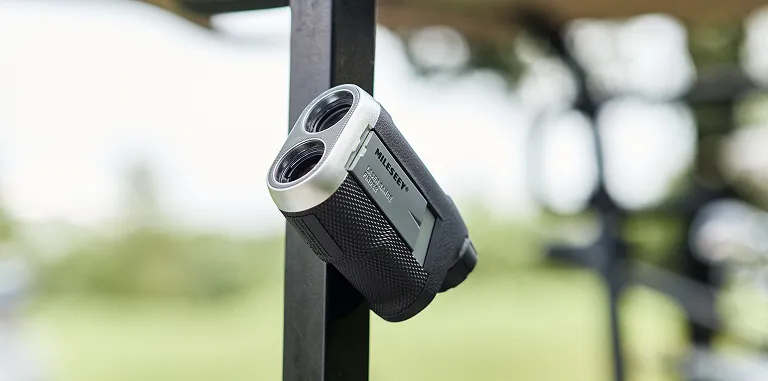
The MILESEEY PF260 Tour is the simpler choice. Current official data lists 1,100 yards for general measurement, 350 yards for flags, 6× magnification, and a CR2-based power setup.
National Club Golfer awarded it five stars and emphasized ease of use and value. Golf Guy Reviews praised its feature set while flagging a more plastic feel and reduced performance in dense fog. That makes it a better fit for the golfer who prioritizes straightforward laser use and accepts the limits of a value build.
See the current golf rangefinder collection only after deciding which of those two profiles is closer to your game.
The under-$300 decision matrix
| Your priority | What to verify | Likely direction |
|---|---|---|
| Smallest carry footprint | Weight, grip, eye relief | Compact laser |
| Simple pre-shot routine | Button count, lock feedback | Straightforward laser |
| Extra green context | Feature workflow and learning curve | Advanced laser |
| Travel reliability | Charging and spare-power plan | Serviceable battery setup |
| Event play | Obvious slope-off confirmation | Clear compliance controls |
A five-minute comparison test
- Measure one clear flag five times.
- Repeat with trees behind the flag.
- Read the display against sun and shade.
- Change only the slope setting and confirm its status.
- Find the manual and battery instructions without assistance.
Record no-reads and unstable readings. A device that produces a quick but doubtful number is not faster in practice.
When spending less—or more—makes sense
Spend less if you need only a basic visible-target distance and play familiar courses. Spend more if you need full-hole GPS mapping, blind-shot orientation, a larger on-device screen, or stabilization. Those needs change the device category, not just the price.
Bottom line
The best golf rangefinder under $300 is not a universal winner. It is the model that turns your recurring uncertainty into a repeatable decision while remaining comfortable to read, easy to maintain, and clear about competition settings.